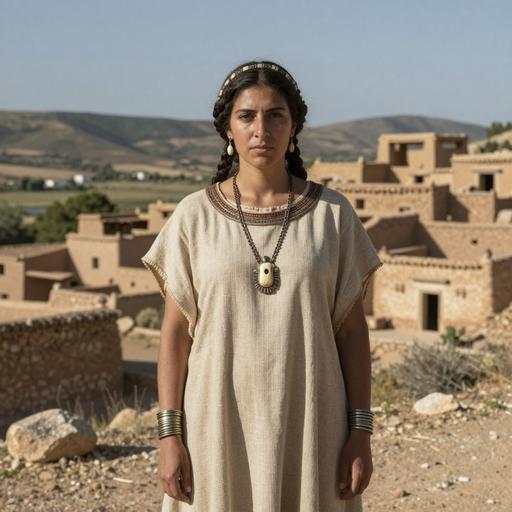
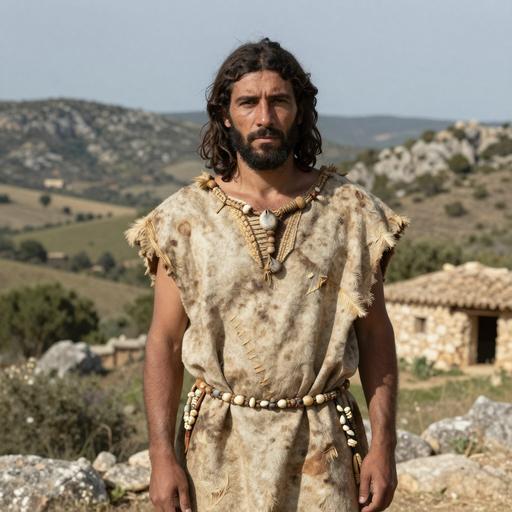
The Story
The journey of mtDNA haplogroup K1B1A1C
Origins and Evolution
Haplogroup K1B1A1C is a terminal branch of the K1B1A1 lineage, itself part of the broader mtDNA haplogroup K clade that expanded in the Near East and into Europe during the early and middle Holocene. Given its phylogenetic position beneath K1B1A1 (a lineage associated with Anatolian/Levantine Neolithic farmers), K1B1A1C most plausibly arose after the primary Neolithic dispersals from Anatolia — probably in the later Neolithic to Bronze Age timeframe (a few thousand years after the initial farmer expansions). Its emergence reflects continued diversification of maternal lineages in populations of the eastern Mediterranean and adjacent parts of Europe.
Subclades (if applicable)
As a narrowly defined terminal subclade, K1B1A1C may have limited or no well-differentiated downstream branches that are broadly reported in the literature; many reported occurrences come from modern population screening or a small number of ancient samples. Where sub-structure exists, it is generally characterized by private mutations found in regional or founder populations (for example, specific lineages that became enriched in isolated island communities or in diasporic groups). Continued mitogenome sequencing in poorly sampled regions may reveal additional subbranches in the future.
Geographical Distribution
The geographic footprint of K1B1A1C mirrors the distribution of its parent clade but at generally lower frequencies. It is most often observed in:
- Near Eastern and Anatolian populations (reflecting origin and early diversification).
- Southern Europe and the Mediterranean basin (Italy, Greece, Iberia, and some islands) where Neolithic farmer ancestry and later gene flows concentrated K-derived lineages.
- Ashkenazi Jewish communities, where founder effects and drift have amplified particular K subclades; K1-derived lineages are well-documented among Ashkenazi maternal lineages and K1B1A1C-type variants can occur as rare founder haplotypes.
- The Caucasus and parts of the Levant/Iran, at low to moderate frequency consistent with long-term gene flow across the eastern Mediterranean and Near East.
Occurrences in northwestern Europe and in parts of North Africa or Central Asia are generally at low frequency and are best interpreted as the result of historical migration, trade, or later demographic exchanges rather than primary centers of origin.
Historical and Cultural Significance
Because K1B1A1C is nested within a clade associated with Neolithic farmers, its history is tied to major demographic processes that reshaped Eurasia after 9000–7000 years ago: the spread of agriculture from Anatolia into Europe and the subsequent regional population interactions. In several diasporic or isolated populations (notably some Jewish communities and island populations of the Mediterranean), founder effects, endogamy and genetic drift have elevated the visibility of otherwise low-frequency maternal lineages, making K1B1A1C detectable in modern surveys and occasionally in ancient samples.
The haplogroup's presence in ancient DNA (even if only in a small number of archaeological samples to date) supports continuity of Near Eastern-derived maternal ancestry in parts of southern and central Europe from the Neolithic through later periods. Its later survival and distribution were shaped by Bronze Age and historical movements across the Mediterranean and Near East.
Conclusion
K1B1A1C represents a localized diversification of the K1B1A1 maternal lineage rooted in the Near East/Anatolia with subsequent spread into the Mediterranean and neighboring regions. It is typically low-frequency but of interest for tracing Neolithic-derived maternal ancestry and for identifying founder events in specific modern populations such as Ashkenazi Jewish groups and insular Mediterranean communities. Additional full mitogenome sampling and ancient DNA recovery will refine its time depth, internal structure, and precise geographic origins.
Key Points
- Origins and Evolution
- Subclades (if applicable)
- Geographical Distribution
- Historical and Cultural Significance
- Conclusion