mtDNA · Maternal lineage

L0D2A1A

mtDNA Haplogroup L0D2A1A

A reference profile for one lineage branch. Shared haplogroups do not establish a family relationship or cultural identity.

Reference profile

Branch background

Historical context for mtDNA lineage branch L0D2A1A

Origins and Evolution

mtDNA haplogroup L0D2A1A is a subclade of L0D2A1, itself nested within the broader L0d2 branch that is strongly associated with Khoe‑San populations of southern Africa. The parent lineage L0D2A1 has been estimated to arise in the Holocene (~8 kya) in southern Africa; L0D2A1A represents a more recent split within that diversity, likely originating a few thousand years ago as local maternal lineages diversified. Like other L0d subclades, L0D2A1A carries a set of additional control‑region and coding‑region mutations that distinguish it from sister subclades, and its phylogenetic position reflects deep maternal continuity in southern African forager populations.

Subclades (if applicable)

L0D2A1A is itself a terminal or near‑terminal branch in many published trees; if further downstream diversity exists, it is presently limited and often private to individual families or small community clusters. Because of sparse sampling outside core Khoe‑San groups, any finer substructure of L0D2A1A may be under‑represented in public databases and could be revealed by increased complete mitogenome sequencing among historically under‑sampled southern African populations.

Geographical Distribution

Primary concentration:** Southern Africa, especially among Khoe‑San groups (e.g., Ju|'hoan, !Kung, Nama), where L0d lineages form a substantial component of maternal ancestry. Secondary occurrences: Low‑to‑moderate frequencies in nearby Bantu‑speaking populations and occasional detections in East and Central African forager groups, reflecting historic and prehistoric contact and gene flow. There are rare instances of L0D2A1A in African‑descended populations in the Americas and sporadic detections in North Africa and the Near East attributable to historical admixture and population movements. One ancient DNA sample in available databases has been assigned within the broader L0D2A1 clade, supporting Holocene continuity of related maternal lineages in the region.

Historical and Cultural Significance

L0D2A1A, as part of the L0d/l lineages, is informative for reconstructing the maternal history of Khoe‑San foragers and for tracing episodes of admixture between foragers and expanding food‑producing communities (e.g., Bantu expansions) in southern Africa. Its persistence within forager groups highlights long‑term maternal continuity in the region across the Holocene, while low‑frequency appearances in neighboring agriculturalist and pastoralist communities signal gene flow and shared demographic history over the past few millennia. The haplogroup is therefore useful in archaeological and anthropological studies that aim to link genetic lineages with cultural change, mobility, and contact in southern Africa.

Conclusion

L0D2A1A is a geographically focused, Holocene‑age maternal lineage that exemplifies the deep maternal diversity of southern African forager populations. While currently best documented among Khoe‑San groups, limited sampling means that additional occurrences or substructure may be discovered with broader mitogenome sequencing efforts. Its distribution and co‑occurrence patterns provide insights into local continuity and regional admixture events during the later Holocene.

Key Points

  • Origins and Evolution
  • Subclades (if applicable)
  • Geographical Distribution
  • Historical and Cultural Significance
  • Conclusion
Reference profile

Tree & Relationships

Phylogenetic context and subclades

Evolution Path

Follow the recorded parent branches toward L0D2A1A. Dates are estimates and can change as reference data is revised.

Steps Haplogroup Age Estimate Archaeology Era Time Passed Immediate Descendants Tested Modern Descendants Ancient Connections
1 L0D2A1A Current ~3,000 years ago Iron Age 3,000 years 0 0 1
2 L0D2A1 ~8,000 years ago Neolithic 8,000 years 1 0 0
3 L0D2A ~50,000 years ago Paleolithic 50,000 years 1 2 1
4 L0D2A'B'D - - - 1 2 0
5 L0D2 ~70,000 years ago Paleolithic 70,000 years 2 5 0
6 L0D1'2 - - - 2 14 0
7 L0d ~120,000 years ago Paleolithic 120,000 years 2 24 4
8 L0 ~170,000 years ago Paleolithic 170,000 years 3 384 6
9 L ~160,000 years ago Paleolithic 160,000 years 2 32,236 5

Subclades (0)

Terminal branch - no recorded subclades

Reference profile

Where in the World

Geographic distribution and modern presence

Recorded origin

Southern Africa

Modern Distribution

The populations where mtDNA haplogroup L0D2A1A is found include:

  1. Khoe-San groups of southern Africa (e.g., Ju|'hoan, !Kung, Nama)
  2. Various southern African Bantu-speaking populations (low-to-moderate frequency due to admixture)
  3. Some East African populations at low-to-moderate frequencies (reflecting ancient and historic contacts)
  4. Central African forager groups (low frequency)
  5. African-descended populations in the Americas (rare, due to the transatlantic slave trade)
  6. Occasional low-frequency occurrences in North Africa and the Near East (historical admixture)
Historical context

A branch through time

Estimated formation in a broad historical timeline. Period markers provide context and do not imply a connection with particular cultures.

  1. ~10k years ago

    Neolithic Revolution

    Agriculture begins, settled communities form

  2. ~5k years ago

    Bronze Age

    Metalworking, writing, and early civilizations

  3. ~3k years ago

    Iron Age

    Iron tools, expanded trade networks

  4. ~3k years ago

    Haplogroup L0D2A1A

    Estimated formation of this mtDNA branch; dates and locations are reference estimates.

    This branch
  5. ~2.5k years ago

    Classical Antiquity

    Greek and Roman civilizations flourish

  6. Present

    Present Day

    Modern era

Reference profile

Archaeological context

Recorded archaeological associations for mtDNA branch L0D2A1A

Recorded associations

These labels describe archaeological contexts recorded for reference samples linked to L0D2A1A. An association does not establish that all carriers belonged to a culture or followed a particular migration route.

Early Iron Age Fingira Culture Makwasinyi Malawian LSA Middle Iron Age Mtwapa Pemba Phase I Tanzanian Prehistoric Terminal Stone Age
Culture assignments are based on archaeological context of ancient DNA samples and may represent regional associations during specific time periods.
Reference profile

Sample Catalog

1 direct carrier of haplogroup L0D2A1A

1 shown · 1 matching samples

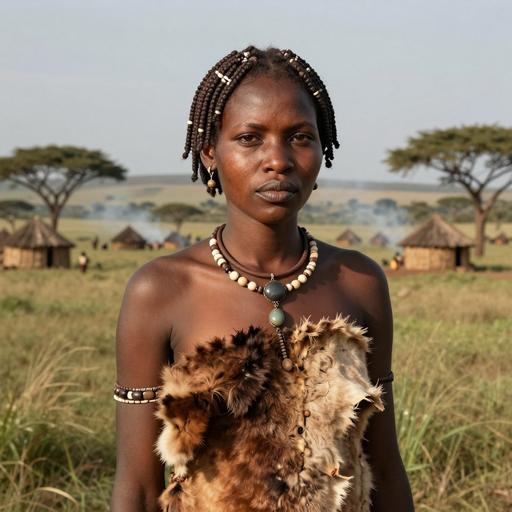
Portraits are AI-generated illustrations. Sample labels and accession IDs identify the reference records.

Portrait Sample Country Era Date Culture mtDNA Match
AI-generated illustrative portrait of Bantu individual, Doonside, South Africa (343-56 BCE)
Sample ID: doo001
South Africa South Africa 2000 Years Before Present 343 BCE - 56 BCE Early Iron Age L0d2a1a Direct
MATERNAL LINEAGE · ANCIENT DNA

Ancient lineage evidence map

Follow parent clades toward this branch and explore where ancient carriers were found.

Loading ancient observations…

Markers are archaeological find locations. A dashed connector is an uncertain, proposed geographic transition between consecutive branches supported by multiple dated observations; it is not an exact travel route, birthplace or proof of direct descent. Parent-clade samples may belong to other descendant branches. Gaps remain where evidence is insufficient. Sample dates differ from haplogroup formation dates.

Reference profile

Carrier Distribution Map

Geographic distribution of 1 ancient DNA sample (direct and subclade carriers of L0D2A1A)

Direct carrier
Time Period Filter
All Time Periods
Showing all samples
Reference profile

Temporal Distribution

Distribution of carriers across archaeological periods

Reference profile

Geographic Distribution

Counts by recorded sample country. These reflect the available reference selection, not population frequencies.

Reference profile

Country × Era Distribution

Compare recorded sample counts across countries and archaeological periods. Select a populated cell to inspect a sample.

Data

Data & Provenance

Source information and data quality

Last Updated 2026-02-16
Confidence Score 50/100
Coverage Low

Data Source

Classification, estimated dates and geographic context reflect the recorded reference data and may change as evidence is revised. Sample coverage is uneven; recorded locations and archaeological associations do not establish personal origin or cultural identity.

A haplogroup follows one maternal or paternal line. The branch prediction depends on which markers the DNA file contains. How our analysis works