Menu
mtDNA Haplogroup • Maternal Lineage

L3E1

mtDNA Haplogroup L3E1

~15,000 years ago
West/Central Africa
4 subclades
Scroll to explore
Chapter I

The Story

The journey of mtDNA haplogroup L3E1

Origins and Evolution

mtDNA haplogroup L3E1 is a subclade of the broader L3e lineage, itself a major branch of African haplogroup L3. Based on the phylogenetic position of L3e and coalescent estimates for its sublineages, L3E1 most likely diversified in West/Central Africa during the late Pleistocene to early Holocene (roughly ~15 kya, with uncertainty around several thousand years). Like other L3e subclades, L3E1 reflects deep sub-Saharan maternal ancestry and shows signals of later Holocene demographic growth in multiple descendant branches.

Subclades

L3E1 is not a single homogeneous lineage but comprises multiple downstream sublineages (commonly reported as L3E1a, L3E1b, etc., in population studies). Some of these subclades show evidence of localized continuity in rainforest and savanna populations, while others expanded geographically during Holocene movements such as the Bantu-speaking expansions. The diversity of L3E1 subclades in West and Central Africa indicates an older regional presence with subsequent population-specific differentiations.

Geographical Distribution

L3E1 is concentrated in West and Central African populations, where it reaches its highest frequencies and diversity. It is also found at appreciable frequencies among Bantu-speaking groups across Central, Southern and parts of Eastern Africa, consistent with maternal lineages carried during Holocene demographic expansions. Due to the transatlantic slave trade and later diasporas, L3E1 is present in African-descended populations in the Americas and the Caribbean. Low-level occurrences in North Africa and the Near East are best explained by historical admixture and back-migration from sub-Saharan Africa.

Historical and Cultural Significance

The distribution pattern of L3E1 links it to major demographic processes in African prehistory and history. Several descendant subclades expanded in the Holocene, and the lineage was carried by migrating populations during the Bantu expansions (beginning ~3.5–5 kya), which redistributed many West/Central African maternal lineages into Central, Southern and Eastern Africa. In the last 500 years, L3E1 became part of the maternal gene pool of the Americas through the transatlantic slave trade, where it contributes to the maternal ancestry of African diaspora communities.

Conclusion

L3E1 is a demonstrative example of a regionally rooted African maternal lineage that has persisted in West and Central Africa since the late Pleistocene/early Holocene, diversified locally, and was later redistributed by Holocene migrations and historic events. Its modern geographic pattern—high diversity in West/Central Africa, presence across Bantu-speaking regions, and representation in the African diaspora—reflects both deep antiquity and recent demographic processes.

Key Points

  • Origins and Evolution
  • Subclades
  • Geographical Distribution
  • Historical and Cultural Significance
  • Conclusion
Chapter II

Tree & Relationships

Phylogenetic context and subclades

Evolution Path

This haplogroup's evolutionary journey from its earliest ancestor to the present.

Steps Haplogroup Age Estimate Archaeology Era Time Passed Immediate Descendants Tested Modern Descendants Ancient Connections
1 L3E1 Current ~15,000 years ago 🏹 Mesolithic 15,000 years 4 113 0
2 L3e ~30,000 years ago 🦴 Paleolithic 30,000 years 3 565 5
3 L3 ~70,000 years ago 🦴 Paleolithic 70,000 years 11 17,621 6
4 L ~160,000 years ago 🦴 Paleolithic 160,000 years 7 18,987 5

Siblings (2)

Other branches from the same parent haplogroup

Chapter III

Where in the World

Geographic distribution and modern presence

Place of Origin

West/Central Africa

Modern Distribution

The populations where mtDNA haplogroup L3E1 is found include:

  1. Yoruba and other West African groups (Nigeria, Ghana)
  2. Central African rainforest groups including Mbuti and other Pygmy populations
  3. Bantu-speaking populations across Central, Southern and parts of East Africa
  4. Akan, Igbo and other West African ethnic groups
  5. Coastal East African groups (e.g., Swahili-adjacent populations)
  6. Khoe-San–adjacent and some Southern African Bantu groups (lower to moderate frequencies)
  7. African-descended populations in the Americas and the Caribbean (due to transatlantic slave trade)
  8. North African and Near Eastern populations (low frequencies from historical admixture)
CHAPTER IV

When in Time

Your haplogroup in the context of human history

~20k years ago

Last Glacial Maximum

Peak of the last ice age, populations isolated

~15k years ago

Haplogroup L3E1

Your mtDNA haplogroup emerged in West/Central Africa

West/Central Africa
~10k years ago

Neolithic Revolution

Agriculture begins, settled communities form

~5k years ago

Bronze Age

Metalworking, writing, and early civilizations

~3k years ago

Iron Age

Iron tools, expanded trade networks

~2k years ago

Classical Antiquity

Greek and Roman civilizations flourish

Present

Present Day

Modern era

Your Haplogroup
Historical Era
Chapter IV-B

Linked Cultures

Ancient cultures associated with mtDNA haplogroup L3E1

Cultural Heritage

These ancient cultures have been linked to haplogroup L3E1 based on matching ancient DNA samples from archaeological excavations. The presence of this haplogroup in these cultures provides insights into the migrations and population movements of populations carrying this haplogroup.

Bungule Corded Ware Jordanow-Michelsberg Culture Khovd Long-Term Modern Period Mtwapa Slab Grave Culture St. Helena Colonial Terminal Stone Age Xaro Culture
Culture assignments are based on archaeological context of ancient DNA samples and may represent regional associations during specific time periods.
Chapter V

Sample Catalog

3 direct carriers and 8 subclade carriers of haplogroup L3E1

11 / 11 samples
Portrait Sample Country Era Date Culture mtDNA Match
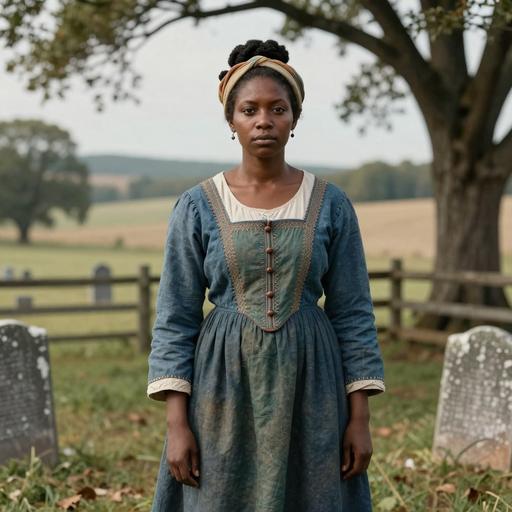
Portrait of ancient individual I8097 from USA, dated 1700 CE - 1850 CE
I8097
USA Modern Era 1700 CE - 1850 CE Modern Period L3e1 Direct
Portrait of ancient individual I8096 from USA, dated 1700 CE - 1850 CE
I8096
USA Modern Era 1700 CE - 1850 CE Modern Period L3e1 Direct
Portrait of ancient individual I8085 from USA, dated 1700 CE - 1850 CE
I8085
USA Modern Era 1700 CE - 1850 CE Modern Period L3e1 Direct
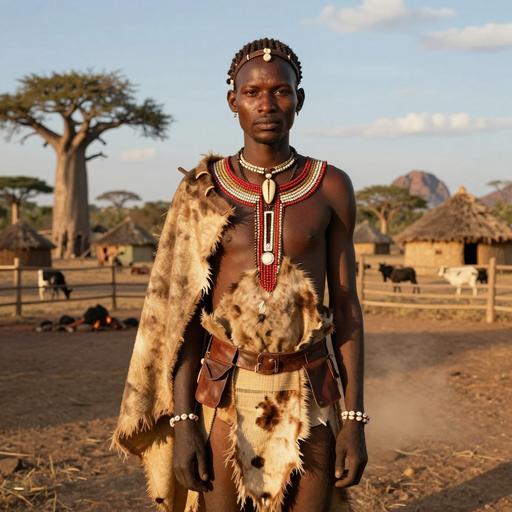
Portrait of ancient individual XAR001 from Botswana, dated 700 CE - 1000 CE
XAR001
Botswana Xaro Early Iron Age in Botswana 700 CE - 1000 CE Xaro Culture L3e1a2 Downstream
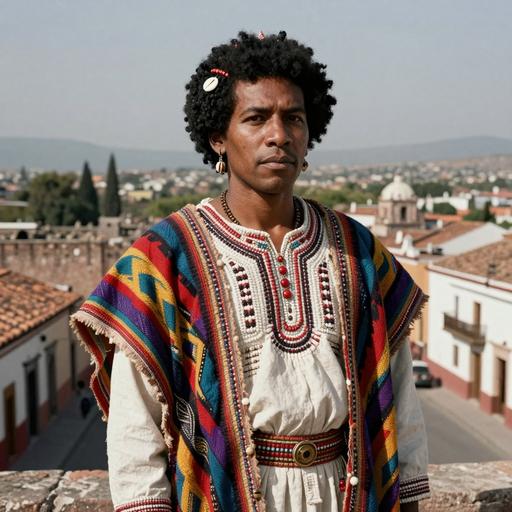
Portrait of ancient individual SJN003 from Mexico, dated 1436 CE - 1472 CE
SJN003
Mexico Afro-Mexican Community of Colonial Mexico City 1436 CE - 1472 CE Afro-Mexican L3e1a1a Downstream
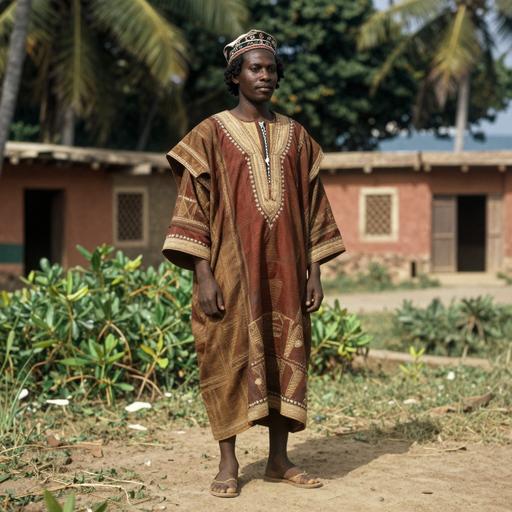
Portrait of ancient individual I19420 from Kenya, dated 1446 CE - 1614 CE
I19420
Kenya Swahili Culture of Mtwapa 1446 CE - 1614 CE Mtwapa L3e1d1 Downstream
Portrait of ancient individual mfo001 from South Africa, dated 1483 CE - 1644 CE
mfo001
South Africa South Africa 2200 Years Before Present 1483 CE - 1644 CE Terminal Stone Age L3e1b2 Downstream
Portrait of ancient individual I15333 from USA, dated 1700 CE - 1850 CE
I15333
USA Modern Era 1700 CE - 1850 CE Modern Period L3e1a1a Downstream
Portrait of ancient individual STH_281 from St. Helena, dated 1840 CE - 1940 CE
STH_281
St. Helena St. Helena 1840 CE - 1940 CE St. Helena Colonial L3e1e Downstream
Portrait of ancient individual STH_344 from St. Helena, dated 1840 CE - 1940 CE
STH_344
St. Helena St. Helena 1840 CE - 1940 CE St. Helena Colonial L3e1a3a Downstream
Chapter VI

Carrier Distribution Map

Geographic distribution of 11 ancient DNA samples (direct and subclade carriers of L3E1)

Direct carrier Subclade carrier
Time Period Filter
All Time Periods
Showing all samples
Chapter VII

Temporal Distribution

Distribution of carriers across archaeological periods

Chapter VIII

Geographic Distribution

Distribution by country of origin (direct and subclade carriers shown by default)

Chapter IX

Country × Era Distribution

Cross-tabulation of carrier countries and archaeological periods (direct and subclade carriers shown by default)

Data

Data & Provenance

Source information and data quality

Last Updated 2026-02-16
Confidence Score 50/100
Coverage Low
Data Source

We use the latest phylotree for MTDNA haplogroup classification and data.