The Story
The journey of mtDNA haplogroup M7A1
Origins and Evolution
mtDNA haplogroup M7A1 is a downstream branch of the broader M7 maternal lineage, itself a major branch of macro-haplogroup M that became established in eastern Eurasia. As a subclade of the M7A group (with intermediate notation such as M7AA in some phylogenies), M7A1 likely arose in the Late Pleistocene to early Holocene (roughly within the last ~10–15 kya in most coalescence estimates for similar subclades). Its emergence fits the pattern of regional diversification of M-derived lineages across East and Southeast Asia as human populations adapted to post-glacial environments and later to Holocene coastal and riverine ecologies.
Population-genetic surveys and mitogenome sequencing show that M7 lineages underwent local diversification in multiple East Asian refugia. M7A1 represents one of these localized expansions, preserving signals of maternal continuity in particular geographic corridors (coastal Japan, Korean Peninsula, southern China and adjoining areas).
Subclades (if applicable)
M7A1 sits below M7A (and categorized under intermediate tags such as M7AA in some builds of Phylotree) and may itself include finer sub-branches identified by full mitogenome studies. High-resolution sequencing often resolves additional internal structure (for example, M7A1a-like branches in some datasets), but the exact subclade topology and geographic partitioning of M7A1 require broader sampling across East and Southeast Asian populations to be fully characterized.
Because M7A1 is an intermediate clade in current nomenclature, it is useful as a phylogenetic connector between more basal M7A lineages and the youngest, geographically restricted daughter clades identified in dense mitogenome trees.
Geographical Distribution
The highest frequencies and the most consistent occurrences of M7A1 are documented in northeast and parts of east Asia, with lower but detectable presence further south:
- Japan: M7A-related lineages (including M7A1) are relatively common in several Japanese population samples and especially notable in island and coastal groups where maternal continuity from the Pleistocene/Holocene transition is strong.
- Korea: M7A1 is present in Korean mitogenome surveys at low-to-moderate frequencies, reflecting shared regional maternal ancestry with neighboring Japan and northern China.
- Southern China and Southeast Asia: M7A1 and closely related M7A branches appear in southern Chinese coastal populations and in parts of mainland Southeast Asia at lower frequencies, consistent with patterns of coastal dispersal and gene flow.
Overall, M7A1 displays a clear East Asian focus, with declining frequency radiating outward from core northeastern/eastern loci.
Historical and Cultural Significance
M7A1’s distribution and time-depth make it relevant to several major prehistoric processes in East Asia:
- Late Pleistocene / Early Holocene continuity: The age and geography of M7A1 align with maternal lineages that persisted through the Last Glacial Maximum and diversified during the early Holocene as climatic amelioration allowed demographic expansion.
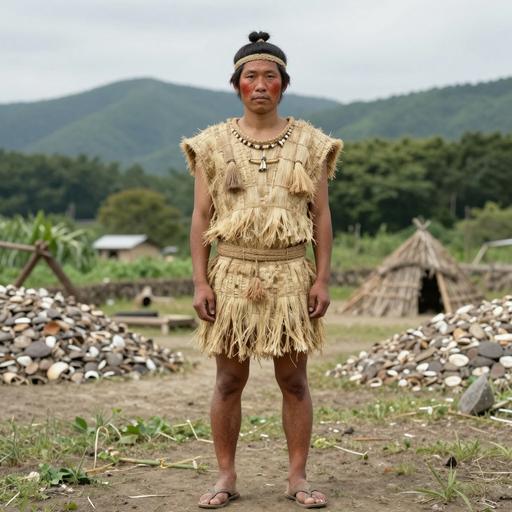
- Jomon-period affinities in Japan: M7A-type lineages (including M7A1 sublineages) are observed in samples and modern populations tied to Jomon-descended groups, suggesting at least partial continuity of female lines in parts of the Japanese archipelago.
- Neolithic and post-Neolithic interactions: Lower-frequency occurrences in continental East and Southeast Asia point to later episodes of population contact, coastal migration, and gene flow associated with Holocene foragers and early farmers.
These associations are inferential and derive from combining phylogenetic age estimates with the spatial patterning of mitogenome data; finer resolution depends on additional ancient DNA and broad modern mitogenome sampling.
Conclusion
mtDNA haplogroup M7A1 is an East Asian maternal lineage that documents localized Holocene diversification of the M7 clade. It is particularly informative about maternal histories in Japan and adjacent regions and serves as an intermediate phylogenetic marker linking deeper M7A diversity to more recent, regionally restricted daughter branches. Continued high-resolution mitogenome sequencing and ancient DNA sampling will refine its internal structure, age estimates, and precise roles in prehistoric population movements across East and Southeast Asia.
Key Points
- Origins and Evolution
- Subclades (if applicable)
- Geographical Distribution
- Historical and Cultural Significance
- Conclusion