Menu
Currency
mtDNA Haplogroup • Maternal Lineage

M8A2B

mtDNA Haplogroup M8A2B

~12,000 years ago
Northeast Asia
0 subclades
8 ancient samples
Scroll to explore
Chapter I

The Story

The journey of mtDNA haplogroup M8A2B

Origins and Evolution

Haplogroup M8A2B is a downstream branch within the broader M8 lineage of Eurasian mtDNA, itself a derivative of macro-haplogroup M that diversified in Asia after the initial Out-of-Africa expansions. As a subclade of M8A2A, M8A2B represents a relatively recent split that likely occurred during the Late Pleistocene to early Holocene (the terminal Pleistocene — roughly the last ~15,000 years), a period of climatic change, population dispersals and local adaptation across Northeast Asia.

Phylogenetically, M8A2B sits within the M8a/M8A radiation that is characteristic of East Asian and Siberian maternal lineages. The pattern of short internal branch lengths and the rarity of reported samples suggest a localized origin followed by low-to-moderate demographic persistence rather than a major continent-wide expansion.

Subclades

As an intermediate/terminal clade currently defined in Phylotree-style nomenclature, M8A2B may have few well-characterized downstream subclades (or may itself be a terminal branch), depending on future sequencing and sampling. Its primary taxonomic importance is to link the upstream diversity of M8A2A with any microsubstructure detected in Northeast Asian and adjacent Siberian maternal lineages. Continued high-resolution mitogenomic surveys could reveal additional internal structure under M8A2B.

Geographical Distribution

Genetic and phylogeographic patterns for M8-derived lineages indicate a concentration in Northeast Asia (including the Amur River basin, the Japanese archipelago, the Korean peninsula, and parts of eastern Siberia). For M8A2B specifically, the best-supported inferences are that it is:

  • Present at low to moderate frequencies in localized populations of the Amur-Sakhalin-Primorye region and some historically mobile Tungusic-speaking groups.
  • Occasionally detected among Jōmon-descended or related populations in northern Japan and in some coastal Okhotsk and Amur hunter-gatherer contexts.

Because reports of M8A2B are sparse in the literature and many studies lump subclades at coarser resolutions, its known distribution is incomplete and will benefit from targeted whole-mitochondrial sequencing in under-sampled Northeast Asian groups.

Historical and Cultural Significance

The inferred age and regional concentration of M8A2B tie it to post-glacial recolonization and long-term local continuity among Mesolithic and early Neolithic hunter-gatherer communities of the Amur-Sakhalin-Primorye corridor and adjacent islands. This corridor is archaeologically important as a zone of interaction between continental Siberian groups, coastal foragers, and early maritime cultures (including Jōmon and later Okhotsk cultural horizons).

M8-derived haplogroups more broadly are often observed in ancient and modern samples associated with these cultures, suggesting that lineages like M8A2B can serve as markers of maternal continuity, localized demographic stability, and microevolutionary processes (founder effects, drift) in high-latitude East Asia.

Conclusion

M8A2B is best interpreted as a regional, low-frequency mtDNA lineage that documents maternal micro-differentiation in Northeast Asia during the Late Pleistocene–Holocene transition. Its primary value at present is phylogenetic: linking M8A2A to more localized maternal histories and serving as a target for future mitogenomic sampling that can clarify patterns of migration, continuity, and interaction among Siberian, Amur, and northern Japanese populations.

Continued whole-mitogenome sequencing across under-sampled Northeast Asian and Siberian groups will refine the age estimates, reveal any hidden subclades, and better define the archaeological associations of M8A2B.

Key Points

  • Origins and Evolution
  • Subclades
  • Geographical Distribution
  • Historical and Cultural Significance
  • Conclusion
Chapter II

Tree & Relationships

Phylogenetic context and subclades

Evolution Path

This haplogroup's evolutionary journey from its earliest ancestor to the present.

Steps Haplogroup Age Estimate Archaeology Era Time Passed Immediate Descendants Tested Modern Descendants Ancient Connections
1 M8A2B Current ~12,000 years ago 🌾 Neolithic 12,000 years 0 1 8
2 M8A2A 1 8 0
3 M8A2 ~15,000 years ago 🏹 Mesolithic 15,000 years 1 8 0
4 M8A2'3 1 8 0
5 M8A ~24,000 years ago 🦴 Paleolithic 24,000 years 2 13 4
6 M8 ~42,000 years ago 🦴 Paleolithic 42,000 years 2 722 5
7 M ~60,000 years ago 🦴 Paleolithic 60,000 years 42 2,162 41
8 L3 ~70,000 years ago 🦴 Paleolithic 70,000 years 7 23,542 6
9 L3'4 2 23,581 0
10 L3'4'6 2 23,584 0
11 L2'3'4'6 2 24,475 0
12 L2'3'4'5'6'7 2 24,488 0
13 L1'2'3'4'5'6'7 2 24,903 0
14 L ~160,000 years ago 🦴 Paleolithic 160,000 years 2 25,205 5

Subclades (0)

Terminal branch - no known subclades

Chapter III

Where in the World

Geographic distribution and modern presence

Place of Origin

Northeast Asia

Modern Distribution

The populations where mtDNA haplogroup M8A2B is found include:

  1. Amur River basin hunter-gatherer-descended groups (e.g., Hezhen/Hezhe-related lineages)
  2. Indigenous Siberian groups of the Russian Far East (e.g., some Tungusic-speaking communities)
  3. Northern Japanese populations with Jōmon ancestry signatures
  4. Coastal Okhotsk-associated groups and Sakhalin island populations
  5. Northeastern Chinese minority populations in border regions (sporadic occurrences)
CHAPTER IV

When in Time

Your haplogroup in the context of human history

~12k years ago

Haplogroup M8A2B

Your mtDNA haplogroup emerged in Northeast Asia

Northeast Asia
~10k years ago

Neolithic Revolution

Agriculture begins, settled communities form

~5k years ago

Bronze Age

Metalworking, writing, and early civilizations

~3k years ago

Iron Age

Iron tools, expanded trade networks

~2k years ago

Classical Antiquity

Greek and Roman civilizations flourish

Present

Present Day

Modern era

Your Haplogroup
Historical Era
Chapter IV-B

Linked Cultures

Ancient cultures associated with mtDNA haplogroup M8A2B

Cultural Heritage

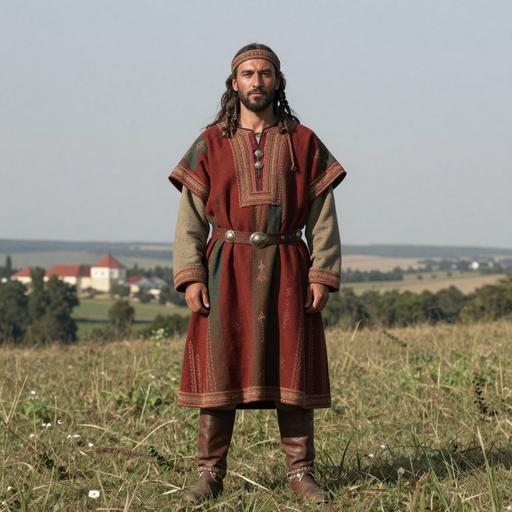
These ancient cultures have been linked to haplogroup M8A2B based on matching ancient DNA samples from archaeological excavations. The presence of this haplogroup in these cultures provides insights into the migrations and population movements of populations carrying this haplogroup.

Avar Avar Culture Chinese Bronze-Iron Dong Son Culture Late Medieval Mongolian Late Russian Iron Age Santa Rosa Island Culture Yellow River Culture
Culture assignments are based on archaeological context of ancient DNA samples and may represent regional associations during specific time periods.
Chapter V

Sample Catalog

8 direct carriers of haplogroup M8A2B

8 / 8 samples
Portrait Sample Country Era Date Culture mtDNA Match
Portrait of ancient individual LGM41 from China, dated 250 BCE - 50 BCE
LGM41
China Late Bronze Age to Iron Age China 250 BCE - 50 BCE Chinese Bronze-Iron M8a2b Direct
Portrait of ancient individual LGM41 from China, dated 250 BCE - 50 BCE
LGM41
China Iron Age China 250 BCE - 50 BCE M8a2b Direct
Portrait of ancient individual RKF029 from Hungary, dated 650 CE - 900 CE
RKF029
Hungary Middle Avar Period Hungary 650 CE - 900 CE Avar Culture M8a2b Direct
Portrait of ancient individual RKF031 from Hungary, dated 650 CE - 800 CE
RKF031
Hungary Middle to Late Avar Period 650 CE - 800 CE Avar M8a2b Direct
Portrait of ancient individual RKF040 from Hungary, dated 650 CE - 800 CE
RKF040
Hungary Middle to Late Avar Period 650 CE - 800 CE Avar M8a2b Direct
Portrait of ancient individual RKF141 from Hungary, dated 650 CE - 800 CE
RKF141
Hungary Middle to Late Avar Period 650 CE - 800 CE Avar M8a2b Direct
Portrait of ancient individual RKF157 from Hungary, dated 650 CE - 800 CE
RKF157
Hungary Middle to Late Avar Period 650 CE - 800 CE Avar M8a2b Direct
Portrait of ancient individual RKF213 from Hungary, dated 650 CE - 800 CE
RKF213
Hungary Middle to Late Avar Period 650 CE - 800 CE Avar M8a2b Direct
Chapter VI

Carrier Distribution Map

Geographic distribution of 8 ancient DNA samples (direct and subclade carriers of M8A2B)

Direct carrier
Time Period Filter
All Time Periods
Showing all samples
Chapter VII

Temporal Distribution

Distribution of carriers across archaeological periods

Chapter VIII

Geographic Distribution

Distribution by country of origin (direct and subclade carriers shown by default)

Chapter IX

Country × Era Distribution

Cross-tabulation of carrier countries and archaeological periods (direct and subclade carriers shown by default)

Data

Data & Provenance

Source information and data quality

Last Updated 2026-06-14
Confidence Score 50/100
Coverage Low
Data Source

We use the latest phylotree for MTDNA haplogroup classification and data.