Menu
Currency
Ancestry
mtDNA Haplogroup • Maternal Lineage

T2B23

mtDNA Haplogroup T2B23

~6,000 years ago
Near East / Mediterranean fringe
0 subclades
Scroll to explore
Chapter I

The Story

The journey of mtDNA haplogroup T2B23

Origins and Evolution

Haplogroup T is a subclade of haplogroup JT and has long been associated with post‑glacial and Neolithic expansions from Near Eastern and Mediterranean source populations into Europe. T2B23 sits beneath T2B2 in the mtDNA phylogeny; T2B2 itself is estimated to have arisen on the Near Eastern / Mediterranean margin following the Last Glacial Maximum (the parent is commonly dated at ~11 kya). Given that placement, T2B23 is best interpreted as a younger derivative that likely formed during the later Neolithic or Bronze Age period as populations carrying T2B2 diversified while spreading through coastal and inland Mediterranean corridors.

Mutational motifs that define T2B23 are a small number of coding‑region and control‑region changes downstream of the T2B2 diagnostic mutations; these private mutations allow modern and ancient samples to be assigned to T2B23 when complete mitogenomes or high‑coverage control‑region data are available. The relative scarcity of reported T2B23 lineages in published datasets suggests a moderate to low effective population size for this subclade since its origin.

Subclades (if applicable)

As of the most recent public mitogenome compilations, T2B23 appears to be a terminal or lightly branched clade with few well‑characterized downstream subclades. Where present, minor internal branches reflect localized diversification in Mediterranean and adjacent European populations. Continued sequencing of complete mitogenomes from underrepresented regions (e.g., southern Balkans, western Anatolia, North Africa) could reveal additional substructure within T2B23.

Geographical Distribution

T2B23 is most often observed at low to moderate frequencies along the Near Eastern and Mediterranean margins and in parts of Southern and Central Europe. Its modern distribution mirrors that of many T2B2 derivatives and Neolithic‑associated maternal lineages: higher relative incidence in Italy, the central Mediterranean, parts of the Balkans and Iberia, with lower‑frequency occurrences in eastern Europe, the Caucasus, North Africa and sporadic findings in Central Asia. The haplogroup has also been reported in some Jewish maternal lineages, consistent with shared Near Eastern ancestry and historical diasporas.

In ancient DNA studies, T2B and T2B2 lineages are documented in early farmer contexts; T2B23 itself has been identified in a small number of archaeological samples in published and unpublished datasets, linking it to farming or post‑Neolithic communities in the Mediterranean and nearby regions.

Historical and Cultural Significance

Because T2B23 derives from a clade associated with Neolithic expansions, its temporal and spatial distribution is valuable for reconstructing maternal gene flow during the spread of farming and subsequent population movements. The haplogroup's presence in both archaeological farmer assemblages and in modern Mediterranean populations supports a model of partial continuity and localized admixture rather than wholesale replacement.

The lineage may also reflect later mobility associated with Bronze Age networked societies (maritime and overland trade), as well as historical movements such as Phoenician, Greek, Roman, and medieval exchanges across the Mediterranean — processes that can distribute otherwise regionally concentrated mtDNA lineages.

Conclusion

T2B23 is a relatively recent, regionally focused mtDNA subclade of T2B2 that provides a genetic signal of Near Eastern / Mediterranean maternal ancestry entering Europe during and after the Neolithic. While currently represented at low to moderate frequencies and with limited deep substructure, T2B23 contributes to the tapestry of maternal lineages that document the spread of farming and subsequent demographic interactions across the Mediterranean and adjacent regions. Additional complete mitogenome sequencing from targeted regions will sharpen estimates of its age, internal diversity, and archaeological associations.

Key Points

  • Origins and Evolution
  • Subclades (if applicable)
  • Geographical Distribution
  • Historical and Cultural Significance
  • Conclusion
Chapter II

Tree & Relationships

Phylogenetic context and subclades

Evolution Path

This haplogroup's evolutionary journey from its earliest ancestor to the present.

Steps Haplogroup Age Estimate Archaeology Era Time Passed Immediate Descendants Tested Modern Descendants Ancient Connections
1 T2B23 Current ~6,000 years ago 🪨 Chalcolithic 5,500 years 0 4 0
2 T2B2 ~11,000 years ago 🌾 Neolithic 11,000 years 6 22 0
3 T2B ~14,000 years ago 🏹 Mesolithic 14,000 years 10 320 413
4 T2 ~21,000 years ago 🏹 Mesolithic 21,000 years 13 940 70
5 T ~27,000 years ago 🦴 Paleolithic 27,000 years 3 1,646 84
6 JT ~40,000 years ago 🦴 Paleolithic 40,000 years 2 3,283 1
7 R2'JT 2 3,317 0
8 R ~55,000 years ago 🦴 Paleolithic 55,000 years 17 17,854 57
9 NA 1 17,854 0
10 N ~60,000 years ago 🦴 Paleolithic 60,000 years 16 20,371 13
11 L3 ~70,000 years ago 🦴 Paleolithic 70,000 years 7 23,542 6
12 L3'4 2 23,581 0
13 L3'4'6 2 23,584 0
14 L2'3'4'6 2 24,475 0
15 L2'3'4'5'6'7 2 24,488 0
16 L1'2'3'4'5'6'7 2 24,903 0
17 L ~160,000 years ago 🦴 Paleolithic 160,000 years 2 25,205 5

Subclades (0)

Terminal branch - no known subclades

Siblings (5)

Other branches from the same parent haplogroup

Chapter III

Where in the World

Geographic distribution and modern presence

Place of Origin

Near East / Mediterranean fringe

Modern Distribution

The populations where mtDNA haplogroup T2B23 is found include:

  1. Southern and Central European populations (Italy, Iberia, Balkans)
  2. Eastern European populations (sporadic occurrences)
  3. Near Eastern populations (Anatolia, Levant)
  4. North African populations (lower frequencies along the Maghreb and Mediterranean coast)
  5. Caucasus populations (sporadic occurrences)
  6. Central Asian populations (very low frequencies, sporadic)
  7. Jewish populations (including some diaspora lineages, e.g., Ashkenazi and Sephardi groups)
CHAPTER IV

When in Time

Your haplogroup in the context of human history

~10k years ago

Neolithic Revolution

Agriculture begins, settled communities form

~5k years ago

Haplogroup T2B23

Your mtDNA haplogroup emerged in Near East / Mediterranean fringe

Near East / Mediterranean fringe
~5k years ago

Bronze Age

Metalworking, writing, and early civilizations

~3k years ago

Iron Age

Iron tools, expanded trade networks

~2k years ago

Classical Antiquity

Greek and Roman civilizations flourish

Present

Present Day

Modern era

Your Haplogroup
Historical Era
Chapter IV-B

Linked Cultures

Ancient cultures associated with mtDNA haplogroup T2B23

Cultural Heritage

These ancient cultures have been linked to haplogroup T2B23 based on matching ancient DNA samples from archaeological excavations. The presence of this haplogroup in these cultures provides insights into the migrations and population movements of populations carrying this haplogroup.

Alföld Linear Pottery Körös Culture Lengyel Culture Linear Pottery Culture Vinča Culture
Culture assignments are based on archaeological context of ancient DNA samples and may represent regional associations during specific time periods.
Chapter V

Sample Catalog

30 direct carriers of haplogroup T2B23

30 / 30 samples
Portrait Sample Country Era Date Culture mtDNA Match
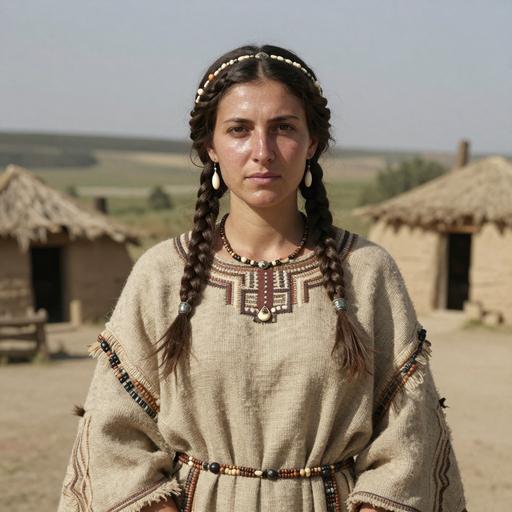
Portrait of ancient individual RKF165 from Hungary, dated 550-850 CE
RKF165
Hungary Hungary Avar 550-850 CE Avar T2b23 Direct
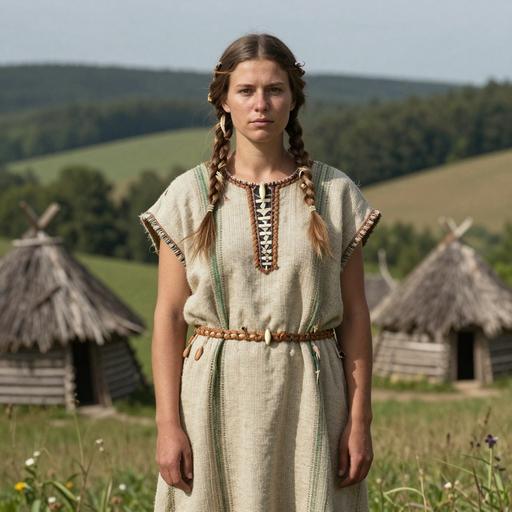
Portrait of ancient individual RKF271 from Hungary, dated 550-850 CE
RKF271
Hungary Hungary Avar 550-850 CE Avar T2b23 Direct
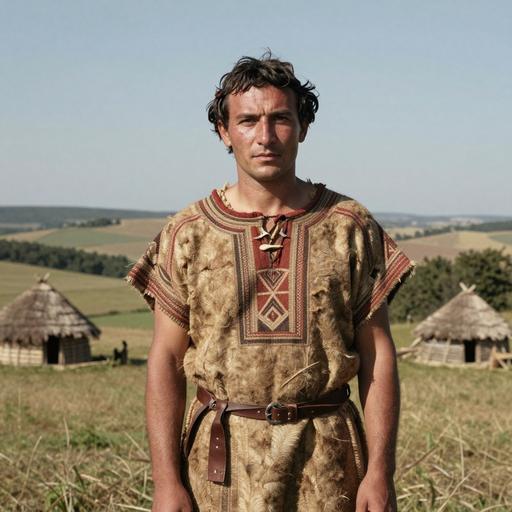
Portrait of ancient individual RKF280 from Hungary, dated 580 CE - 804 CE
RKF280
Hungary Hungary Avar 580 CE - 804 CE Avar T2b23 Direct
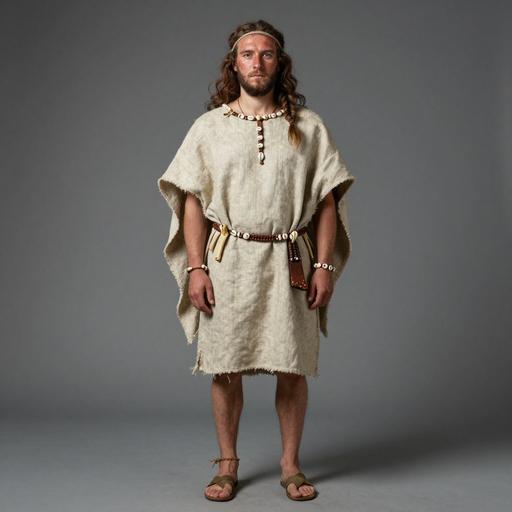
Portrait of ancient individual I16254 from Albania, dated 600-400 BCE
I16254
Albania The Transition to Iron Age in Albania 600-400 BCE Albanian Iron Age T2b23 Direct
Portrait of ancient individual PCA0124 from Poland, dated 900-1000 CE
PCA0124
Poland Iron Age Niemcza Culture 900-1000 CE Niemcza Culture T2b23 Direct
Portrait of ancient individual OTTM_94 from Germany, dated 1496-1286 calBCE (3124±36 BP, MAMS-21547)
OTTM_94
Germany Germany OberottmarshausenKiesgrubeLauter MBA 1496-1286 calBCE (3124±36 BP, MAMS-21547) Germany_OberottmarshausenKiesgrubeLauter_MBA T2b23 Direct
Portrait of ancient individual I24342 from Croatia, dated 1501-1421 calBCE (3185±20 BP, UCIAMS-233623)
I24342
Croatia Croatia MBA 1501-1421 calBCE (3185±20 BP, UCIAMS-233623) Croatian Middle Bronze Age T2b23 Direct
Portrait of ancient individual KNE001 from Czech Republic, dated 2194-1954 calBCE (3679±34 BP, Bln-5436)
KNE001
Czech Republic Early Bronze Age Unetice Culture, Bohemia, Czech Republic 2194-1954 calBCE (3679±34 BP, Bln-5436) Unetice Culture T2b23 Direct
Portrait of ancient individual KNE004 from Czech Republic, dated 2197-1986 calBCE (3704±24 BP, MAMS-30773)
KNE004
Czech Republic Early Bronze Age Unetice Culture, Bohemia, Czech Republic 2197-1986 calBCE (3704±24 BP, MAMS-30773) Unetice Culture T2b23 Direct
Portrait of ancient individual KNE005 from Czech Republic, dated 2203-2036 calBCE (3730±24 BP, MAMS-38478)
KNE005
Czech Republic Early Bronze Age Unetice Culture, Bohemia, Czech Republic 2203-2036 calBCE (3730±24 BP, MAMS-38478) Unetice Culture T2b23 Direct
Chapter VI

Carrier Distribution Map

Geographic distribution of 30 ancient DNA samples (direct and subclade carriers of T2B23)

Direct carrier
Time Period Filter
All Time Periods
Showing all samples
Chapter VII

Temporal Distribution

Distribution of carriers across archaeological periods

Chapter VIII

Geographic Distribution

Distribution by country of origin (direct and subclade carriers shown by default)

Chapter IX

Country × Era Distribution

Cross-tabulation of carrier countries and archaeological periods (direct and subclade carriers shown by default)

Data

Data & Provenance

Source information and data quality

Last Updated 2026-02-16
Confidence Score 50/100
Coverage Low
Data Source

We use the latest phylotree for MTDNA haplogroup classification and data.