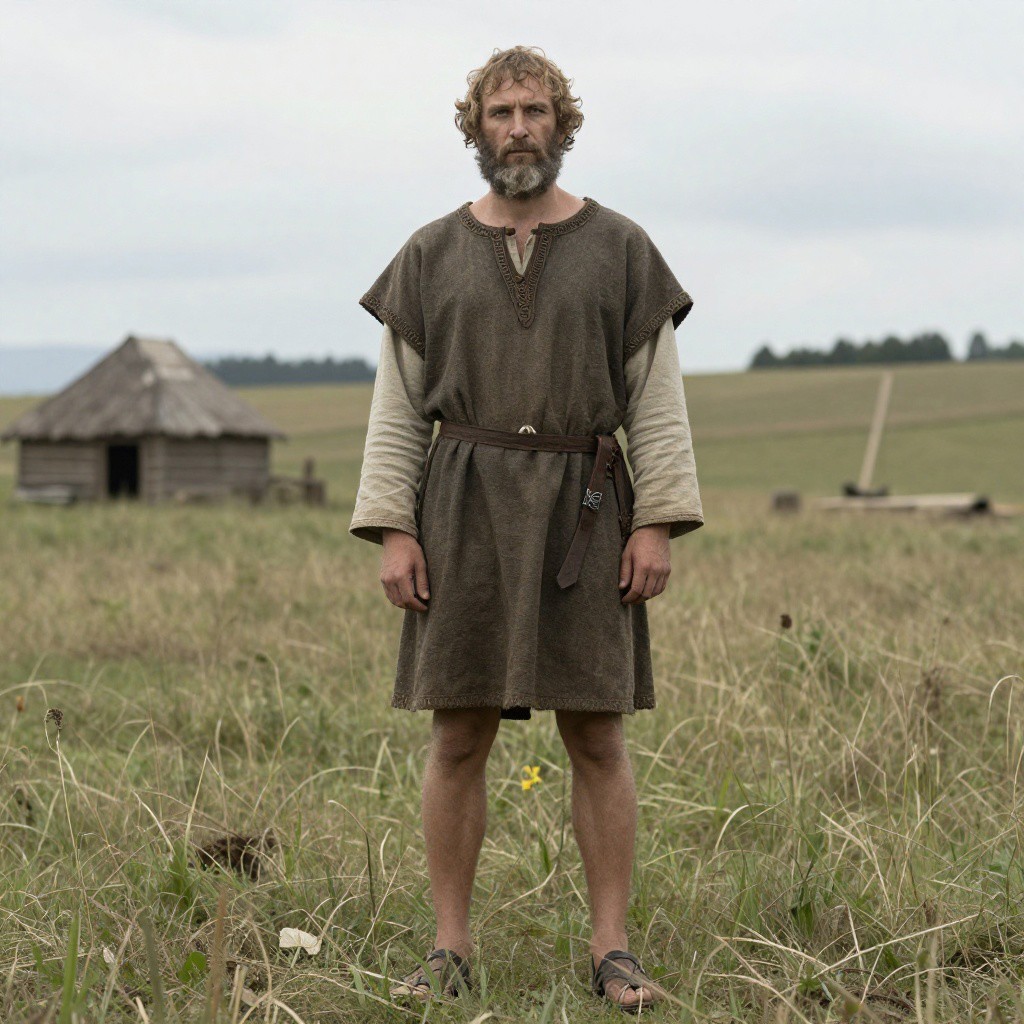
mtDNA · Maternal lineage

T2B8

mtDNA Haplogroup T2B8

A reference profile for one lineage branch. Shared haplogroups do not establish a family relationship or cultural identity.

Reference profile

Branch background

Historical context for mtDNA lineage branch T2B8

Origins and Evolution

mtDNA haplogroup T2B8 is a derived lineage within the broader T2B clade (itself a branch of T2). The parent clade T2B is thought to have diversified on the Near Eastern / Mediterranean fringe after the Last Glacial Maximum (LGM, roughly 14 kya for the parent), and T2B8 represents a later, more localized branching event. Based on phylogenetic position and the archaeological contexts in which T2B lineages appear, T2B8 most plausibly formed during the later Mesolithic or early Neolithic period (a few thousand years after the LGM) and expanded with demographic movements associated with early farming and coastal Mediterranean dispersals.

As with many mtDNA subclades, T2B8 is defined by additional coding-region and control-region mutations that place it downstream of T2B. The exact internal structure of T2B8 is still being refined as more complete mitochondrial genomes are sequenced; at present it is best treated as a modestly aged, regionally distributed branch rather than a deep or highly diverse major clade.

Subclades (if applicable)

At present, T2B8 appears to have limited recognized downstream diversity in public databases and in the published literature, consistent with a relatively recent origin and/or limited demographic expansion. Ongoing aDNA studies and targeted mitogenome sequencing may reveal further substructure (T2B8a, T2B8b, etc.) in the future; however, for many practical purposes T2B8 is treated as a terminal or near-terminal branch within T2B in population-level analyses.

Geographical Distribution

Modern distribution: T2B8 is observed at low to moderate frequencies across the Mediterranean basin and adjacent regions. It is most commonly reported from southern and central Europe (Italy, Iberia, the Balkans), with additional occurrences in eastern Europe and the Near East (Anatolia, the Levant). Low-frequency occurrences are documented in North Africa, the Caucasus, and parts of Central Asia. T2B8 is also found intermittently within Jewish populations, including some Ashkenazi maternal lineages, reflecting historical Near Eastern origins and later diaspora movements.

Ancient DNA: T2B and closely related T2 subclades are well-documented in Neolithic farmer contexts across Europe. For T2B8 specifically, there are a small number of archaeological identifications (several ancient samples in curated databases), consistent with a role in the Neolithic and later prehistoric gene flow into Europe. The limited number of ancient T2B8 samples suggests it was never a dominant maternal lineage but one of many farmer-associated mtDNA types that contributed to the genetic landscape of Europe.

Historical and Cultural Significance

Because T2B8 is tied to the T2B/T2 lineage complex, its history reflects broader processes: the post-glacial re-expansion of human populations from refugia in the Near East and Mediterranean, and the diffusion of farming communities into Europe during the Neolithic. The presence of T2B8 in Mediterranean archaeological contexts aligns with coastal and inland dispersal routes used by early Neolithic farmers (for example, Cardial-Impressed and other maritime-adapted Neolithic groups) as well as later demographic movements across the Mediterranean and into adjacent regions.

In Jewish populations, sporadic occurrences of T2B8 likely reflect retention of maternal lineages that trace back to Near Eastern origins and subsequent admixture with local communities during diaspora episodes.

Conclusion

T2B8 is a regionally distributed, downstream mtDNA lineage of T2B that likely originated on the Near East / Mediterranean fringe in the later Mesolithic to Neolithic timeframe and spread into Europe with farming and subsequent population movements. It is not a major pan-European haplogroup but contributes to the maternal diversity of Mediterranean, Near Eastern, North African, and some Jewish populations. Continued mitogenomic sequencing and ancient DNA sampling will refine its age estimate, internal structure, and detailed prehistoric dynamics.

Key Points

  • Origins and Evolution
  • Subclades (if applicable)
  • Geographical Distribution
  • Historical and Cultural Significance
  • Conclusion
Reference profile

Tree & Relationships

Phylogenetic context and subclades

Evolution Path

Follow the recorded parent branches toward T2B8. Dates are estimates and can change as reference data is revised.

Steps Haplogroup Age Estimate Archaeology Era Time Passed Immediate Descendants Tested Modern Descendants Ancient Connections
1 T2B8 Current ~6,000 years ago Chalcolithic 6,000 years 1 1 0
2 T2B ~14,000 years ago Mesolithic 14,000 years 10 377 413
3 T2 ~21,000 years ago Mesolithic 21,000 years 13 1,141 70
4 T ~27,000 years ago Paleolithic 27,000 years 3 1,950 84
5 JT ~40,000 years ago Paleolithic 40,000 years 2 4,094 1
6 R2'JT - - - 2 4,133 0
7 R ~55,000 years ago Paleolithic 55,000 years 17 22,830 57
8 NA - - - 1 22,830 0
9 N ~60,000 years ago Paleolithic 60,000 years 16 26,150 13
10 L3 ~70,000 years ago Paleolithic 70,000 years 7 30,162 6
11 L3'4 - - - 2 30,212 0
12 L3'4'6 - - - 2 30,216 0
13 L2'3'4'6 - - - 2 31,333 0
14 L2'3'4'5'6'7 - - - 2 31,349 0
15 L1'2'3'4'5'6'7 - - - 2 31,852 0
16 L ~160,000 years ago Paleolithic 160,000 years 2 32,236 5

Siblings (9)

Other branches from the same parent haplogroup

Reference profile

Where in the World

Geographic distribution and modern presence

Recorded origin

Near East / Mediterranean fringe

Modern Distribution

The populations where mtDNA haplogroup T2B8 is found include:

  1. Southern and Central European populations (Italy, Iberia, Balkans)
  2. Eastern European populations
  3. Near Eastern populations (Anatolia, Levant)
  4. North African populations (at lower frequencies)
  5. Caucasus populations (sporadic occurrences)
  6. Central Asian populations (low frequencies)
  7. Jewish populations (including some Ashkenazi lineages)
Historical context

A branch through time

Estimated formation in a broad historical timeline. Period markers provide context and do not imply a connection with particular cultures.

  1. ~10k years ago

    Neolithic Revolution

    Agriculture begins, settled communities form

  2. ~6k years ago

    Haplogroup T2B8

    Estimated formation of this mtDNA branch; dates and locations are reference estimates.

    This branch
  3. ~5k years ago

    Bronze Age

    Metalworking, writing, and early civilizations

  4. ~3k years ago

    Iron Age

    Iron tools, expanded trade networks

  5. ~2.5k years ago

    Classical Antiquity

    Greek and Roman civilizations flourish

  6. Present

    Present Day

    Modern era

Reference profile

Archaeological context

Recorded archaeological associations for mtDNA branch T2B8

Recorded associations

These labels describe archaeological contexts recorded for reference samples linked to T2B8. An association does not establish that all carriers belonged to a culture or followed a particular migration route.

Anatolian Neolithic Ansarve Culture Austria_Avar Bulgarian Neolithic Körös Culture Lazarides Culture Malak Preslavets Culture Saxon Culture Starčevo Starčevo Culture Starčevo-Criș
Culture assignments are based on archaeological context of ancient DNA samples and may represent regional associations during specific time periods.
Reference profile

Sample Catalog

5 direct carriers of haplogroup T2B8

5 shown · 5 matching samples

Portraits are AI-generated illustrations. Sample labels and accession IDs identify the reference records.

Portrait Sample Country Era Date Culture mtDNA Match
AI-generated illustrative portrait of Avar individual, Mödling-An der Goldenen Stiege (Lower Austria, Mödling District), Austria (650-800 CE)
Sample ID: MGS034
Austria Austria Avar 650-800 CE Austria_Avar T2b8 Direct
AI-generated illustrative portrait of Germanic individual, Groningen, Netherlands (700-800 CE)
Sample ID: GRO023
Netherlands Saxon Medieval Groningen, Netherlands 700 CE - 800 CE Saxon Culture T2b8 Direct
AI-generated illustrative portrait of EBA individual, Lazarides (Aegina), Greece (2,881-2,758 BCE)
Sample ID: LAZ017
Greece Early Bronze Age Lazarides 2881-2758 calBCE (4171±25 BP, MAMS-47523) Lazarides Culture T2b8 Direct
AI-generated illustrative portrait of Megalithic Culture individual, Ansarve, Sweden (3,525-3,097 BCE)
Sample ID: ans003
Sweden Megalithic Ansarve, Sweden 3525 BCE - 3097 BCE Ansarve Culture T2b8 Direct
AI-generated illustrative portrait of Megalithic individual, Ansarve, Sweden (3,525-3,097 BCE)
Sample ID: ans003
Sweden Megalithic Cultures 3525 BCE - 3097 BCE T2b8 Direct
MATERNAL LINEAGE · ANCIENT DNA

Ancient lineage evidence map

Follow parent clades toward this branch and explore where ancient carriers were found.

Loading ancient observations…

Markers are archaeological find locations. A dashed connector is an uncertain, proposed geographic transition between consecutive branches supported by multiple dated observations; it is not an exact travel route, birthplace or proof of direct descent. Parent-clade samples may belong to other descendant branches. Gaps remain where evidence is insufficient. Sample dates differ from haplogroup formation dates.

Reference profile

Carrier Distribution Map

Geographic distribution of 5 ancient DNA samples (direct and subclade carriers of T2B8)

Direct carrier
Time Period Filter
All Time Periods
Showing all samples
Reference profile

Temporal Distribution

Distribution of carriers across archaeological periods

Reference profile

Geographic Distribution

Counts by recorded sample country. These reflect the available reference selection, not population frequencies.

Reference profile

Country × Era Distribution

Compare recorded sample counts across countries and archaeological periods. Select a populated cell to inspect a sample.

Data

Data & Provenance

Source information and data quality

Last Updated 2026-02-16
Confidence Score 50/100
Coverage Low

Data Source

Classification, estimated dates and geographic context reflect the recorded reference data and may change as evidence is revised. Sample coverage is uneven; recorded locations and archaeological associations do not establish personal origin or cultural identity.

A haplogroup follows one maternal or paternal line. The branch prediction depends on which markers the DNA file contains. How our analysis works