mtDNA · Maternal lineage

T2H2

mtDNA Haplogroup T2H2

A reference profile for one lineage branch. Shared haplogroups do not establish a family relationship or cultural identity.

Reference profile

Branch background

Historical context for mtDNA lineage branch T2H2

Origins and Evolution

mtDNA haplogroup T2H2 sits within the broader T2 branch of macro-haplogroup T, a lineage that has clear associations with post-glacial and Neolithic demographic events in Western Eurasia. As a subclade derived from the intermediate node T2HB, T2H2 most plausibly arose as a local diversification of T2 lineages that expanded from the Near East into Europe during the early to mid-Holocene. The estimated coalescence time given here (~9 kya) is an informed inference based on the typical ages of comparable T2 subclades and the demographic history of Neolithic farmers, but it should be regarded as provisional pending more complete mitogenome-based dating.

Subclades (if applicable)

T2H2 is described as an intermediate clade linking its parent node (T2HB) with downstream local variants. At present the clade appears to be limited in known diversity compared with major T2 subbranches, and published samples are sparse. In practice, identification of internal subclades of T2H2 will depend on expanded full-mitogenome sequencing of both ancient and modern samples; such sequencing frequently reveals private mutations that define finer-scale substructure within these intermediate nodes.

Geographical Distribution

T2H2 is expected to show a patchy distribution across the Mediterranean, the Balkans, the Caucasus and parts of Western and Central Europe. This expectation is based on the geographic pattern of related T2 subclades, which are common among Early Neolithic farmer-associated remains in Anatolia and parts of Europe and which persist at low-to-moderate frequency among modern populations in southern and central Europe and the Near East. Because T2H2 has not been widely reported in large-scale surveys, its known occurrences are currently rare and geographically scattered; targeted sampling in Anatolia, the Levant, the Balkans and southern Europe is the most likely route to improving knowledge of its true range.

Historical and Cultural Significance

Members of haplogroup T2 (including subclades like T2H2) are frequently interpreted in population-genetic studies as part of the maternal component associated with Early European Farmer (EEF) expansions from Anatolia into Europe during the Neolithic. Thus, T2H2 may have been carried by farming communities associated with early Neolithic cultural complexes (e.g., Cardial, Linearbandkeramik) and later integrated into regional gene pools during successive demographic events (Bronze Age movements, local continuity). While T2 lineages are occasionally found in later archaeological contexts (including Bell Beaker and Bronze Age assemblages), T2H2 itself should currently be considered associated with Neolithic farmer ancestry until further aDNA confirmations allow more precise cultural links.

Conclusion

T2H2 is a modestly diversified, relatively rare maternal lineage nested within T2 that likely arose in the Near East or adjacent regions around the early Holocene and spread into Europe with Neolithic expansions. Its current characterization is limited by the scarcity of published full mitogenomes assigned to this node; additional modern and ancient mitogenome sequencing will be required to refine its age, internal structure, and precise regional distribution. Researchers and community testers interested in the maternal history of Neolithic and post-Neolithic Europe should prioritize sequencing and reporting of complete mtDNA genomes that fall under T2HB/T2H to clarify the status of T2H2.

Key Points

  • Origins and Evolution
  • Subclades (if applicable)
  • Geographical Distribution
  • Historical and Cultural Significance
  • Conclusion
Reference profile

Tree & Relationships

Phylogenetic context and subclades

Evolution Path

Follow the recorded parent branches toward T2H2. Dates are estimates and can change as reference data is revised.

Steps Haplogroup Age Estimate Archaeology Era Time Passed Immediate Descendants Tested Modern Descendants Ancient Connections
1 T2H2 Current ~9,000 years ago Neolithic 9,000 years 0 1 0
2 T2HB - - - 1 1 0
3 T2H ~9,000 years ago Neolithic 9,000 years 2 1 9
4 T2 ~21,000 years ago Mesolithic 21,000 years 13 1,141 70
5 T ~27,000 years ago Paleolithic 27,000 years 3 1,950 84
6 JT ~40,000 years ago Paleolithic 40,000 years 2 4,094 1
7 R2'JT - - - 2 4,133 0
8 R ~55,000 years ago Paleolithic 55,000 years 17 22,830 57
9 NA - - - 1 22,830 0
10 N ~60,000 years ago Paleolithic 60,000 years 16 26,150 13
11 L3 ~70,000 years ago Paleolithic 70,000 years 7 30,162 6
12 L3'4 - - - 2 30,212 0
13 L3'4'6 - - - 2 30,216 0
14 L2'3'4'6 - - - 2 31,333 0
15 L2'3'4'5'6'7 - - - 2 31,349 0
16 L1'2'3'4'5'6'7 - - - 2 31,852 0
17 L ~160,000 years ago Paleolithic 160,000 years 2 32,236 5

Subclades (0)

Terminal branch - no recorded subclades

Reference profile

Where in the World

Geographic distribution and modern presence

Recorded origin

Near East / Western Eurasia

Modern Distribution

The populations where mtDNA haplogroup T2H2 is found include:

  1. Anatolian / Anatolian Neolithic-associated individuals and modern Anatolian populations
  2. Near Eastern populations (Levant, eastern Mediterranean)
  3. Southern European populations (Italy, Greece, Iberian Peninsula) at low-to-moderate frequency
  4. Balkans (modern and ancient samples associated with early farmers)
  5. Caucasus-region populations (scattered occurrences)
  6. Central Europe in contexts linked to Neolithic farmer ancestry
Historical context

A branch through time

Estimated formation in a broad historical timeline. Period markers provide context and do not imply a connection with particular cultures.

  1. ~10k years ago

    Neolithic Revolution

    Agriculture begins, settled communities form

  2. ~9k years ago

    Haplogroup T2H2

    Estimated formation of this mtDNA branch; dates and locations are reference estimates.

    This branch
  3. ~5k years ago

    Bronze Age

    Metalworking, writing, and early civilizations

  4. ~3k years ago

    Iron Age

    Iron tools, expanded trade networks

  5. ~2.5k years ago

    Classical Antiquity

    Greek and Roman civilizations flourish

  6. Present

    Present Day

    Modern era

Reference profile

Archaeological context

Recorded archaeological associations for mtDNA branch T2H2

Recorded associations

These labels describe archaeological contexts recorded for reference samples linked to T2H2. An association does not establish that all carriers belonged to a culture or followed a particular migration route.

Armenian Late Bronze Austria_Avar Carolingian Early Bronze Age Armenian Early Croatian Etruscan Late Hellenistic Armenian Late Roman Sicilian Bronze Age Tepe Hissar Ukraine_Odesa_Eneolithic
Culture assignments are based on archaeological context of ancient DNA samples and may represent regional associations during specific time periods.
Reference profile

Sample Catalog

4 direct carriers of haplogroup T2H2

4 shown · 4 matching samples

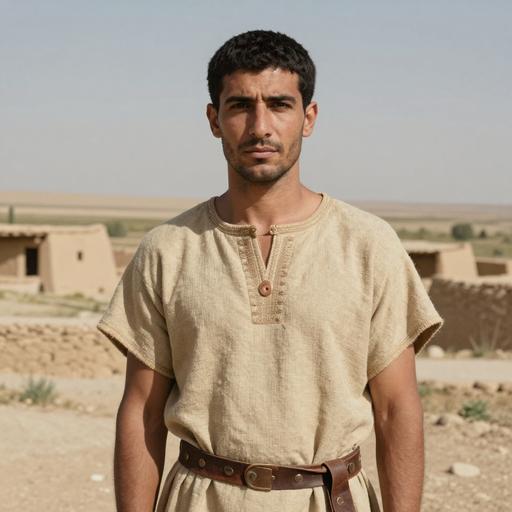
Portraits are AI-generated illustrations. Sample labels and accession IDs identify the reference records.

Portrait Sample Country Era Date Culture mtDNA Match
AI-generated illustrative portrait of Etruscan Civilization individual, Tuscany. Grosseto. Marsiliana d'Albegna, Italy (348-56 BCE)
Sample ID: MAS001
Italy Etruscan Grosseto, Italy 348 BCE - 56 BCE Etruscan T2h2 Direct
AI-generated illustrative portrait of Early Medieval individual, Gornji-Kosinj-Sveta-Ana (Lika-Senj County, Općina Perušić), Croatia (1,000-1,250 CE)
Sample ID: I35014
Croatia Croatia EarlyMedieval 1000-1250 CE Early Croatian T2h2 Direct
AI-generated illustrative portrait of Tepe Hissar individual, Tepe Hissar, Iran (2,575-2,350 BCE)
Sample ID: I2927
Iran Chalcolithic Tepe Hissar 2575-2350 calBCE (3970±30 BP, PSUAMS-1916) Tepe Hissar T2h2 Direct
AI-generated illustrative portrait of Odesa Eneolithic individual, Mayaky (Odesa Oblast, Bilyaivs'kyi District, Mayaky Municipality), Ukraine (4,446-4,340 BCE)
Sample ID: I12704
Ukraine Ukraine Odesa Eneolithic 4446-4340 calBCE (5536±25 BP) [R_combine: (5530±32 BP, OxA-22959), (5545±40 BP, PSUAMS-7793)] Ukraine_Odesa_Eneolithic T2h2 Direct
MATERNAL LINEAGE · ANCIENT DNA

Ancient lineage evidence map

Follow parent clades toward this branch and explore where ancient carriers were found.

Loading ancient observations…

Markers are archaeological find locations. A dashed connector is an uncertain, proposed geographic transition between consecutive branches supported by multiple dated observations; it is not an exact travel route, birthplace or proof of direct descent. Parent-clade samples may belong to other descendant branches. Gaps remain where evidence is insufficient. Sample dates differ from haplogroup formation dates.

Reference profile

Carrier Distribution Map

Geographic distribution of 4 ancient DNA samples (direct and subclade carriers of T2H2)

Direct carrier
Time Period Filter
All Time Periods
Showing all samples
Reference profile

Temporal Distribution

Distribution of carriers across archaeological periods

Reference profile

Geographic Distribution

Counts by recorded sample country. These reflect the available reference selection, not population frequencies.

Reference profile

Country × Era Distribution

Compare recorded sample counts across countries and archaeological periods. Select a populated cell to inspect a sample.

Data

Data & Provenance

Source information and data quality

Last Updated 2026-06-14
Confidence Score 50/100
Coverage Low

Data Source

Classification, estimated dates and geographic context reflect the recorded reference data and may change as evidence is revised. Sample coverage is uneven; recorded locations and archaeological associations do not establish personal origin or cultural identity.

A haplogroup follows one maternal or paternal line. The branch prediction depends on which markers the DNA file contains. How our analysis works