Menu
mtDNA Haplogroup • Maternal Lineage

U1

mtDNA Haplogroup U1

~28,000 years ago
Near East (Western Asia)
2 subclades
Scroll to explore
Chapter I

The Story

The journey of mtDNA haplogroup U1

Origins and Evolution

Haplogroup U1 is a subclade of the ancient mtDNA haplogroup U, which itself has deep roots in Eurasia. U1 most likely arose in the Near East / western Asia region after the Last Glacial Maximum, roughly in the Late Upper Paleolithic to early post-glacial period (on the order of ~25–35 kya), before becoming regionally established. From a phylogenetic perspective, U1 branches from the broader U tree and subsequently split into downstream lineages (commonly described as U1a, U1b and further sublineages), reflecting diversification within West Asian and adjacent populations.

Subclades (if applicable)

U1 divides into several downstream branches that show differing geographic affinities. The major recognized subdivisions are typically labeled U1a and U1b, with additional further splits described in high-resolution mtDNA studies. U1a lineages are often more common in the Caucasus, Iran and parts of South Asia, whereas other U1 subbranches show patchy distributions across the Near East, North Africa and southern Europe. Because U1 is less frequent than some other U subclades (for example U5 or U6), many of its subclades are relatively localized and can exhibit strong geographic structure when sampled densely.

Geographical Distribution

In modern populations U1 is most consistently reported at low-to-moderate frequencies in the Near East and the Caucasus, with detectable presence in Iran, the Levant, Turkey and surrounding areas. U1 also appears intermittently in South Asia (India and Pakistan), North Africa (notably among some Berber groups), and southern and eastern parts of Europe at low frequencies — often reflecting historical gene flow from western Asia. Ancient DNA research and population surveys indicate that U1 represents a Near Eastern maternal component with both deep local continuity and episodes of dispersal tied to prehistoric and historic movements.

Historical and Cultural Significance

U1's pattern — concentrated in the Near East/Caucasus with extensions into South Asia and North Africa — is consistent with a role in post-glacial regional continuity and later demographic events such as Neolithic expansions and historic movements across West Eurasia. U1 lineages could have been carried by early farming communities dispersing from Anatolia and the Levant into adjacent regions, and they also persist in populations that experienced less replacement, producing the localized high-resolution structure seen in some modern groups. While U1 is not typically associated with a single well-known archaeological culture at high frequency, it is part of the maternal genetic landscape that shaped populations during the Neolithic and Bronze Age transitions in western Asia and South Asia.

Conclusion

mtDNA haplogroup U1 is an informative maternal lineage for reconstructing population history in the Near East, the Caucasus and parts of South Asia. Its age and phylogenetic position make it a marker of post-LGM diversification in western Eurasia, and its present-day distribution reflects a mix of ancient regional continuity and later dispersals tied to farming expansions and historic interactions. Though not as common as some sister clades of U, U1 provides useful resolution for regional maternal ancestry studies when combined with dense sampling and high-resolution sequencing.

Key Points

  • Origins and Evolution
  • Subclades (if applicable)
  • Geographical Distribution
  • Historical and Cultural Significance
  • Conclusion

Chapter II

Tree & Relationships

Phylogenetic context and subclades

Evolution Path

This haplogroup's evolutionary journey from its earliest ancestor to the present.

Steps Haplogroup Age Estimate Archaeology Era Time Passed Immediate Descendants Tested Modern Descendants Ancient Connections
1 U1 Current ~28,000 years ago 🦴 Paleolithic 28,000 years 2 79 0
2 U ~46,000 years ago 🦴 Paleolithic 46,000 years 12 2,835 110
3 R ~60,000 years ago 🦴 Paleolithic 60,000 years 12 10,987 57
4 N ~60,000 years ago 🦴 Paleolithic 60,000 years 15 15,452 13
5 L3 ~70,000 years ago 🦴 Paleolithic 70,000 years 11 17,621 6
6 L ~160,000 years ago 🦴 Paleolithic 160,000 years 7 18,987 5

Siblings (11)

Other branches from the same parent haplogroup

Chapter III

Where in the World

Geographic distribution and modern presence


Place of Origin

Near East (Western Asia)

Modern Distribution

The populations where mtDNA haplogroup U1 is found include:

  1. Populations of the Near East (e.g., Iran, Levant, Turkey)
  2. Caucasus populations (e.g., Armenians, Georgians, neighboring groups)
  3. South Asian populations (India and Pakistan, at low-to-moderate frequencies)
  4. North African groups (sporadic presence, including some Berber populations)
  5. Southern and Eastern European populations (low-frequency, often reflecting westward gene flow)
  6. Jewish populations (sporadic presence in some community studies)
  7. Small/localized groups showing regional continuity in West Asia and adjacent areas
CHAPTER IV

When in Time

Your haplogroup in the context of human history

~28k years ago

Haplogroup U1

Your mtDNA haplogroup emerged in Near East (Western Asia)

Near East (Western Asia)
~20k years ago

Last Glacial Maximum

Peak of the last ice age, populations isolated

~10k years ago

Neolithic Revolution

Agriculture begins, settled communities form

~5k years ago

Bronze Age

Metalworking, writing, and early civilizations

~3k years ago

Iron Age

Iron tools, expanded trade networks

~2k years ago

Classical Antiquity

Greek and Roman civilizations flourish

Present

Present Day

Modern era

Your Haplogroup
Historical Era
Chapter IV-B

Linked Cultures

Ancient cultures associated with mtDNA haplogroup U1

Cultural Heritage

These ancient cultures have been linked to haplogroup U1 based on matching ancient DNA samples from archaeological excavations. The presence of this haplogroup in these cultures provides insights into the migrations and population movements of populations carrying this haplogroup.

Assyrian Trading Colony Buran-Kaya Cardial Culture Cioclovina Corded Ware Ganj Dareh Culture Geoksyur Culture Linear Pottery Culture Pitted Ware Tyumen Ukrainian Neolithic Wartberg
Culture assignments are based on archaeological context of ancient DNA samples and may represent regional associations during specific time periods.
Chapter V

Sample Catalog

80 subclade carriers of haplogroup U1 (no exact U1 samples sequenced yet)

50 / 50 samples
Portrait Sample Country Era Date Culture mtDNA Match
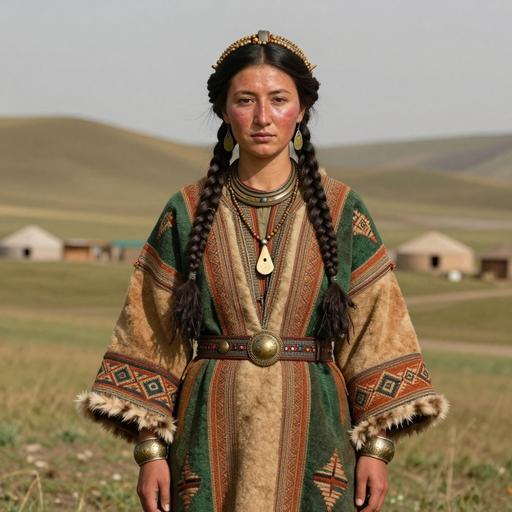
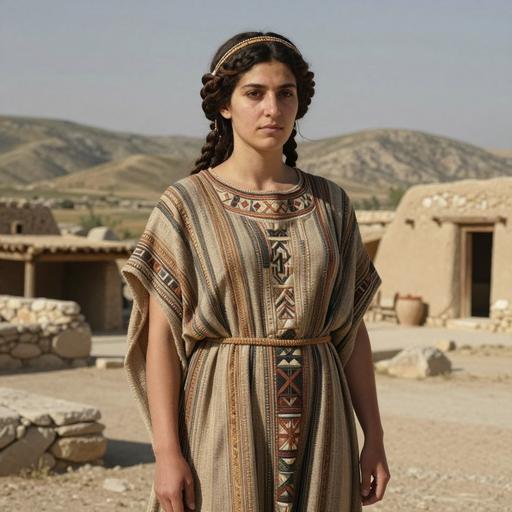
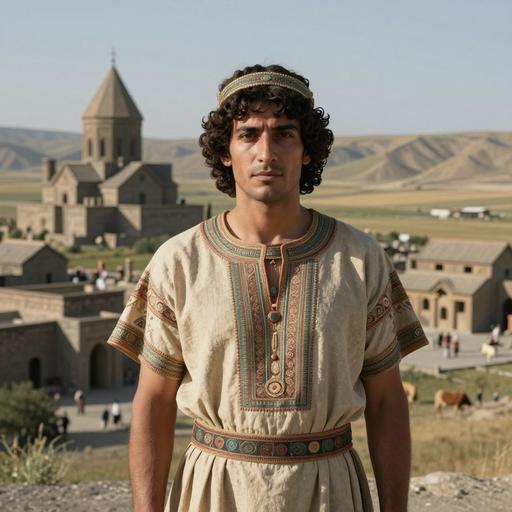
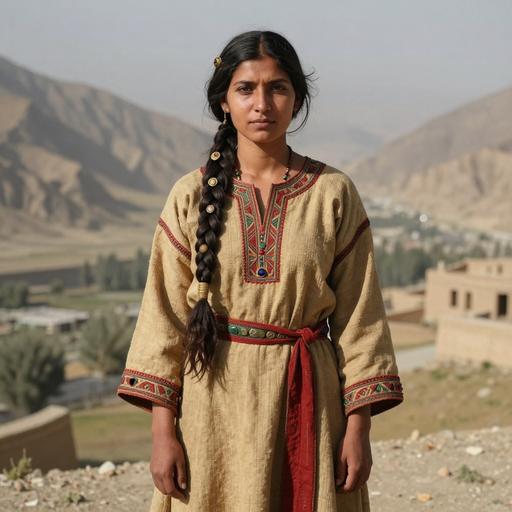
Portrait of ancient individual R114 from Italy, dated 1 CE - 200 CE
R114
Italy Imperial Rome 1 CE - 200 CE Roman Empire U1b1 Downstream
Portrait of ancient individual R42 from Italy, dated 26 CE - 126 CE
R42
Italy Imperial Rome 26 CE - 126 CE Roman Empire U1a1 Downstream
Portrait of ancient individual CHK005 from Kyrgyzstan, dated 300 BCE - 100 CE
CHK005
Kyrgyzstan Iron Age Saka Culture, Kyrgyzstan 300 BCE - 100 CE Saka Culture U1a Downstream
Portrait of ancient individual I26764 from Croatia, dated 300 CE - 450 CE
I26764
Croatia Roman Period Croatia (Sisak-Pogorelec) 300 CE - 450 CE Roman Croatia U1a1a Downstream
Portrait of ancient individual I33812 from Croatia, dated 300 CE - 500 CE
I33812
Croatia Late Antique Croatia 300 CE - 500 CE Late Antique U1a3 Downstream
Portrait of ancient individual BRE006 from Kazakhstan, dated 400 BCE - 100 CE
BRE006
Kazakhstan Iron Age Kazakhstan 400 BCE - 100 CE Kazakh Iron Age U1b2 Downstream
Portrait of ancient individual Pr4 from Russia, dated 400 BCE - 100 BCE
Pr4
Russia Early Sarmatian Culture, Russia 400 BCE - 100 BCE Early Sarmatian U1a Downstream
Portrait of ancient individual Pr4 from Russia, dated 400 BCE - 100 BCE
Pr4
Russia The Sarmatian Culture 400 BCE - 100 BCE U1a Downstream
Portrait of ancient individual I7224 from Italy, dated 409 BCE
I7224
Italy Sicilian Greek (Himeran) 409 BCE Himeran Greek U1a1a Downstream
Portrait of ancient individual I14839 from Turkey, dated 426 CE - 541 CE
I14839
Turkey West Byzantine Turkey 426 CE - 541 CE Byzantine Culture U1a1a3 Downstream
Chapter VI

Carrier Distribution Map

Geographic distribution of 80 ancient DNA samples (direct and subclade carriers of U1)

Subclade carrier
Time Period Filter
All Time Periods
Showing all samples
Chapter VII

Temporal Distribution

Distribution of carriers across archaeological periods

Chapter VIII

Geographic Distribution

Distribution by country of origin (direct and subclade carriers shown by default)

Chapter IX

Country × Era Distribution

Cross-tabulation of carrier countries and archaeological periods (direct and subclade carriers shown by default)

Data

Data & Provenance

Source information and data quality

Last Updated 2026-02-16
Confidence Score 50/100
Coverage Low
Data Source

We use the latest phylotree for MTDNA haplogroup classification and data.