Menu
Currency
mtDNA Haplogroup • Maternal Lineage

U3B1A

mtDNA Haplogroup U3B1A

~6,000 years ago
Near East / Caucasus
1 subclades
7 ancient samples
Scroll to explore
Chapter I

The Story

The journey of mtDNA haplogroup U3B1A

Origins and Evolution

mtDNA haplogroup U3B1A is a downstream subclade of U3B1, itself nested within the broader U3 branch of haplogroup U. U3 lineages are characteristic of West Eurasian maternal pools with deep roots in the Near East and adjacent regions. Given the parent clade U3B1 is estimated to have arisen in the Near East/Caucasus around the early Holocene (~9 kya), U3B1A most plausibly formed later in the mid-Holocene (~6 kya), representing a localized diversification event on the maternal tree during or shortly after the Neolithic period. Its phylogenetic position places it as a relatively recent branch within the U3 radiation, consistent with low-to-moderate modern frequencies and sporadic ancient occurrences.

Subclades (if applicable)

As a named subclade (U3B1A), this lineage may itself contain further internal variation, but available data indicate it is a relatively limited branch with few well-documented downstream clades. Where deeper subdivisions exist, they currently appear geographically restricted and rare in modern and ancient samples. Continued sequencing of full mitogenomes from the Near East, Caucasus and Mediterranean will refine the internal structure of U3B1A and identify any geographically localized sub-branches.

Geographical Distribution

U3B1A shows a concentration in the Near Eastern and Caucasian region with scattered occurrences beyond that core area. Modern and ancient DNA evidence supports presence in Levantine populations (Lebanese, Syrians, Palestinians), Anatolia (modern Turkey), Caucasus groups (Armenians, Georgians, Azerbaijanis), and occasional findings in North Africa, southern Europe (Italy, Greece, Iberia) and among some Jewish maternal lineages. Low-frequency detections in parts of South Asia and Central Asia likely reflect historical gene flow along trade and migration routes rather than a deep South Asian origin. Overall this distribution mirrors Neolithic and later historic connections radiating from the Near East and Caucasus.

Historical and Cultural Significance

Because U3B1A derives from a Near Eastern/Caucasian parent clade that expanded during the early Holocene and Neolithic, the lineage is best interpreted as part of the maternal signature associated with Neolithic farmer and post-Neolithic populations in the eastern Mediterranean and adjacent regions. Its presence in North Africa and southern Europe at low frequencies is consistent with maritime and overland movements — including Bronze Age trade, Classical period mobility (Phoenician, Greek, Roman), and later medieval migrations. Detection of U3-related lineages in some Jewish communities aligns with documented Near Eastern maternal ancestries in certain Ashkenazi and Sephardic lineages, though U3B1A itself appears to represent only a minor component.

Conclusion

U3B1A is a geographically informative but low-frequency mtDNA subclade that reflects mid-Holocene maternal diversification in the Near East/Caucasus and subsequent limited dispersal into neighboring regions. It should be interpreted in the context of U3's broader West Eurasian history: a Near Eastern origin followed by episodic spread with Neolithic farmers and continued movement through Bronze Age and historical-era networks. Further full mitogenome sampling, especially from ancient remains across Anatolia, the Levant and the Caucasus, will sharpen age estimates and reveal finer-scale phylogeographic structure for U3B1A.

Key Points

  • Origins and Evolution
  • Subclades (if applicable)
  • Geographical Distribution
  • Historical and Cultural Significance
  • Conclusion
Chapter II

Tree & Relationships

Phylogenetic context and subclades

Evolution Path

This haplogroup's evolutionary journey from its earliest ancestor to the present.

Steps Haplogroup Age Estimate Archaeology Era Time Passed Immediate Descendants Tested Modern Descendants Ancient Connections
1 U3B1A Current ~6,000 years ago ?? Chalcolithic 6,000 years 1 6 7
2 U3B1 ~4,000 years ago ?? Bronze Age 4,500 years 2 19 0
3 U3BA - - - 3 42 0
4 U3B ~12,000 years ago ?? Neolithic 12,000 years 2 105 33
5 U3 ~20,000 years ago ?? Mesolithic 20,000 years 2 239 10
6 U2'3'4'7'8'9 - - - 5 3,500 0
7 U ~46,000 years ago ?? Paleolithic 46,000 years 5 5,557 110
8 R ~55,000 years ago ?? Paleolithic 55,000 years 17 22,830 57
9 NA - - - 1 22,830 0
10 N ~60,000 years ago ?? Paleolithic 60,000 years 16 26,150 13
11 L3 ~70,000 years ago ?? Paleolithic 70,000 years 7 30,162 6
12 L3'4 - - - 2 30,212 0
13 L3'4'6 - - - 2 30,216 0
14 L2'3'4'6 - - - 2 31,333 0
15 L2'3'4'5'6'7 - - - 2 31,349 0
16 L1'2'3'4'5'6'7 - - - 2 31,852 0
17 L ~160,000 years ago ?? Paleolithic 160,000 years 2 32,236 5

Siblings (1)

Other branches from the same parent haplogroup

Chapter III

Where in the World

Geographic distribution and modern presence

Place of Origin

Near East / Caucasus

Modern Distribution

The populations where MTDNA haplogroup U3B1A is found include:

  1. Levantine populations (Lebanese, Syrians, Palestinians)
  2. Caucasus groups (Armenians, Georgians, Azerbaijanis)
  3. Anatolian/Turkish populations
  4. North African populations (notably some Berber groups)
  5. Southern European populations (Italy, Greece, Iberia at low-to-moderate frequencies)
  6. Jewish communities (certain Ashkenazi and Sephardic maternal lineages)
  7. South Asian populations (low frequencies in parts of India and Pakistan)
  8. Central Asian populations (sporadic occurrences)
CHAPTER IV

When in Time

Your haplogroup in the context of human history

~10k years ago

Neolithic Revolution

Agriculture begins, settled communities form

~6k years ago

Haplogroup U3B1A

Your mtDNA haplogroup emerged in Near East / Caucasus

Near East / Caucasus
~5k years ago

Bronze Age

Metalworking, writing, and early civilizations

~3k years ago

Iron Age

Iron tools, expanded trade networks

~2k years ago

Classical Antiquity

Greek and Roman civilizations flourish

Present

Present Day

Modern era

Your Haplogroup
Historical Era
Chapter IV-B

Linked Cultures

Ancient cultures associated with mtDNA haplogroup U3B1A

Cultural Heritage

These ancient cultures have been linked to haplogroup U3B1A based on matching ancient DNA samples from archaeological excavations. The presence of this haplogroup in these cultures provides insights into the migrations and population movements of populations carrying this haplogroup.

Albanian Modern Anatolian Chalcolithic Canaanite Early Bronze Age Armenian Early Bronze Anatolia Early Medieval Armenian Late Anatolian Chalcolithic Late Bronze Jordan Liushui Culture Loebanr Culture Mycenaean Post-Medieval Albanian Roman Empire
Culture assignments are based on archaeological context of ancient DNA samples and may represent regional associations during specific time periods.
Chapter V

Sample Catalog

3 direct carriers and 4 subclade carriers of haplogroup U3B1A

7 / 7 samples
Portrait Sample Country Era Date Culture mtDNA Match
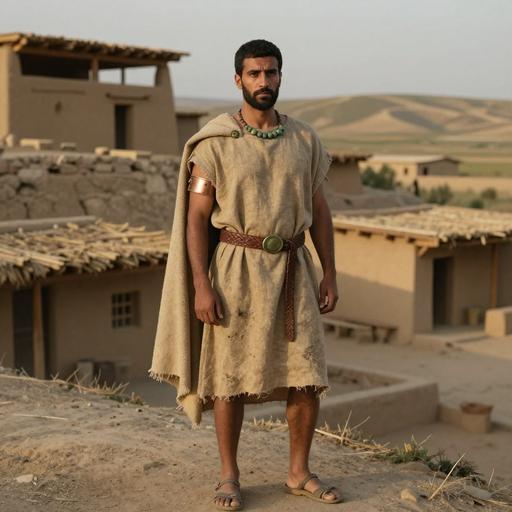
Reconstructed portrait of LBA individual, Baq'ah, Jordan (1,550-1,150 BCE)
LBA individual, Jordan Sample ID: I6464
Jordan Jordan LBA 1550-1150 BCE Late Bronze Jordan U3b1a Direct
Reconstructed portrait of LBA individual, Ashkelon, Israel (1,700-1,500 BCE)
LBA individual, Israel Sample ID: ASH034
Israel Late Bronze Age Israel 1700-1500 BCE Canaanite U3b1a Direct
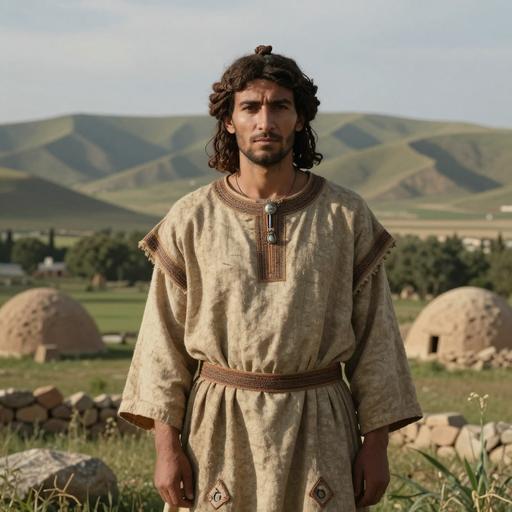
Reconstructed portrait of EBA-1 individual, Oylum Höyük (Southeast. Kilis), Turkey (3,000-2,000 BCE)
EBA-1 individual, Turkey Sample ID: I14798
Turkey Turkey EBA 3000-2000 BCE Early Bronze Anatolia U3b1a Direct
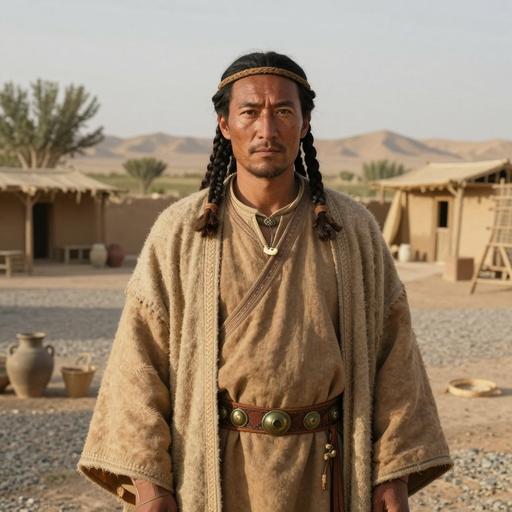
Reconstructed portrait of Xinjiang Liushui IA individual, Xinjiang. Hetian Region. Yutian County. Liushui, China (765-489 BCE)
Xinjiang Liushui IA individual, China Sample ID: C1259
China China Xinjiang Liushui IA 765-489 calBCE Liushui Culture U3b1a1 Downstream
Reconstructed portrait of IA individual, Swat Valley. Loebanr, Pakistan (911-816 BCE)
IA individual, Pakistan Sample ID: I8999
Pakistan The Loebanr Iron Age Culture of Pakistan 911-816 calBCE (2725±20 BP, PSUAMS-4851) Loebanr Culture U3b1a1 Downstream
Reconstructed portrait of Ancient Near Eastern Civilization individual, Berkaber. Dzhoghaz Cemetery Meydanner, Armenia (2,500-2,250 BCE)
Ancient Near Eastern Civilization individual, Armenia Sample ID: I14343
Armenia Early Bronze Age Armenia 2500 BCE - 2250 BCE Early Bronze Age Armenian U3b1a1 Downstream
Reconstructed portrait of Armenia Eba Kura Araxes individual, Berkaber. Dzhoghaz Cemetery Meydanner, Armenia (2,500-2,250 BCE)
Armenia Eba Kura Araxes individual, Armenia Sample ID: I14343
Armenia Early Bronze Age Armenia 2500 BCE - 2250 BCE U3b1a1 Downstream
MATERNAL LINEAGE · ANCIENT DNA

Ancient lineage evidence map

Follow parent clades toward this branch and explore where ancient carriers were found.

Loading ancient observations…

Markers are archaeological find locations. A dashed connector is an uncertain, proposed geographic transition between consecutive branches supported by multiple dated observations; it is not an exact travel route, birthplace or proof of direct descent. Parent-clade samples may belong to other descendant branches. Gaps remain where evidence is insufficient. Sample dates differ from haplogroup formation dates.

Chapter VI

Carrier Distribution Map

Geographic distribution of 7 ancient DNA samples (direct and subclade carriers of U3B1A)

Direct carrier Subclade carrier
Time Period Filter
All Time Periods
Showing all samples
Chapter VII

Temporal Distribution

Distribution of carriers across archaeological periods

Chapter VIII

Geographic Distribution

Distribution by country of origin (direct and subclade carriers shown by default)

Chapter IX

Country × Era Distribution

Cross-tabulation of carrier countries and archaeological periods (direct and subclade carriers shown by default)

Data

Data & Provenance

Source information and data quality

Last Updated 2026-02-16
Confidence Score 50/100
Coverage Low
Data Source

We use the latest phylotree for MTDNA haplogroup classification and data.