mtDNA · Maternal lineage

W1E1A

mtDNA Haplogroup W1E1A

A reference profile for one lineage branch. Shared haplogroups do not establish a family relationship or cultural identity.

Reference profile

Branch background

Historical context for mtDNA lineage branch W1E1A

Origins and Evolution

mtDNA haplogroup W1E1A is a downstream subclade of W1E1, itself a low‑frequency branch of haplogroup W. Given the parent clade's inferred origin in the Near East/Caucasus region during the post‑glacial to Neolithic period (around ~6 kya), W1E1A most plausibly represents a later, local diversification of that lineage. Based on phylogenetic position and the spatial pattern of modern and ancient occurrences, W1E1A likely arose in the post‑Neolithic to Bronze Age interval (roughly 2–4 kya), reflecting continued maternal lineage diversification in populations of the Near East and adjacent highlands.

Mutational differences that define W1E1A separate it from sibling W1E1 subclades and indicate a relatively shallow coalescence time compared with older basal W lineages. The subclade's limited modern frequency and patchy geographic distribution are consistent with a history of small population sizes, founder effects, and localized dispersals rather than a major demographic expansion.

Subclades (if applicable)

As a named subclade of W1E1, W1E1A may itself carry downstream branches in specific regional populations, but available sampling remains sparse. Where deeper resolution has been achieved in high‑coverage mitogenomes, W1E1A can be resolved into one or more local lineages that appear in single populations or neighboring regions — a pattern typical for recently derived, low‑frequency maternal clades.

Geographical Distribution

W1E1A shows a scattered, low‑frequency distribution consistent with the broader footprint of W1E1. Present‑day occurrences are concentrated around the Near East/Caucasus and extend into: Eastern and Northern Europe (in low numbers), parts of Central Asia and South Asia (notably northwest India and Pakistan), Anatolia and Iran, and marginally into western China and southwestern Siberia. The distribution suggests historical gene flow along routes connecting the Caucasus and Anatolia with the Eurasian steppe and south into the Indian subcontinent, plus localized retention in some European populations.

Modern surveys and mitogenome studies report W1E1 and its subclades only sporadically; W1E1A specifically appears in a small number of modern mitogenomes and a limited number of ancient samples. That rarity means frequency maps are sensitive to sampling biases, and local pockets of elevated frequency can reflect founder events or recent gene flow rather than large prehistoric expansions.

Historical and Cultural Significance

Because W1E1A is rare, it is not strongly diagnostic of any single archaeological culture. However, its geographic links to the Caucasus and Near East place it in regions that acted as conduits between early farmers, steppe pastoralists, and southern Asian populations. Possible cultural and demographic contexts where W1E1A could have been transmitted include:

  • Post‑Neolithic-to‑Bronze Age movements linking the Caucasus, Anatolia and the Eurasian steppe (e.g., exchanges involving Yamnaya‑related and adjacent groups).
  • Long‑distance contacts and trade routes that connected Anatolia and the Caucasus with Central Asia and South Asia in the Bronze Age and later periods.

In genetic datasets W1E1A commonly co‑occurs in the same populations with other West Eurasian maternal haplogroups (H, U, K, T) and with Y‑chromosome lineages characteristic of steppe and West Eurasian populations (R1a, R1b), reflecting mixed maternal and paternal ancestries in many of the regions where it is found.

Conclusion

W1E1A is best understood as a regional, low‑frequency daughter clade of W1E1 that arose after the main post‑glacial/Neolithic diversification of W in the Near East/Caucasus. Its pattern of presence — scattered but persistent across a broad arc from the Caucasus into parts of Europe, Central and South Asia — points to localized founder effects and historical mobility rather than to a major, single prehistoric expansion. Improved mitogenome sampling, especially ancient DNA from the Caucasus, Anatolia, and adjacent steppe corridors, will refine the timing, routes, and demographic contexts of W1E1A's spread.

Key Points

  • Origins and Evolution
  • Subclades (if applicable)
  • Geographical Distribution
  • Historical and Cultural Significance
  • Conclusion
Reference profile

Tree & Relationships

Phylogenetic context and subclades

Evolution Path

Follow the recorded parent branches toward W1E1A. Dates are estimates and can change as reference data is revised.

Steps Haplogroup Age Estimate Archaeology Era Time Passed Immediate Descendants Tested Modern Descendants Ancient Connections
1 W1E1A Current ~3,000 years ago Iron Age 3,000 years 0 1 3
2 W1E1 ~6,000 years ago Chalcolithic 6,000 years 1 1 0
3 W1E ~9,000 years ago Neolithic 9,000 years 1 3 1
4 W1 ~12,000 years ago Neolithic 12,000 years 7 82 2
5 W ~20,000 years ago Mesolithic 20,000 years 4 570 114
6 N2 ~45,000 years ago Paleolithic 45,000 years 2 574 0
7 N ~60,000 years ago Paleolithic 60,000 years 16 26,150 13
8 L3 ~70,000 years ago Paleolithic 70,000 years 7 30,162 6
9 L3'4 - - - 2 30,212 0
10 L3'4'6 - - - 2 30,216 0
11 L2'3'4'6 - - - 2 31,333 0
12 L2'3'4'5'6'7 - - - 2 31,349 0
13 L1'2'3'4'5'6'7 - - - 2 31,852 0
14 L ~160,000 years ago Paleolithic 160,000 years 2 32,236 5

Subclades (0)

Terminal branch - no recorded subclades

Reference profile

Where in the World

Geographic distribution and modern presence

Recorded origin

Near East / Caucasus

Modern Distribution

The populations where mtDNA haplogroup W1E1A is found include:

  1. Eastern European populations (e.g., Baltic states, Poland, Russia) in low frequencies
  2. Northern European populations (including parts of Scandinavia) in isolated instances
  3. Caucasus populations (Armenia, Georgia, Azerbaijan) with localized occurrences
  4. South Asian populations (northwest India, Pakistan) at low frequency
  5. Central Asian populations (Kazakhstan, Uzbekistan, Turkmenistan) sporadically
  6. Middle Eastern populations (Anatolia, Iran) with scattered presence
  7. Small numbers in western China and southwestern Siberia
Historical context

A branch through time

Estimated formation in a broad historical timeline. Period markers provide context and do not imply a connection with particular cultures.

  1. ~10k years ago

    Neolithic Revolution

    Agriculture begins, settled communities form

  2. ~5k years ago

    Bronze Age

    Metalworking, writing, and early civilizations

  3. ~3k years ago

    Iron Age

    Iron tools, expanded trade networks

  4. ~3k years ago

    Haplogroup W1E1A

    Estimated formation of this mtDNA branch; dates and locations are reference estimates.

    This branch
  5. ~2.5k years ago

    Classical Antiquity

    Greek and Roman civilizations flourish

  6. Present

    Present Day

    Modern era

Reference profile

Archaeological context

Recorded archaeological associations for mtDNA branch W1E1A

Recorded associations

These labels describe archaeological contexts recorded for reference samples linked to W1E1A. An association does not establish that all carriers belonged to a culture or followed a particular migration route.

Anatolian Neolithic Avar Culture Bodrogkeresztur Early Medieval German Lengyel Culture Linear Pottery Culture Middle Neolithic Czech Santok Culture
Culture assignments are based on archaeological context of ancient DNA samples and may represent regional associations during specific time periods.
Reference profile

Sample Catalog

3 direct carriers of haplogroup W1E1A

3 shown · 3 matching samples

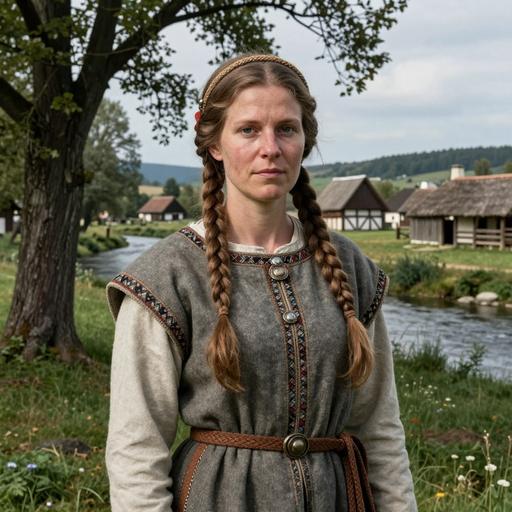
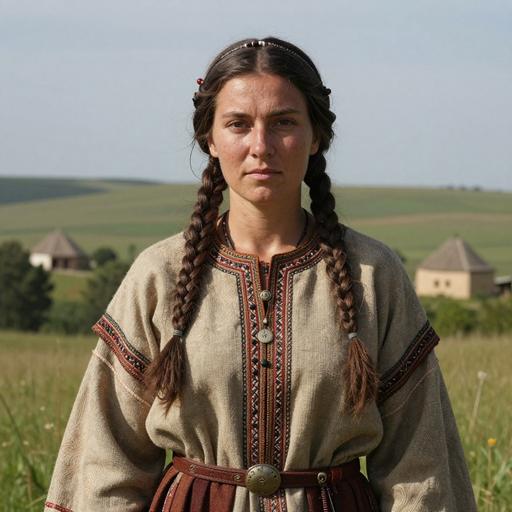
Portraits are AI-generated illustrations. Sample labels and accession IDs identify the reference records.

Portrait Sample Country Era Date Culture mtDNA Match
AI-generated illustrative portrait of Germanic individual, Bavaria. Straubing- Bajuwarenstraße, Germany (402-536 CE)
Sample ID: STR328c
Germany Early Medieval Germany 402 CE - 536 CE Early Medieval German W1e1a Direct
AI-generated illustrative portrait of Germanic individual, Bavaria. Straubing- Bajuwarenstraße, Germany (402-536 CE)
Sample ID: STR328c
Germany The Germanic Tribes 402 CE - 536 CE W1e1a Direct
AI-generated illustrative portrait of Late Avar-o Low East Asia individual, Békés County. Szarvas-Grexatéglagyár, Hungary (700-800 CE)
Sample ID: SZRV-316
Hungary Hungary LateAvar 700-800 CE Avar Culture W1e1a Direct
MATERNAL LINEAGE · ANCIENT DNA

Ancient lineage evidence map

Follow parent clades toward this branch and explore where ancient carriers were found.

Loading ancient observations…

Markers are archaeological find locations. A dashed connector is an uncertain, proposed geographic transition between consecutive branches supported by multiple dated observations; it is not an exact travel route, birthplace or proof of direct descent. Parent-clade samples may belong to other descendant branches. Gaps remain where evidence is insufficient. Sample dates differ from haplogroup formation dates.

Reference profile

Carrier Distribution Map

Geographic distribution of 3 ancient DNA samples (direct and subclade carriers of W1E1A)

Direct carrier
Time Period Filter
All Time Periods
Showing all samples
Reference profile

Temporal Distribution

Distribution of carriers across archaeological periods

Reference profile

Geographic Distribution

Counts by recorded sample country. These reflect the available reference selection, not population frequencies.

Reference profile

Country × Era Distribution

Compare recorded sample counts across countries and archaeological periods. Select a populated cell to inspect a sample.

Data

Data & Provenance

Source information and data quality

Last Updated 2026-02-16
Confidence Score 50/100
Coverage Low

Data Source

Classification, estimated dates and geographic context reflect the recorded reference data and may change as evidence is revised. Sample coverage is uneven; recorded locations and archaeological associations do not establish personal origin or cultural identity.

A haplogroup follows one maternal or paternal line. The branch prediction depends on which markers the DNA file contains. How our analysis works