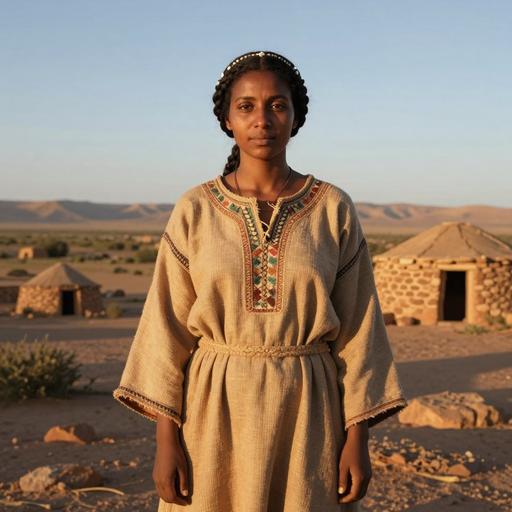
The Story
The journey of mtDNA haplogroup X2
Origins and Evolution
mtDNA haplogroup X2 is a primary branch of haplogroup X and likely split from its sister lineages in the Late Glacial period roughly ~20–25 kya. Phylogenetic analyses and ancient DNA studies place the diversification of X2 in Western Asia / the Near East, a region that has acted as a genetic crossroads between Europe, North Africa and Central Asia. From this Near Eastern source X2 expanded and diversified into multiple regional subclades during the Late Glacial and early Holocene.
X2 should be viewed as a lineage with both deep Paleolithic associations (its root coalescing near the Last Glacial Maximum) and later Neolithic-era population movements that redistributed its subclades across Eurasia and into North America (in the unique X2a branch).
Subclades
Key subclades of X2 include several regionally differentiated lineages (often labeled X2b, X2c, X2d, X2e, X2g, etc.), and the well-known X2a branch found principally in some Native American populations. Many X2 subclades have focal distributions: some are centered in the Caucasus and Anatolia, others in the Mediterranean and Europe. The Native American X2a is phylogenetically distinct and is interpreted as having entered the Americas via Beringia during the Late Pleistocene/Early Holocene.
Geographical Distribution
Today X2 is most common and diverse in the Near East, the Caucasus and parts of Southern Europe, with lower-frequency occurrences across broader Europe, North Africa and into Central Asia. Ancient DNA from Neolithic sites in Anatolia and the Levant, and from later European contexts, shows X2 lineages present among early farmers, consistent with movement of maternal lineages from the Near East into Europe during the Neolithic. The presence of X2a in North America is a notable exception illustrating a separate early migration into the Americas.
Historical and Cultural Significance
Because of its Near Eastern origin and its diversification during the Late Glacial and early Holocene, X2 is often discussed in the context of Neolithic farmer dispersals that spread Near Eastern maternal lineages into Europe and the Mediterranean. It is detected in modern populations associated with the Caucasus, Anatolia and Southern Europe and has been identified in some ancient skeletal remains from Neolithic and later periods. The distinctive X2a subclade provides evidence for one component of the maternal ancestry of some Native American groups and therefore has significance for understanding early peopling of the Americas.
Conclusion
mtDNA haplogroup X2 represents a lineage with a Near Eastern Late Glacial origin that later contributed maternal ancestry to multiple regions across Eurasia and, via the X2a branch, to parts of North America. Its pattern—diversity concentrated in the Near East/Caucasus with scattered but persistent presence in Europe, North Africa and the Americas—illustrates the combined effects of deep Pleistocene structure and Holocene migrations (notably the Neolithic expansion) on maternal genetic landscapes. Ongoing aDNA sampling and fine-scale phylogenetic work continue to refine the timing and routes of X2 dispersals.
Key Points
- Origins and Evolution
- Subclades
- Geographical Distribution
- Historical and Cultural Significance
- Conclusion