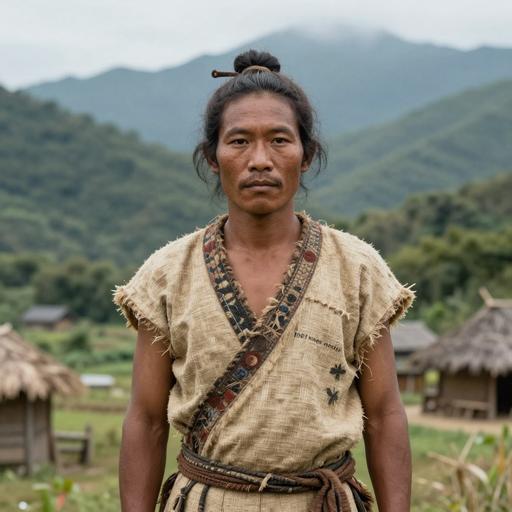
The Story
The journey of Y-DNA haplogroup O2A2A1A2
Origins and Evolution
Y-DNA haplogroup O2A2A1A2 is a derived branch within the broader O-M119/O2 paternal lineage, a major East Asian Y-chromosome clade strongly associated with populations in southern China and neighboring regions. Because it sits several layers downstream of O2A2A1A, this subclade represents a relatively recent diversification within the southern East Asian male lineage network, most plausibly formed during the mid- to late Holocene.
Its precise formation age is not yet well constrained in the literature, but a reasonable estimate is around 5.5 kya, with an origin in southern China or a nearby East Asian border region. The broader O-M119/O2 phylogeny is often linked to population growth, regional dispersals, and later prehistoric expansions among southern Chinese, Austronesian-related, and mainland Southeast Asian populations.
Subclades
As an intermediate downstream branch, O2A2A1A2 may include additional terminal lineages not yet fully resolved in public datasets. In general, substructure within this section of the O2 tree reflects localized demographic expansion, founder effects, and the separation of regional populations over time. Further sequencing may reveal geographically restricted daughter branches in southern China, Taiwan, or mainland Southeast Asia.
Geographical Distribution
O2A2A1A2 is expected to be concentrated primarily in southern East Asia, with its highest relative representation likely in populations that already show broader O-M119/O2 ancestry. It is reported or inferred across:
- Southern Han Chinese and other Chinese groups from southern provinces
- Vietnamese populations
- Tai-Kadai-speaking populations and related groups in southern China and mainland Southeast Asia
- Tibeto-Burman-speaking populations in China and the Himalayas at lower frequencies
- Austronesian-speaking populations in Taiwan and Island Southeast Asia
- Other mainland Southeast Asian populations
- Lower-frequency occurrences in Korean and Japanese populations
The distribution pattern is consistent with a lineage that expanded through regional population movements in southern China and adjacent Southeast Asia, rather than a deep northern East Asian or steppe-associated origin.
Historical and Cultural Significance
Although haplogroup O2A2A1A2 itself has not been directly tied to a single named archaeological culture, its broader phylogenetic context is relevant to several major prehistoric processes in East Asia. The parent clade O2 lineages have been connected with the spread and differentiation of southern Chinese Neolithic populations, later Bronze Age regional expansions, and the demographic histories of Austronesian and mainland Southeast Asian-speaking populations.
This haplogroup likely reflects the long-term structuring of paternal lineages in eastern Asia, including the growth of farming communities, river-valley networks, and later maritime dispersals. Its presence in Austronesian-associated populations may reflect shared deeper ancestry in southern China rather than a single migration event.
Conclusion
Y-DNA haplogroup O2A2A1A2 is a relatively recent branch of the major southern East Asian paternal lineage O-M119/O2. Its geographic pattern points to an origin in southern China or nearby East Asia and a history shaped by Holocene population expansions across southern China, mainland Southeast Asia, and parts of the Austronesian world.
Key Points
- Origins and Evolution
- Subclades
- Geographical Distribution
- Historical and Cultural Significance
- Conclusion