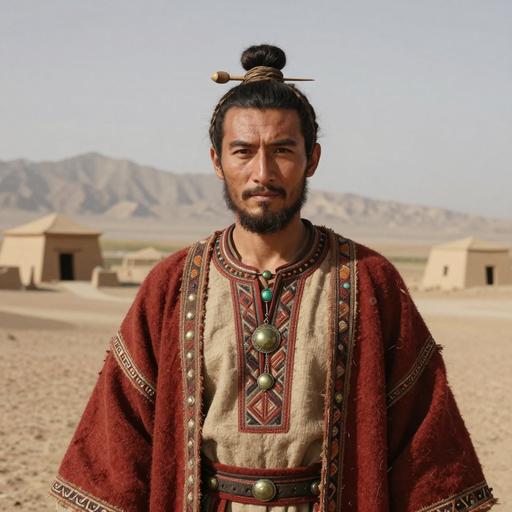
The Story
The journey of Y-DNA haplogroup R1b
Origins and Evolution
Y-DNA haplogroup R1b is a major branch of haplogroup R, itself part of the broader R-M207 paternal lineage. The exact place of origin is still debated, but most population-genetic models place the early diversification of R1b somewhere in West Eurasia or the Pontic-Caspian/adjacent steppe zone, with downstream expansions occurring during the late Paleolithic, Neolithic, and especially the Bronze Age.
R1b became one of the most successful paternal lineages in Europe, particularly through expansions associated with Bronze Age mobility and demographic change. Ancient DNA research has shown that some major R1b subclades rose to high frequency in Europe after the spread of steppe ancestry, although the details vary strongly by region and by downstream branch.
Subclades
R1b is a broad umbrella lineage with several important descendant branches. The most significant include:
- R1b-M343: the defining marker for the major branch of R1b
- R1b-L51 (P310): a major western Eurasian branch, especially relevant to much of Western Europe
- R1b-PF7562 and related branches: found at lower frequencies in parts of West Asia and the Caucasus region
- R1b-Z2103: often associated with steppe and southeastern European distributions, and seen in ancient Bronze Age contexts
- R1b-M269: the best-known and most widespread western European lineage within R1b, though technically a downstream subclade of R1b
Because R1b is an intermediate clade, its geographic and historical signal is broad. The deeper position of R1b means it connects older ancestral diversification within haplogroup R to the younger, regionally dominant branches that shaped much of the paternal history of Europe.
Geographical Distribution
Today, R1b occurs across a wide range of populations, with the highest frequencies in Western Europe. It is especially common in Ireland, Britain, France, Iberia, and parts of the Low Countries, but it is also present at lower to moderate frequencies in Italy, the Balkans, the Caucasus, Anatolia, the Levant, North Africa, and parts of Central Asia.
The distribution is not uniform. Western Europe shows strong enrichment for later R1b derivatives, while southeastern Europe, the Caucasus, and parts of West Asia preserve more diverse and sometimes deeper lineages. This pattern is consistent with a combination of ancient population structure, Bronze Age expansions, and later regional founder effects.
Historical and Cultural Significance
R1b is one of the most intensively studied Y-DNA lineages because of its strong association with major prehistoric population movements in Europe. Ancient DNA studies have linked certain R1b branches to steppe-derived populations and later to Bell Beaker-associated expansions, which played a major role in reshaping the paternal landscape of much of Western Europe.
The high frequency of R1b in Atlantic Europe has made it important in discussions of Indo-European language spread, Bronze Age demographic turnovers, and the formation of modern European populations. However, it is important to note that haplogroups do not define language, ethnicity, or culture by themselves; rather, they track paternal ancestry and often reflect complex demographic processes.
Geographical Distribution in Context
R1b's modern prevalence reflects a layered history:
- Western Europe: highest frequencies, especially in Atlantic and western regions
- Southern and Southeastern Europe: variable frequencies, often with older and more diverse subclades
- West Asia and the Caucasus: lower but important presence, often informative for deep phylogeographic history
- North Africa: scattered presence, usually reflecting historical gene flow from Europe and West Asia
- Central Asia: low to moderate presence in some populations, often linked to steppe-related ancestry
Conclusion
Y-DNA haplogroup R1b is a key paternal lineage for understanding the genetic history of Eurasia, especially the demographic transformations that shaped Western Europe. Its broad phylogenetic position makes it an important bridge between older West Eurasian ancestry and the later subclades that became highly frequent during the Bronze Age and beyond.
Key Points
- Origins and Evolution
- Subclades
- Geographical Distribution
- Historical and Cultural Significance
- Geographical Distribution in Context