Menu
mtDNA Haplogroup • Maternal Lineage

A2A3

mtDNA Haplogroup A2A3

~8,000 years ago
Beringia / Arctic North America
0 subclades
Scroll to explore
Chapter I

The Story

The journey of mtDNA haplogroup A2A3

Origins and Evolution

mtDNA haplogroup A2A3 is a downstream branch of the Native American A2A lineage, which itself derives from the founding American haplogroup A2. Based on its phylogenetic position and the distribution of closely related lineages, A2A3 most likely formed in Beringia or the adjacent Arctic coastal zone during the early Holocene (roughly 8 kya), after initial colonization pulses into the Americas. Its formation reflects continued diversification of maternal lineages among populations occupying the sub‑Arctic and Arctic ecological niches following the Last Glacial Maximum and early post‑glacial dispersals.

Subclades (if applicable)

A2A3 is recognized as a named subclade within A2A; further downstream variation (local subclades of A2A3) is currently limited in published datasets and ancient DNA repositories but may be detected with higher-resolution mitogenome sequencing in regional samples. Because A2A3 sits within a regionally restricted branch of A2, most variation observed so far is consistent with localized differentiation in Arctic and northern North American populations rather than broad continental radiation.

Geographical Distribution

A2A3 shows a strongly northern distribution. It is most frequent and consistently observed among Arctic and sub‑Arctic Indigenous groups (Inuit, Yup'ik, Aleut and neighboring First Nations) and appears at lower frequencies among some northern First Nations (including Na‑Dene and Algonquian speakers) and isolated occurrences in circumpolar Siberian groups. The geographic pattern is consistent with maternal continuity in high‑latitude coastal and riverine populations and with demographic events associated with Paleo‑Eskimo and Neo‑Eskimo (Thule) movements.

Historical and Cultural Significance

The presence of A2A3 in Arctic populations aligns with archaeological horizons that document repeated human occupation of high latitudes after the Ice Age. A2A3 likely contributed maternally to communities associated with early Arctic traditions (e.g., Pre‑Dorset), later Paleo‑Eskimo cultures (Dorset), and the Neo‑Eskimo expansion represented archaeologically by the Thule culture, which spread across the Arctic within the last 1–1.5 kya. Its distribution is therefore informative for reconstructing maternal lineages involved in adaptations to marine and coastal economies, high‑latitude migration corridors, and the demographic processes that shaped modern Arctic Indigenous populations.

Conclusion

As a regional subclade of A2A, A2A3 is best interpreted as an Arctic‑centered maternal lineage that diversified during the early Holocene and has persisted in northern North American and circumpolar populations. Although currently represented by a modest number of reported samples, targeted mitogenome sequencing and additional ancient DNA data from Arctic sites are likely to refine its internal structure and clarify its role in prehistoric migrations and cultural transitions in the North American Arctic.

Key Points

  • Origins and Evolution
  • Subclades (if applicable)
  • Geographical Distribution
  • Historical and Cultural Significance
  • Conclusion
Chapter II

Tree & Relationships

Phylogenetic context and subclades

Evolution Path

This haplogroup's evolutionary journey from its earliest ancestor to the present.

Steps Haplogroup Age Estimate Archaeology Era Time Passed Immediate Descendants Tested Modern Descendants Ancient Connections
1 A2A3 Current ~8,000 years ago 🌾 Neolithic 8,000 years 0 1 0
2 A2A ~12,000 years ago 🌾 Neolithic 12,000 years 9 17 58
3 A2 ~15,000 years ago 🏹 Mesolithic 15,000 years 20 574 14
4 A ~30,000 years ago 🦴 Paleolithic 30,000 years 7 630 192

Subclades (0)

Terminal branch - no known subclades

Siblings (8)

Other branches from the same parent haplogroup

Chapter III

Where in the World

Geographic distribution and modern presence

Place of Origin

Beringia / Arctic North America

Modern Distribution

The populations where mtDNA haplogroup A2A3 is found include:

  1. Inuit populations across the Canadian Arctic, Greenland, and Alaska
  2. Yup'ik and Cup'ik communities of western and southwestern Alaska
  3. Aleut (Unangan) populations of the Aleutian Islands and adjacent areas
  4. Northern First Nations groups (Na‑Dene and some Algonquian‑speaking communities) in sub‑Arctic Canada
  5. Selected circumpolar Siberian groups at low frequencies (e.g., Chukotkan/Tungusic contacts)
  6. Modern admixed populations in the Americas carrying Indigenous maternal ancestry
CHAPTER IV

When in Time

Your haplogroup in the context of human history

~10k years ago

Neolithic Revolution

Agriculture begins, settled communities form

~8k years ago

Haplogroup A2A3

Your mtDNA haplogroup emerged in Beringia / Arctic North America

Beringia / Arctic North America
~5k years ago

Bronze Age

Metalworking, writing, and early civilizations

~3k years ago

Iron Age

Iron tools, expanded trade networks

~2k years ago

Classical Antiquity

Greek and Roman civilizations flourish

Present

Present Day

Modern era

Your Haplogroup
Historical Era
Chapter IV-B

Linked Cultures

Ancient cultures associated with mtDNA haplogroup A2A3

Cultural Heritage

These ancient cultures have been linked to haplogroup A2A3 based on matching ancient DNA samples from archaeological excavations. The presence of this haplogroup in these cultures provides insights into the migrations and population movements of populations carrying this haplogroup.

Athabaskan Culture Cuncaicha Maya Classic Neo-Aleut Culture Old Bering Sea Old Bering Sea Culture Sukhbaatar Multi-Period Uelen Culture
Culture assignments are based on archaeological context of ancient DNA samples and may represent regional associations during specific time periods.
Chapter V

Sample Catalog

5 direct carriers of haplogroup A2A3

5 / 5 samples
Portrait Sample Country Era Date Culture mtDNA Match
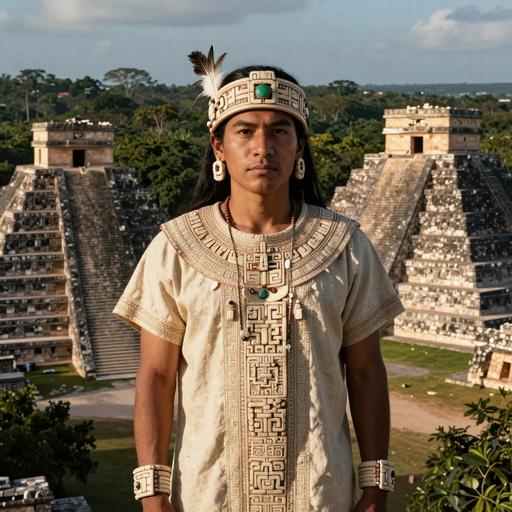
Portrait of ancient individual YCH023 from Mexico, dated 550 CE - 1200 CE
YCH023
Mexico Maya Lowland Classic 550 CE - 1200 CE Maya Classic A2a3 Direct
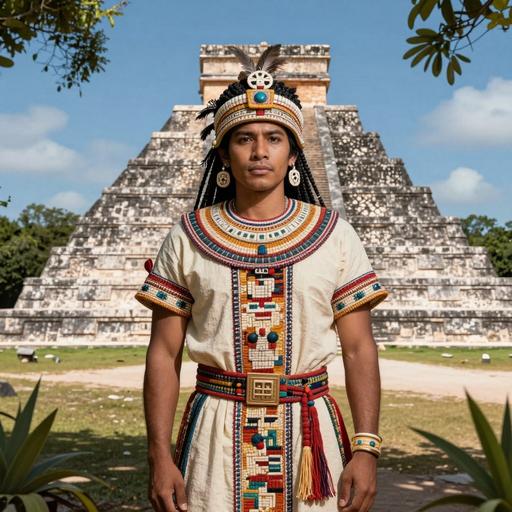
Portrait of ancient individual YCH023 from Mexico, dated 550 CE - 1200 CE
YCH023
Mexico Maya Lowland Classic 550 CE - 1200 CE Maya Classic A2a3 Direct
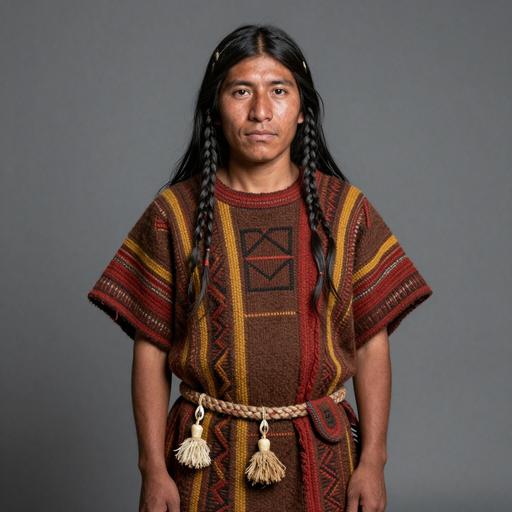
Portrait of ancient individual YCH037 from Mexico, dated 667 CE - 774 CE
YCH037
Mexico Maya Lowland Classic 667 CE - 774 CE Maya Classic A2a3 Direct
Portrait of ancient individual ULN011 from Mongolia, dated 1176 CE - 1270 CE
ULN011
Mongolia Middle to Late Bronze Age to Xiongnu to Late Medieval Sukhbaatar, Mongolia 1176 CE - 1270 CE Sukhbaatar Multi-Period A2a3 Direct
Portrait of ancient individual Cuncaicha15-03 from Peru, dated 2300 BCE - 2030 BCE
Cuncaicha15-03
Peru Cuncaicha, Peru 4,200 Years Ago 2300 BCE - 2030 BCE Cuncaicha A2a3 Direct
Chapter VI

Carrier Distribution Map

Geographic distribution of 5 ancient DNA samples (direct and subclade carriers of A2A3)

Direct carrier
Time Period Filter
All Time Periods
Showing all samples
Chapter VII

Temporal Distribution

Distribution of carriers across archaeological periods

Chapter VIII

Geographic Distribution

Distribution by country of origin (direct and subclade carriers shown by default)

Chapter IX

Country × Era Distribution

Cross-tabulation of carrier countries and archaeological periods (direct and subclade carriers shown by default)

Data

Data & Provenance

Source information and data quality

Last Updated 2026-02-16
Confidence Score 50/100
Coverage Low
Data Source

We use the latest phylotree for MTDNA haplogroup classification and data.