Menu
mtDNA Haplogroup • Maternal Lineage

A2AO

mtDNA Haplogroup A2AO

~10,000 years ago
Beringia / Arctic North America
0 subclades
4 ancient samples
Scroll to explore
Chapter I

The Story

The journey of mtDNA haplogroup A2AO

Origins and Evolution

mtDNA haplogroup A2AO sits as a downstream branch of A2A, itself a subclade of the Indigenous American founding lineage A2. Given the parent clade's estimated emergence in Beringia around ~12 kya, A2AO most plausibly arose in the late Pleistocene to early Holocene (roughly ~10 kya) during or shortly after the dispersal of maternal A2 lineages into northeastern Siberia, Beringia, and the initial settlement zones of Arctic and sub‑Arctic North America. Its emergence fits models of a Beringian standstill followed by rapid post‑glacial expansions into the North American Arctic and adjacent regions.

Phylogenetically, A2AO inherits the basal A2A motif and is defined by additional private mutations that distinguish it from sibling subclades. Because A2A and its descendants are deeply tied to northern migrations, A2AO likely represents a regional diversification event within communities moving into or already occupying high‑latitude environments during the early Holocene.

Subclades

A2AO is a relatively derived branch beneath A2A; depending on sampling density there may be further internal substructure, but many of these low‑level clades are currently rare and undercharacterized in public databases. Ancient DNA work in Arctic contexts has begun to reveal internal diversity, but A2AO remains a minor, regionally focused lineage compared with more widespread A2 subclades. As more high‑coverage mitogenomes from northern archaeological contexts are published, additional subclades and defining mutations for A2AO may be resolved.

Geographical Distribution

A2AO is primarily documented in northern North America and adjacent northeastern Siberia. Modern occurrences are concentrated among Arctic and sub‑Arctic Indigenous groups (for example Inuit, Yup'ik, Aleut) and some northern First Nations and Na‑Dene/Athabaskan populations. Low frequency occurrences have also been reported in a few Indigenous Siberian and circumpolar Eurasian groups, consistent with historical and prehistoric gene flow across Beringia. Outside these core areas, A2AO appears at low frequencies in admixed populations in the Americas where Indigenous maternal ancestry persists.

Because sample sizes from remote Arctic populations remain limited and because ancient sampling is still expanding, the observed distribution is best interpreted as a combination of true regional localization plus incomplete sampling of northern mitogenome diversity.

Historical and Cultural Significance

The presence of A2AO in Arctic and sub‑Arctic groups ties it to demographic processes central to North American prehistory: post‑glacial northward expansions, the establishment of specialized Arctic subsistence economies, and later cultural transformations such as the spread of Paleo‑Inuit and Thule cultural traditions. In population genetic terms, A2AO contributes to the signature of maternal continuity in many northern Indigenous groups and helps trace maternal lines across prehistoric Beringian and Arctic migrations.

A2AO is therefore valuable in archaeogenetic studies that aim to link archaeological cultures (for example early Holocene Beringian communities, Paleo‑Inuit groups, and later Thule expansions) to maternal lineages observed in living populations. However, because it is a relatively low‑frequency and regionally concentrated haplogroup, it is most informative when combined with other mtDNA haplogroups and autosomal or Y‑DNA data.

Conclusion

As a derived branch of A2A, A2AO represents a northern, post‑glacial maternal lineage that likely formed in Beringia or the adjacent Arctic shortly after the initial A2 diversification. Its distribution highlights the role of the Arctic and sub‑Arctic as zones of both continuity and localized diversification for Indigenous American maternal lineages. Ongoing targeted mitogenome sequencing and ancient DNA sampling in northern regions will refine the internal structure, timing, and precise archaeological associations of A2AO.

Key Points

  • Origins and Evolution
  • Subclades
  • Geographical Distribution
  • Historical and Cultural Significance
  • Conclusion
Chapter II

Tree & Relationships

Phylogenetic context and subclades

Evolution Path

This haplogroup's evolutionary journey from its earliest ancestor to the present.

Steps Haplogroup Age Estimate Archaeology Era Time Passed Immediate Descendants Tested Modern Descendants Ancient Connections
1 A2AO Current ~10,000 years ago 🌾 Neolithic 10,000 years 0 3 4
2 A2A ~12,000 years ago 🌾 Neolithic 12,000 years 9 17 58
3 A2 ~15,000 years ago 🏹 Mesolithic 15,000 years 20 574 14
4 A ~30,000 years ago 🦴 Paleolithic 30,000 years 7 630 192

Subclades (0)

Terminal branch - no known subclades

Siblings (8)

Other branches from the same parent haplogroup

Chapter III

Where in the World

Geographic distribution and modern presence

Place of Origin

Beringia / Arctic North America

Modern Distribution

The populations where mtDNA haplogroup A2AO is found include:

  1. Arctic and sub‑Arctic Indigenous peoples (Inuit, Yup'ik, Aleut)
  2. Northern North American First Nations and Na‑Dene/Athabaskan groups
  3. Selected Indigenous Siberian and circumpolar Eurasian groups at low frequency (e.g., Chukotkan communities)
  4. Broader Indigenous Native American populations at low to very low frequencies in northern North America
  5. Modern admixed populations in the Americas carrying Indigenous maternal ancestry
CHAPTER IV

When in Time

Your haplogroup in the context of human history

~10k years ago

Neolithic Revolution

Agriculture begins, settled communities form

~10k years ago

Haplogroup A2AO

Your mtDNA haplogroup emerged in Beringia / Arctic North America

Beringia / Arctic North America
~5k years ago

Bronze Age

Metalworking, writing, and early civilizations

~3k years ago

Iron Age

Iron tools, expanded trade networks

~2k years ago

Classical Antiquity

Greek and Roman civilizations flourish

Present

Present Day

Modern era

Your Haplogroup
Historical Era
Chapter IV-B

Linked Cultures

Ancient cultures associated with mtDNA haplogroup A2AO

Cultural Heritage

These ancient cultures have been linked to haplogroup A2AO based on matching ancient DNA samples from archaeological excavations. The presence of this haplogroup in these cultures provides insights into the migrations and population movements of populations carrying this haplogroup.

Athabaskan Culture Chumash Cuncaicha Maya Classic Neo-Aleut Culture Old Bering Sea Old Bering Sea Culture Uelen Culture
Culture assignments are based on archaeological context of ancient DNA samples and may represent regional associations during specific time periods.
Chapter V

Sample Catalog

4 direct carriers of haplogroup A2AO

4 / 4 samples
Portrait Sample Country Era Date Culture mtDNA Match
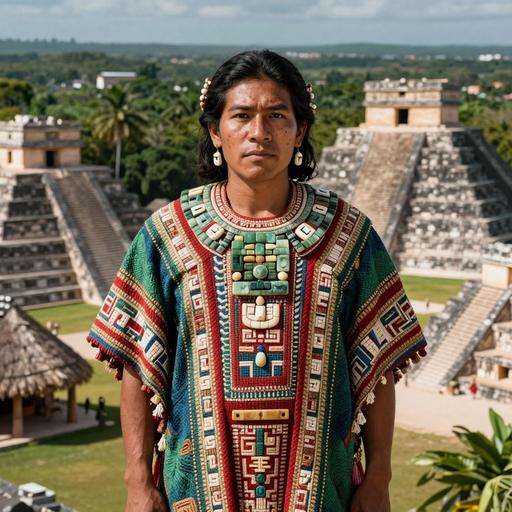
Portrait of ancient individual YCH022 from Mexico, dated 550 CE - 1200 CE
YCH022
Mexico Maya Lowland Classic 550 CE - 1200 CE Maya Classic A2ao Direct
Portrait of ancient individual YCH022 from Mexico, dated 550 CE - 1200 CE
YCH022
Mexico Maya Lowland Classic 550 CE - 1200 CE Maya Classic A2ao Direct
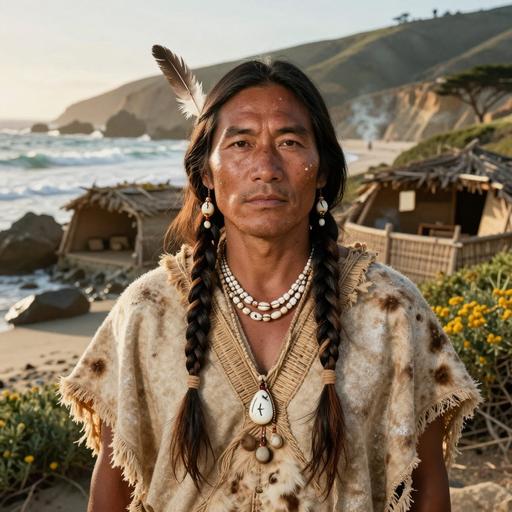
Portrait of ancient individual I14825 from USA, dated 1377 BCE - 1130 BCE
I14825
USA Native American Coastal California 1377 BCE - 1130 BCE Chumash A2ao Direct
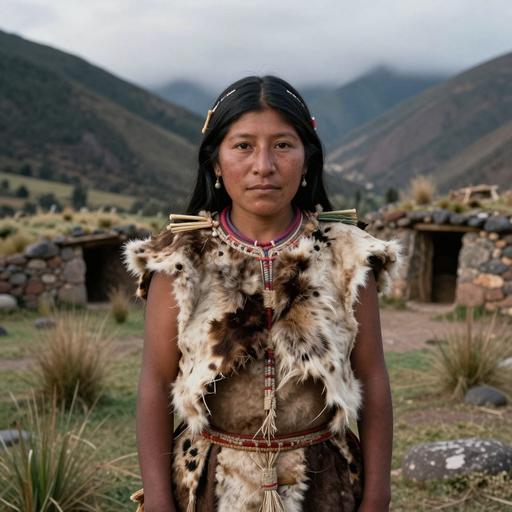
Portrait of ancient individual Cuncaicha15-07 from Peru, dated 7290 BCE - 6820 BCE
Cuncaicha15-07
Peru Cuncaicha, Peru 9,000 Years Ago 7290 BCE - 6820 BCE Cuncaicha A2ao Direct
Chapter VI

Carrier Distribution Map

Geographic distribution of 4 ancient DNA samples (direct and subclade carriers of A2AO)

Direct carrier
Time Period Filter
All Time Periods
Showing all samples
Chapter VII

Temporal Distribution

Distribution of carriers across archaeological periods

Chapter VIII

Geographic Distribution

Distribution by country of origin (direct and subclade carriers shown by default)

Chapter IX

Country × Era Distribution

Cross-tabulation of carrier countries and archaeological periods (direct and subclade carriers shown by default)

Data

Data & Provenance

Source information and data quality

Last Updated 2026-02-16
Confidence Score 50/100
Coverage Low
Data Source

We use the latest phylotree for MTDNA haplogroup classification and data.