Menu
mtDNA Haplogroup • Maternal Lineage

D4

mtDNA Haplogroup D4

~25,000 years ago
East / Northeast Asia
12 subclades
19 ancient samples
Scroll to explore
Chapter I

The Story

The journey of mtDNA haplogroup D4

Origins and Evolution

mtDNA haplogroup D4 is a well-differentiated subclade of haplogroup D (itself derived from macro-haplogroup M) that likely arose in Northeast/East Asia during the Late Pleistocene. Coalescence age estimates for D4 center on the Upper Paleolithic to the Last Glacial Maximum window (roughly ~20–30 kya, with some internal subclades younger), consistent with a pattern of deep local diversification across Siberia and East Asia. The phylogeny of D4 shows multiple radiations and geographically structured subclades that reflect glacial refugia, postglacial re-expansions, and later Holocene population movements.

Subclades

D4 contains multiple named sublineages with distinct geographic and temporal signatures. Important examples include:

  • D4a — common in East Asia and the Japanese archipelago (including Jomon and later populations); often associated with inland Northeast Asian populations.
  • D4b / D4b1 — found across Siberia and parts of East Asia; contributes to regional hunter–gatherer and pastoralist maternal pools.
  • D4h3a — a geographically informative branch with a coastal distribution in East Asia and the Pacific rim that is strongly implicated in at least one Late Pleistocene / early Holocene migration into the Americas (found in some Native American and coastal Asian samples).
  • Other regional branches (D4e, D4j, etc.) — present at variable frequencies across East Asia, Central Asia and Siberia; many subclades show Holocene expansions or local persistence.

Individual subclades have different estimated ages and demographic histories; some expanded during post-LGM warming and the Holocene, while others reflect more localized continuity.

Geographical Distribution

D4 is concentrated in Northeast and East Asia with substantial presence across Siberia and measurable representation in Central and Southeast Asia. Specific distribution patterns include high frequencies in northern and northeastern East Asian groups (e.g., northern Han, Japanese, Koreans), pronounced frequencies in many indigenous Siberian populations (Yakut, Evenk, Yukaghir, Nganasan, etc.), and occurrence of derived branches in parts of Central Asia and among certain Southeast Asian groups. Certain D4-derived lineages (notably D4h3a and a few other closely related branches) appear in Native American samples, reflecting pre-Holocene or early Holocene migration routes into the Americas, particularly along coastal corridors.

Although rare, some D4 lineages appear at low frequency outside these core areas (e.g., limited occurrences in parts of Oceania or in populations affected by recent historic admixture).

Historical and Cultural Significance

The geographic and temporal pattern of D4 mirrors major demographic events in Northeast Asia:

  • Late Pleistocene settlement and survival through the LGM, with D4 subclades persisting in high-latitude refugia and lower-latitude East Asian refugia.
  • Postglacial expansions into newly available territories across Siberia and northeastern Asia, leading to the present-day widespread distribution in these regions.
  • Contributions to the peopling of the Americas, where certain D4-derived clades (most notably D4h3a) are markers of at least one maternal lineage that reached the New World, likely along coastal or near-coastal routes during the Late Pleistocene or early Holocene.

Archaeogenetic studies have recovered D4 lineages in prehistoric skeletal assemblages (including Jomon-era Japan and ancient Siberian sites), supporting continuity between ancient foragers and some later regional populations.

Conclusion

Haplogroup D4 is a major, regionally diversified mtDNA lineage of Northeast/East Asia with deep Paleolithic roots and an important role in the maternal genetic landscape of Siberia, East Asia, and portions of the Americas. Its internal structure—many geographically restricted subclades—makes D4 a useful marker for reconstructing Late Pleistocene and Holocene population dynamics in northern Eurasia and for tracing specific migration events into the Americas.

Key Points

  • Origins and Evolution
  • Subclades
  • Geographical Distribution
  • Historical and Cultural Significance
  • Conclusion
Chapter II

Tree & Relationships

Phylogenetic context and subclades

Evolution Path

This haplogroup's evolutionary journey from its earliest ancestor to the present.

Steps Haplogroup Age Estimate Archaeology Era Time Passed Immediate Descendants Tested Modern Descendants Ancient Connections
1 D4 Current ~25,000 years ago 🦴 Paleolithic 25,000 years 12 276 19
2 D ~45,000 years ago 🦴 Paleolithic 45,000 years 7 398 137
3 M ~60,000 years ago 🦴 Paleolithic 60,000 years 11 1,200 41
4 L3 ~70,000 years ago 🦴 Paleolithic 70,000 years 11 17,621 6
5 L ~160,000 years ago 🦴 Paleolithic 160,000 years 7 18,987 5

Siblings (6)

Other branches from the same parent haplogroup

Chapter III

Where in the World

Geographic distribution and modern presence

Place of Origin

East / Northeast Asia

Modern Distribution

The populations where MTDNA haplogroup D4 is found include:

  1. East Asian populations (Han Chinese, Japanese, Korean)
  2. Indigenous Siberian groups (Yakut, Evenk, Yukaghir, Nganasan, Chukchi, etc.)
  3. Indigenous peoples of the Americas through derived subclades (e.g., D4h3a)
  4. Central Asian populations (e.g., some Mongolic and Turkic groups at lower frequencies)
  5. Southeast Asian populations (Vietnamese, Thai, Malay groups; selective subclades)
  6. Jomon-era and other ancient East Asian archaeological samples
  7. Low-frequency occurrences in parts of Oceania and regions affected by historic admixture
CHAPTER IV

When in Time

Your haplogroup in the context of human history

~25k years ago

Haplogroup D4

Your mtDNA haplogroup emerged in East / Northeast Asia

East / Northeast Asia
~20k years ago

Last Glacial Maximum

Peak of the last ice age, populations isolated

~10k years ago

Neolithic Revolution

Agriculture begins, settled communities form

~5k years ago

Bronze Age

Metalworking, writing, and early civilizations

~3k years ago

Iron Age

Iron tools, expanded trade networks

~2k years ago

Classical Antiquity

Greek and Roman civilizations flourish

Present

Present Day

Modern era

Your Haplogroup
Historical Era
Chapter IV-B

Linked Cultures

Ancient cultures associated with mtDNA haplogroup D4

Cultural Heritage

These ancient cultures have been linked to haplogroup D4 based on matching ancient DNA samples from archaeological excavations. The presence of this haplogroup in these cultures provides insights into the migrations and population movements of populations carrying this haplogroup.

Boisman Devil's Cave Culture Lokomotiv Culture
Culture assignments are based on archaeological context of ancient DNA samples and may represent regional associations during specific time periods.
Chapter V

Sample Catalog

19 subclade carriers of haplogroup D4 (no exact D4 samples sequenced yet)

19 / 19 samples
Portrait Sample Country Era Date Culture mtDNA Match
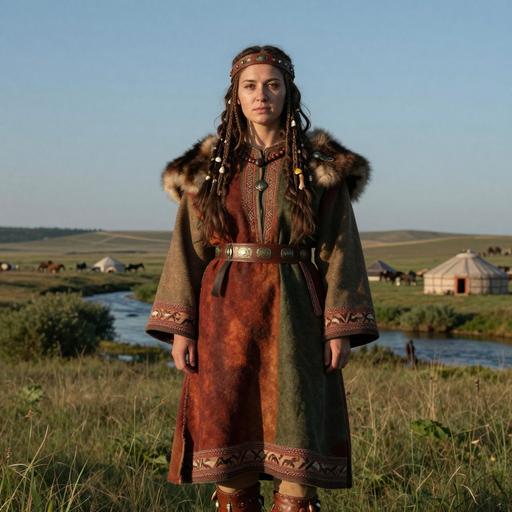
Portrait of ancient individual I6228 from Mongolia, dated 40 BCE - 109 CE
I6228
Mongolia Early Iron Age Xiongnu Culture 7, Mongolia 40 BCE - 109 CE Xiongnu Culture D4j12a* Downstream
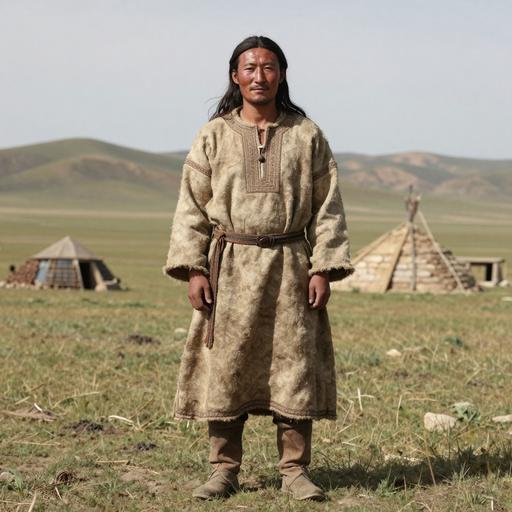
Portrait of ancient individual TAV005 from Mongolia, dated 200 BCE - 1500 CE
TAV005
Mongolia Late Medieval Xiongnu 200 BCE - 1500 CE Late Xiongnu D4j-c Downstream
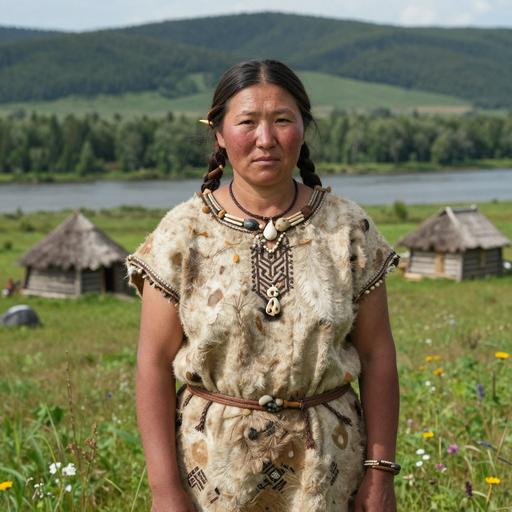
Portrait of ancient individual bla001 from Russia, dated 601 CE - 758 CE
bla001
Russia Iron Age Blagoveshchensk, Russia 601 CE - 758 CE Blagoveshchensk Culture D4e4a* Downstream
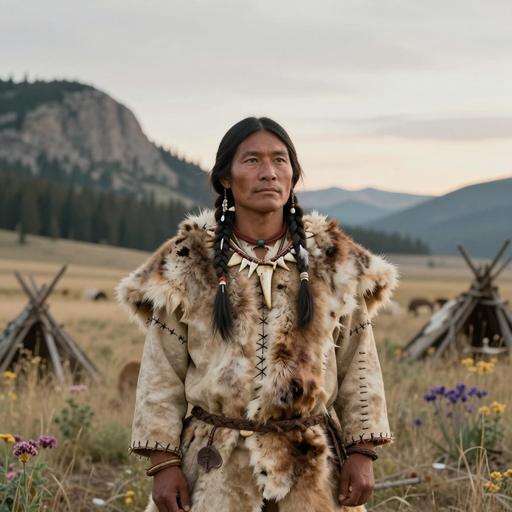
Portrait of ancient individual bla001 from Russia, dated 601 CE - 758 CE
bla001
Russia Iron Age East Asia 601 CE - 758 CE D4e4a* Downstream
Portrait of ancient individual scy006 from Ukraine, dated 800 BCE - 400 BCE
scy006
Ukraine Scythian Culture, Ukraine 800 BCE - 400 BCE Scythian Culture D4j2* Downstream
Portrait of ancient individual PTO001 from Russia, dated 1053 BCE - 912 BCE
PTO001
Russia Early Iron Age Buryatia, Russia 1053 BCE - 912 BCE Early Buryat D4j-a Downstream
Portrait of ancient individual I7039 from Mongolia, dated 1210 BCE - 1019 BCE
I7039
Mongolia Late Bronze Age Center West 4, Mongolia 1210 BCE - 1019 BCE Center West 4 D4j* Downstream
Portrait of ancient individual irk017 from Russia, dated 3337 BCE - 3021 BCE
irk017
Russia Neolithic Lena River, Russia 3337 BCE - 3021 BCE Lena River Neolithic D4j5a1* Downstream
Portrait of ancient individual irk017 from Russia, dated 3337 BCE - 3021 BCE
irk017
Russia Late Neolithic Cis-Baikal, Siberia 3337 BCE - 3021 BCE D4j5a1* Downstream
Portrait of ancient individual irk075 from Russia, dated 3519 BCE - 3370 BCE
irk075
Russia Neolithic Lake Baikal, Russia 3519 BCE - 3370 BCE Lake Baikal Culture D4j12* Downstream
Chapter VI

Carrier Distribution Map

Geographic distribution of 19 ancient DNA samples (direct and subclade carriers of D4)

Subclade carrier
Time Period Filter
All Time Periods
Showing all samples
Chapter VII

Temporal Distribution

Distribution of carriers across archaeological periods

Chapter VIII

Geographic Distribution

Distribution by country of origin (direct and subclade carriers shown by default)

Chapter IX

Country × Era Distribution

Cross-tabulation of carrier countries and archaeological periods (direct and subclade carriers shown by default)

Data

Data & Provenance

Source information and data quality

Last Updated 2026-02-09
Data Source

We use the latest phylotree for MTDNA haplogroup classification and data.