Menu
mtDNA Haplogroup • Maternal Lineage

F1

mtDNA Haplogroup F1

~25,000 years ago
East Asia / Southeast Asia
7 subclades
10 ancient samples
Scroll to explore
Chapter I

The Story

The journey of mtDNA haplogroup F1

Origins and Evolution

Haplogroup F1 is a subclade of mtDNA haplogroup F, which itself derives from macro-haplogroup N. As a branch nested within N, F1 represents a lineage that diversified after the initial out-of-Africa expansion that gave rise to N and M. Current phylogenetic and molecular-clock estimates place the origin of F (and its primary sublineages including F1) in East to Southeast Asia during the Late Pleistocene, with F1 likely arising roughly around 20–30 kya. The lineage diversified further during the Last Glacial Maximum and the subsequent climatic amelioration, producing regional subclades that track both inland and coastal population movements.

Subclades

F1 itself comprises multiple recognized subclades (commonly labelled F1a, F1b, F1c, etc., depending on the resolution of different phylogenies). These subclades show geographically structured patterns: some are found at higher frequency in northeastern East Asia (including Japan and Korea), others are more common in Southeast Asian mainland and island populations, and a number are associated with Austronesian-speaking groups in Island Southeast Asia and Near Oceania. High-resolution sequencing continues to refine the tree and identify younger branches that illuminate Holocene expansions.

Geographical Distribution

F1 is concentrated in East Asia and Southeast Asia with appreciable representation among: Han Chinese and other East Asian groups, Japanese (including some Jomon-derived lineages), Koreans, Vietnamese, Thai and other mainland Southeast Asians, and a range of Austronesian-speaking populations in the Philippines, Indonesia and parts of Island Melanesia and Micronesia. Lower-frequency occurrences are reported in neighboring regions — parts of Central Asia, southern Siberia and sporadically in South Asia — generally reflecting post-glacial movements, trade, and later demographic exchanges.

Historical and Cultural Significance

Because of its antiquity and distribution, F1 helps trace several important demographic processes in East and Southeast Asia. Older branches of F1 likely mark Paleolithic coastal and riverine settlements of East Asia, while later subclades reflect Neolithic expansions, including local agricultural dispersals and the Austronesian maritime expansion that carried maternal lineages into Island Southeast Asia and Near Oceania. Ancient DNA and population surveys have linked F-lineages to prehistoric groups in Japan (including contributions to Jomon/early Japanese maternal pools) and to Neolithic communities along major river systems in southern China.

Conclusion

mtDNA haplogroup F1 is an informative maternal lineage for reconstructing population history across East and Southeast Asia. Its phylogeographic pattern records deep Late Pleistocene roots in the region and subsequent Holocene demographic processes — from local Neolithic farming dispersals to the far-reaching Austronesian expansions — making it a valuable marker in studies of Asian prehistory and maternal ancestry.

Key Points

  • Origins and Evolution
  • Subclades
  • Geographical Distribution
  • Historical and Cultural Significance
  • Conclusion
Chapter II

Tree & Relationships

Phylogenetic context and subclades

Evolution Path

This haplogroup's evolutionary journey from its earliest ancestor to the present.

Steps Haplogroup Age Estimate Archaeology Era Time Passed Immediate Descendants Tested Modern Descendants Ancient Connections
1 F1 Current ~25,000 years ago 🦴 Paleolithic 25,000 years 7 115 10
2 N ~60,000 years ago 🦴 Paleolithic 60,000 years 15 15,452 13
3 L3 ~70,000 years ago 🦴 Paleolithic 70,000 years 11 17,621 6
4 L ~160,000 years ago 🦴 Paleolithic 160,000 years 7 18,987 5
Chapter III

Where in the World

Geographic distribution and modern presence

Place of Origin

East Asia / Southeast Asia

Modern Distribution

The populations where mtDNA haplogroup F1 is found include:

  1. Han Chinese and other East Chinese populations
  2. Japanese (including both mainland and some Ryukyu/Okinawan groups)
  3. Koreans
  4. Vietnamese and other mainland Southeast Asian groups (Thai, Lao)
  5. Filipinos and other Austronesian-speaking populations in Island Southeast Asia
  6. Indonesians and Malays
  7. Some Austronesian-derived populations in Near Oceania (e.g., parts of Melanesia and Micronesia)
  8. Tibeto-Burman and some Himalayan fringe groups (low to moderate frequency)
  9. Scattered occurrences in Central Asian and southern Siberian groups (low frequency)
  10. Occasional reports in South Asian populations (rare, typically at low frequency)
CHAPTER IV

When in Time

Your haplogroup in the context of human history

~25k years ago

Haplogroup F1

Your mtDNA haplogroup emerged in East Asia / Southeast Asia

East Asia / Southeast Asia
~20k years ago

Last Glacial Maximum

Peak of the last ice age, populations isolated

~10k years ago

Neolithic Revolution

Agriculture begins, settled communities form

~5k years ago

Bronze Age

Metalworking, writing, and early civilizations

~3k years ago

Iron Age

Iron tools, expanded trade networks

~2k years ago

Classical Antiquity

Greek and Roman civilizations flourish

Present

Present Day

Modern era

Your Haplogroup
Historical Era
Chapter IV-B

Linked Cultures

Ancient cultures associated with mtDNA haplogroup F1

Cultural Heritage

These ancient cultures have been linked to haplogroup F1 based on matching ancient DNA samples from archaeological excavations. The presence of this haplogroup in these cultures provides insights into the migrations and population movements of populations carrying this haplogroup.

Early Iron Age Culture Kangyu Culture Kurma Culture Late Medieval Mongolian Upper Yellow River Culture Ust-Belaya Culture Vietnamese Neolithic Yellow River Culture
Culture assignments are based on archaeological context of ancient DNA samples and may represent regional associations during specific time periods.
Chapter V

Sample Catalog

10 subclade carriers of haplogroup F1 (no exact F1 samples sequenced yet)

10 / 10 samples
Portrait Sample Country Era Date Culture mtDNA Match
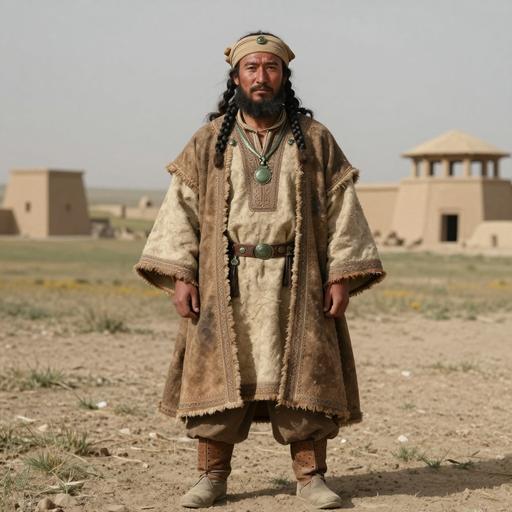
Portrait of ancient individual Vt777 from Vietnam, dated 399 BCE - 209 BCE
Vt777
Vietnam Late Neolithic Vietnam 399 BCE - 209 BCE Vietnamese Neolithic F1a1'4 Downstream
Portrait of ancient individual Vt777 from Vietnam, dated 399 BCE - 209 BCE
Vt777
Vietnam Neolithic Vietnam 399 BCE - 209 BCE Vietnamese Neolithic F1a1'4 Downstream
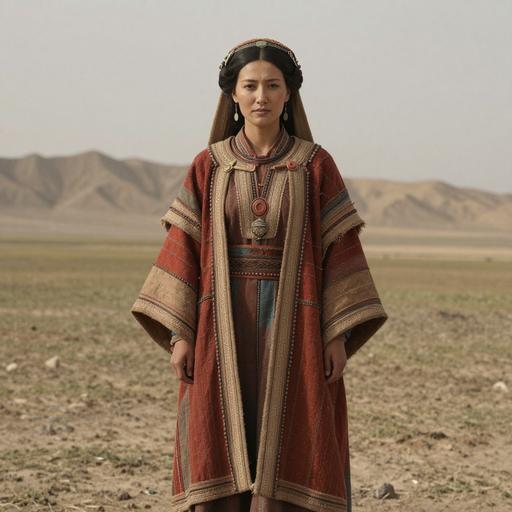
Portrait of ancient individual FU-215 from Hungary, dated 667 CE - 775 CE
FU-215
Hungary Early Avar Period Hungary 667 CE - 775 CE Early Avar F1b1+@152 Downstream
Portrait of ancient individual C792 from China, dated 743 BCE - 386 BCE
C792
China Iron Age Dongmaili, Xinjiang, China 743 BCE - 386 BCE Dongmaili Culture F1b1+@152 Downstream
Portrait of ancient individual C3346 from China, dated 772 BCE - 476 BCE
C3346
China Early Iron Age Songshugou, Xinjiang, China 772 BCE - 476 BCE Songshugou Culture F1b1+@152 Downstream
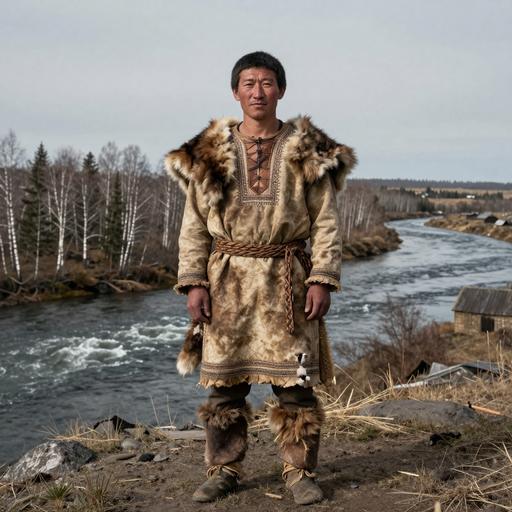
Portrait of ancient individual KAG002 from Russia, dated 1878 BCE - 1697 BCE
KAG002
Russia Early Bronze Age Lena River, Siberia, Russia 1878 BCE - 1697 BCE Lena River Culture F1b1b1* Downstream
Portrait of ancient individual ZPL002 from Russia, dated 2289 BCE - 2140 BCE
ZPL002
Russia Early Bronze Age Lena River, Siberia, Russia 2289 BCE - 2140 BCE Lena River Culture F1b1b* Downstream
Portrait of ancient individual irk036 from Russia, dated 2887 BCE - 2636 BCE
irk036
Russia The Angara River Broze Age Culture of Russia 2887 BCE - 2636 BCE Angara River Culture F1b1b1* Downstream
Portrait of ancient individual irk036 from Russia, dated 2887 BCE - 2636 BCE
irk036
Russia Early Bronze Age Cis-Baikal, Siberia 2887 BCE - 2636 BCE F1b1b1* Downstream
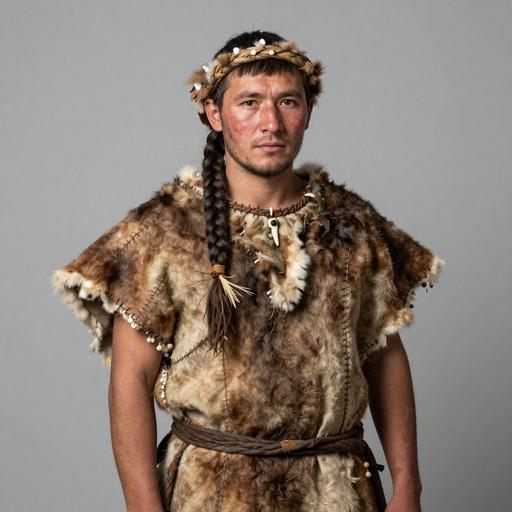
Portrait of ancient individual NEO115 from Russia, dated 5974 BCE - 5726 BCE
NEO115
Russia Transbaikal Mesolithic Culture 5974 BCE - 5726 BCE Transbaikal Culture F1b1+@152 Downstream
Chapter VI

Carrier Distribution Map

Geographic distribution of 10 ancient DNA samples (direct and subclade carriers of F1)

Subclade carrier
Time Period Filter
All Time Periods
Showing all samples
Chapter VII

Temporal Distribution

Distribution of carriers across archaeological periods

Chapter VIII

Geographic Distribution

Distribution by country of origin (direct and subclade carriers shown by default)

Chapter IX

Country × Era Distribution

Cross-tabulation of carrier countries and archaeological periods (direct and subclade carriers shown by default)

Data

Data & Provenance

Source information and data quality

Last Updated 2026-02-09
Data Source

We use the latest phylotree for MTDNA haplogroup classification and data.