mtDNA · Maternal lineage

F1B1B

mtDNA Haplogroup F1B1B

A reference profile for one lineage branch. Shared haplogroups do not establish a family relationship or cultural identity.

Reference profile

Branch background

Historical context for mtDNA lineage branch F1B1B

Origins and Evolution

mtDNA haplogroup F1B1B derives from the broader F1B1 lineage and represents a downstream maternal branch that likely formed during the mid-Holocene (roughly the last 6,000 years) in the East to Southeast Asian region. Its emergence fits the wider pattern of Holocene expansions in East and Island Southeast Asia, where climatic amelioration, rising sea levels, and the spread of coastal and riverine economies promoted demographic growth and population movement. As a subclade of F1B1, F1B1B inherits markers characteristic of the F1 maternal radiation while showing additional private mutations that define its more restricted phylogeographic footprint.

Subclades (if applicable)

F1B1B may contain locally differentiated sublineages that are more common on particular islands or coastal regions of Island Southeast Asia and Near Oceania. Published population surveys and mitogenome sequencing efforts have identified further branches under F1B1 in some regional datasets, but F1B1B itself tends to be split into a small number of regionally structured subbranches rather than a wide, deeply branched clade. Continued full mitogenome sampling in underrepresented parts of Southeast Asia and Near Oceania often refines the internal phylogeny of this clade.

Geographical Distribution

F1B1B shows its highest frequencies and diversity in East and Southeast Asia, with notable presence in:

  • Mainland East Asia (including Han Chinese and other East Chinese groups)
  • Japan (including some Ryukyu/Okinawan groups) and Korea
  • Mainland Southeast Asian populations (Vietnam, Thai, Lao)
  • Island Southeast Asia (Philippines, Indonesia, Malaysia) and in Austronesian-speaking communities
  • Pockets in Near Oceania (Melanesia and Micronesia) associated with Austronesian-derived groups

Low to occasional occurrences are reported in Tibeto-Burman fringe populations, scattered Central Asian and southern Siberian groups, and rare instances in South Asia. The pattern is consistent with an origin in coastal East/Southeast Asia followed by both overland and maritime dispersal routes, with later amplification during the Neolithic–Austronesian expansions.

Historical and Cultural Significance

The distribution of F1B1B aligns closely with coastal and island demographic processes: postglacial coastal recolonization, Neolithic population growth, and the later Austronesian maritime dispersals beginning in the mid-to-late Holocene. In Island Southeast Asia and parts of Near Oceania, F1B1B is one of several maternal lineages (alongside haplogroups such as B4a1a and M7 sublineages) that mark the maternal ancestry of Austronesian-speaking communities. Its presence in mainland East Asia and in some Himalayan fringe and Central Asian populations reflects both prehistoric gene flow and later, low-level long-distance movements.

Ancient DNA and full mitogenome studies identify F1-derived lineages in Holocene contexts across East and Southeast Asia; while F1B1B-specific ancient occurrences are less numerous in the published literature, the lineage's pattern supports a role in maritime-connected prehistoric communities (including those implicated in Lapita/Austronesian-related movements into Remote Oceania).

Conclusion

F1B1B is a regionally informative maternal subclade within the F1B branch that highlights mid-Holocene demographic processes in East and Southeast Asia, especially those tied to coastal economies and Austronesian maritime expansion. It remains valuable for reconstructing maternal population history in Island Southeast Asia and neighboring regions, and ongoing mitogenome sequencing continues to refine its internal structure and geographic history.

Key Points

  • Origins and Evolution
  • Subclades (if applicable)
  • Geographical Distribution
  • Historical and Cultural Significance
  • Conclusion
Reference profile

Tree & Relationships

Phylogenetic context and subclades

Evolution Path

Follow the recorded parent branches toward F1B1B. Dates are estimates and can change as reference data is revised.

Steps Haplogroup Age Estimate Archaeology Era Time Passed Immediate Descendants Tested Modern Descendants Ancient Connections
1 F1B1B Current ~6,000 years ago Chalcolithic 6,000 years 2 1 26
2 F1B1 ~9,000 years ago Neolithic 9,000 years 3 34 0
3 F1B ~15,000 years ago Mesolithic 15,000 years 1 34 8
4 F1A ~12,000 years ago Neolithic 12,000 years 9 120 2
5 F1 ~25,000 years ago Paleolithic 25,000 years 2 154 10
6 F ~28,000 years ago Paleolithic 28,000 years 4 265 6
7 R9 ~40,000 years ago Paleolithic 40,000 years 3 281 0
8 R ~55,000 years ago Paleolithic 55,000 years 17 22,830 57
9 NA - - - 1 22,830 0
10 N ~60,000 years ago Paleolithic 60,000 years 16 26,150 13
11 L3 ~70,000 years ago Paleolithic 70,000 years 7 30,162 6
12 L3'4 - - - 2 30,212 0
13 L3'4'6 - - - 2 30,216 0
14 L2'3'4'6 - - - 2 31,333 0
15 L2'3'4'5'6'7 - - - 2 31,349 0
16 L1'2'3'4'5'6'7 - - - 2 31,852 0
17 L ~160,000 years ago Paleolithic 160,000 years 2 32,236 5

Siblings (2)

Other branches from the same parent haplogroup

Reference profile

Where in the World

Geographic distribution and modern presence

Recorded origin

East to Southeast Asia

Modern Distribution

The populations where mtDNA haplogroup F1B1B is found include:

  1. Han Chinese and other East Chinese populations
  2. Japanese (including some Ryukyu/Okinawan groups)
  3. Koreans
  4. Vietnamese and other mainland Southeast Asian groups (Thai, Lao)
  5. Filipinos and other Austronesian-speaking populations in Island Southeast Asia
  6. Indonesians and Malays
  7. Austronesian-derived populations in Near Oceania (parts of Melanesia and Micronesia)
  8. Tibeto-Burman and Himalayan fringe groups (low to moderate frequency)
  9. Scattered Central Asian and southern Siberian groups (low frequency)
  10. Occasional reports in South Asian populations (rare, low frequency)
Historical context

A branch through time

Estimated formation in a broad historical timeline. Period markers provide context and do not imply a connection with particular cultures.

  1. ~10k years ago

    Neolithic Revolution

    Agriculture begins, settled communities form

  2. ~6k years ago

    Haplogroup F1B1B

    Estimated formation of this mtDNA branch; dates and locations are reference estimates.

    This branch
  3. ~5k years ago

    Bronze Age

    Metalworking, writing, and early civilizations

  4. ~3k years ago

    Iron Age

    Iron tools, expanded trade networks

  5. ~2.5k years ago

    Classical Antiquity

    Greek and Roman civilizations flourish

  6. Present

    Present Day

    Modern era

Reference profile

Archaeological context

Recorded archaeological associations for mtDNA branch F1B1B

Recorded associations

These labels describe archaeological contexts recorded for reference samples linked to F1B1B. An association does not establish that all carriers belonged to a culture or followed a particular migration route.

Karasuk Culture Kipchak Culture Late Bronze Age Culture Lena River Culture Russia_KrasnoyarskKrai_N_Angara Shamanka Culture Slab Grave Culture Ust-Belaya Culture Zavkhan Culture
Culture assignments are based on archaeological context of ancient DNA samples and may represent regional associations during specific time periods.
Reference profile

Sample Catalog

24 direct carriers and 2 subclade carriers of haplogroup F1B1B

10 shown · 26 matching samples

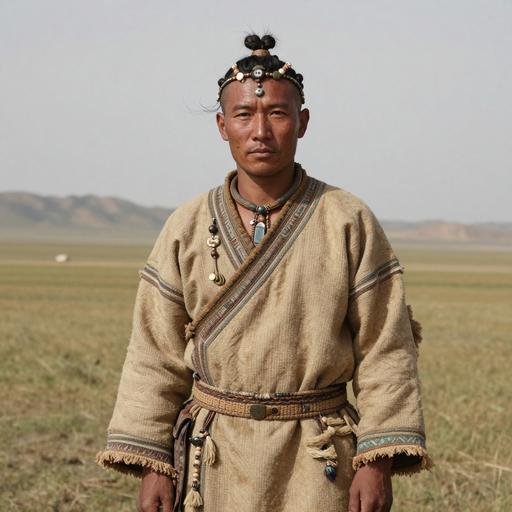
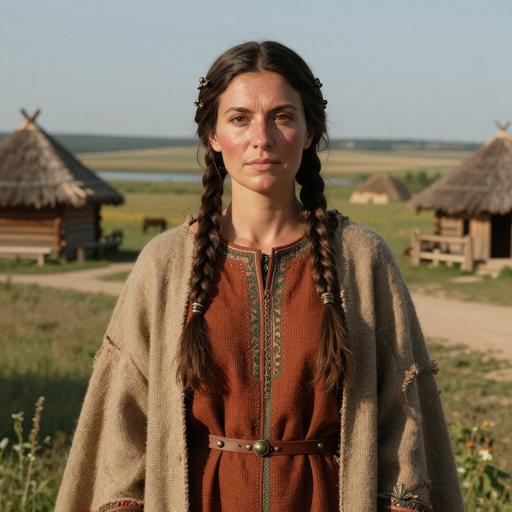
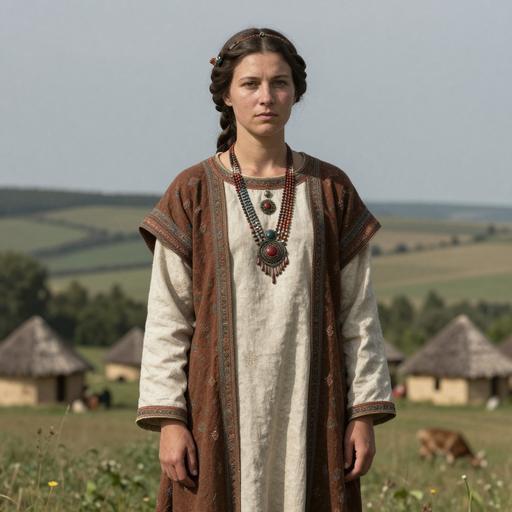
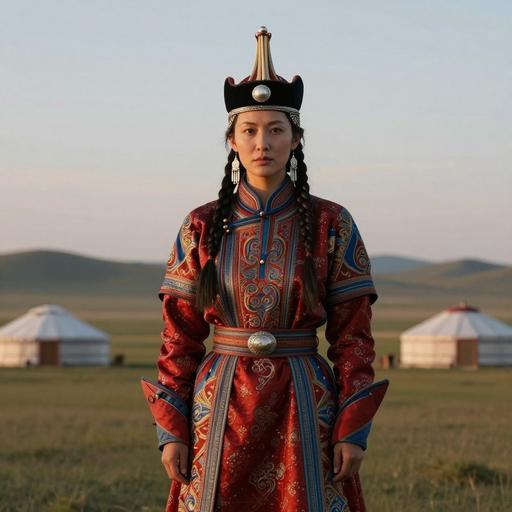
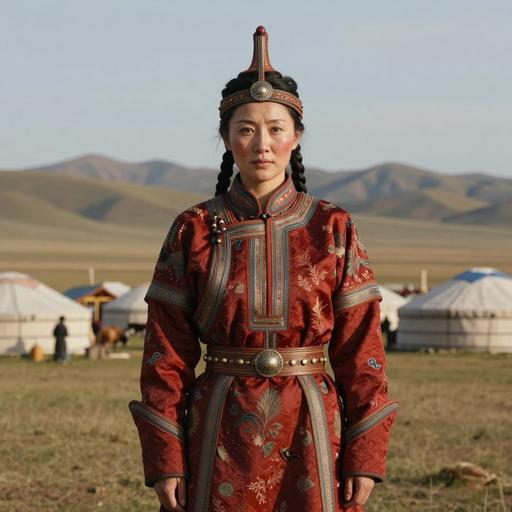
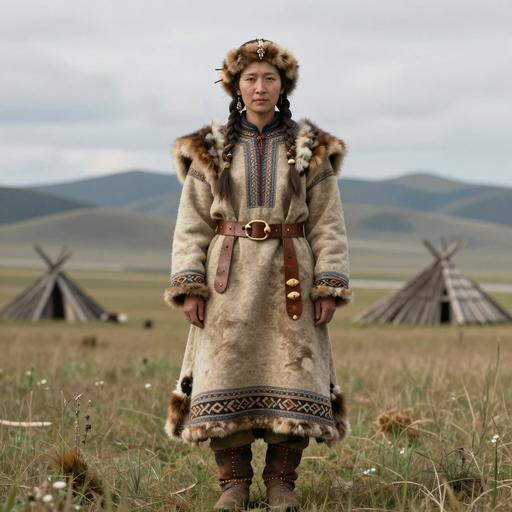
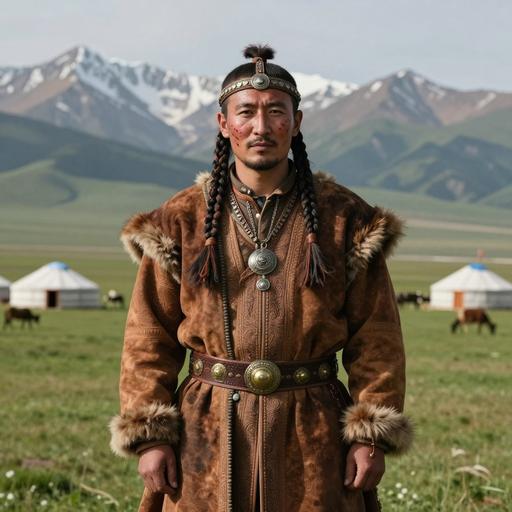
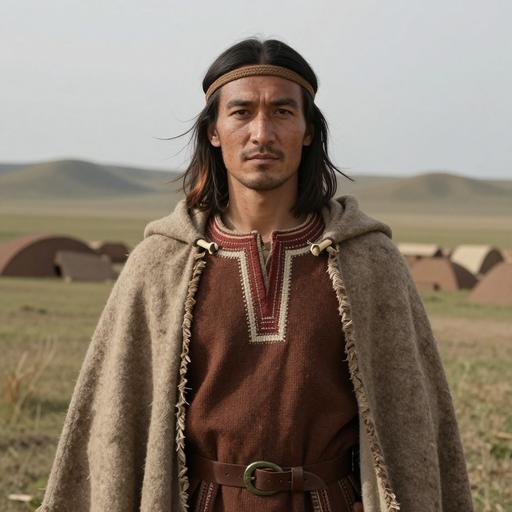
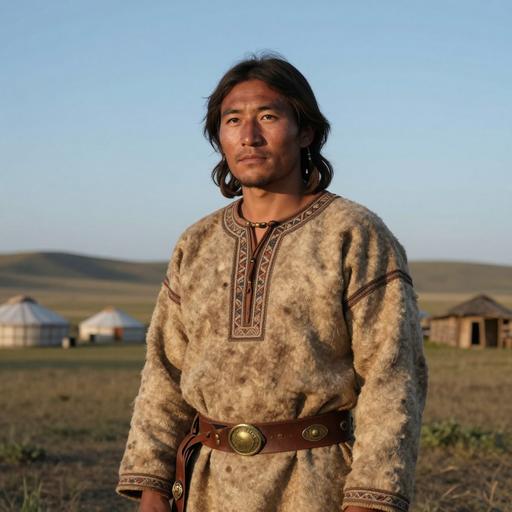
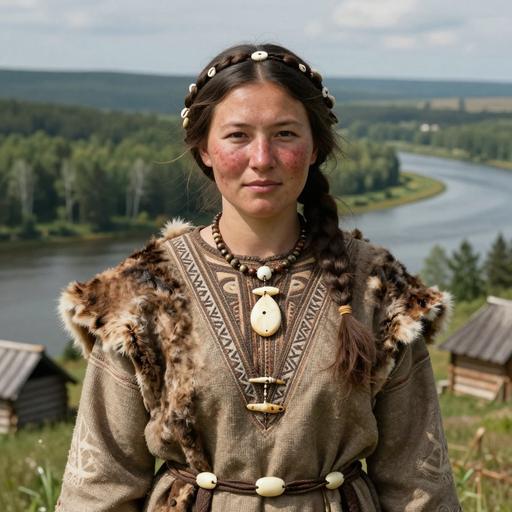
Portraits are AI-generated illustrations. Sample labels and accession IDs identify the reference records.

Portrait Sample Country Era Date Culture mtDNA Match
AI-generated illustrative portrait of EIA Sagly-4 individual, Uvs aimag. Ulaangom sum. Chandman Uul. Ulaangom cemetery Grave #47. Burial 3, Mongolia (357-167 BCE)
Sample ID: I6231
Mongolia Mongolia EIA Sagly 4 357-167 calBCE (2180±20 BP, PSUAMS-7397) Sagly Culture F1b1b Direct
AI-generated illustrative portrait of Eurasian Nomadic individual, Kunpeszér-Felsőpeszéri út (Bács-Kiskun County), Hungary (580-670 CE)
Sample ID: KUP002
Hungary Hungary EarlyAvar 580 CE - 670 CE Early Avar F1b1b Direct
AI-generated illustrative portrait of Early Avar-o High East Asia individual, Csongrád-Csanád County. Makó-Mikócsa-halom, Hungary (600-650 CE)
Sample ID: MM-151
Hungary Hungary EarlyAvar 600-650 CE Early Avar F1b1b Direct
AI-generated illustrative portrait of Early Avar individual, Danube-Tisza Interfluve. Kunpeszér - Felsőpeszéri út, Hungary (600-700 CE)
Sample ID: A1821
Hungary Early Avar Period Danube-Tisza, Hungary 600-700 CE Early Avar F1b1b Direct
AI-generated illustrative portrait of Late Avar-o Low East Asia individual, Rákóczifalva-Bagi-földek (Jász-Nagykun-Szolnok Coiunty, Szolnok), Hungary (650-900 CE)
Sample ID: RKF018
Hungary Hungary LateAvar 650-900 CE Avar Culture F1b1b Direct
AI-generated illustrative portrait of Late Avar-o Low East Asia individual, Rákóczifalva-Bagi-földek (Jász-Nagykun-Szolnok Coiunty, Szolnok), Hungary (650-900 CE)
Sample ID: RKF020
Hungary Hungary LateAvar 650-900 CE Avar Culture F1b1b Direct
AI-generated illustrative portrait of Middle Avar-o Low East Asia individual, Rákóczifalva-Bagi-földek (Jász-Nagykun-Szolnok Coiunty, Szolnok), Hungary (650-900 CE)
Sample ID: RKF098
Hungary Hungary MiddleAvar 650-900 CE Avar Culture F1b1b Direct
AI-generated illustrative portrait of Omnogovi Late Medieval individual, Umungobi. Ikh Uvgun, Mongolia (1,000-1,500 CE)
Sample ID: IKU001
Mongolia Late Medieval Umungobi, Mongolia 1000-1500 CE Umungobi Medieval F1b1b Direct
AI-generated illustrative portrait of Khovd Late Medieval individual, Khovd. Khalzan Khoshuu. Bodonch Gol, Mongolia (1,000-1,500 CE)
Sample ID: KHL001
Mongolia Mongolia Khovd LateMedieval 1000-1500 CE Mongol Period F1b1b Direct
AI-generated illustrative portrait of Eurasian Nomadic individual, Siberia. Tungus & Eastern Steppe, Russia (1,000-800 BCE)
Sample ID: DA9
Russia Russia Tagar 1000 BCE - 800 BCE Tagar Culture F1b1b Direct
MATERNAL LINEAGE · ANCIENT DNA

Ancient lineage evidence map

Follow parent clades toward this branch and explore where ancient carriers were found.

Loading ancient observations…

Markers are archaeological find locations. A dashed connector is an uncertain, proposed geographic transition between consecutive branches supported by multiple dated observations; it is not an exact travel route, birthplace or proof of direct descent. Parent-clade samples may belong to other descendant branches. Gaps remain where evidence is insufficient. Sample dates differ from haplogroup formation dates.

Reference profile

Carrier Distribution Map

Geographic distribution of 26 ancient DNA samples (direct and subclade carriers of F1B1B)

Direct carrier Subclade carrier
Time Period Filter
All Time Periods
Showing all samples
Reference profile

Temporal Distribution

Distribution of carriers across archaeological periods

Reference profile

Geographic Distribution

Counts by recorded sample country. These reflect the available reference selection, not population frequencies.

Reference profile

Country × Era Distribution

Compare recorded sample counts across countries and archaeological periods. Select a populated cell to inspect a sample.

Data

Data & Provenance

Source information and data quality

Last Updated 2026-02-16
Confidence Score 50/100
Coverage Low

Data Source

Classification, estimated dates and geographic context reflect the recorded reference data and may change as evidence is revised. Sample coverage is uneven; recorded locations and archaeological associations do not establish personal origin or cultural identity.

A haplogroup follows one maternal or paternal line. The branch prediction depends on which markers the DNA file contains. How our analysis works