Menu
Currency
mtDNA Haplogroup • Maternal Lineage

G2A

mtDNA Haplogroup G2A

~15,000 years ago
Northeast Asia / Central Asia
3 subclades
48 ancient samples
Scroll to explore
Chapter I

The Story

The journey of mtDNA haplogroup G2A

Origins and Evolution

mtDNA haplogroup G2A is a subclade of haplogroup G (via the intermediate node G2A'C in Phylotree), itself derived from macro-haplogroup M. Haplogroup G is centered in northeastern Eurasia, and its internal diversification largely occurred during the Late Pleistocene and into the Holocene. As an intermediate clade, G2A likely formed following the initial radiation of G in refugial or frontier populations of Siberia / northeastern Asia and may date to the Late Glacial or early post-glacial period (here estimated at ~15 kya), although precise coalescence dates require targeted full mitogenome sampling and refined molecular-clock analysis.

Because G2A sits within a complex phylogeny (G → G2 → G2A / G2B ...), its history connects earlier Pleistocene dispersals of East Eurasian maternal lineages with later Holocene movements across Central and North Asia. The designation G2A (and the related intermediate node G2A'C) functions mainly as a phylogenetic bridge between parent and daughter clades in reference trees and helps clarify relationships among closely related mitotypes.

Subclades

As an internal branch, G2A may include further downstream subclades described in full mitogenome-based phylogenies (for example, localized G2a variants or sequences labeled G2a1 / G2a2 in different datasets). Many published population surveys have only partial control-region or limited coding-region resolution, so the depth and definitions of G2A subclades remain incompletely characterized. Future whole-mitogenome sequencing will better resolve sub-branches, geographic structure, and internal diversity.

Geographical Distribution

The geographic distribution of G2A is concentrated in northeast and central Eurasia, with detections most commonly reported (or inferred) from: indigenous Siberian groups, Mongolic populations, and various Central Asian groups with East Asian ancestry components. The clade is generally rare in large-scale surveys but shows spotty presence across adjacent regions due to prehistoric mobility and later historic gene flow. Occasional detections in archaeological ancient DNA from Eurasian steppe contexts or in modern admixed populations highlight its transregional connections.

Because G2A is relatively uncommon in published modern datasets, distribution maps are currently coarse; increased sampling in underrepresented regions (e.g., interior Siberia, the Russian Far East, and Central Asian highlands) is likely to refine its range and frequency estimates.

Historical and Cultural Significance

While not associated with a single high-frequency archaeological culture, G2A is plausibly linked to the maternal gene pools of:

  • Late Pleistocene / Early Holocene hunter-gatherer groups of northeast Asia who contributed to post-glacial re-expansions.
  • Holocene populations of Central and Inner Asia that later participated in Bronze Age and Iron Age population movements across the steppe (where East Asian maternal lineages mixed with western steppe groups).

In historical times, G2A-bearing maternal lineages may have moved with nomadic and pastoralist expansions (for example, various Turkic- and Mongolic-associated population movements), but the haplogroup does not presently define any single cultural complex in the way some higher-frequency haplogroups do. Its primary significance is phylogenetic: clarifying maternal relationships within haplogroup G and illuminating East–Central Eurasian maternal connections in both prehistoric and historic periods.

Conclusion

mtDNA G2A is an informative intermediate branch of haplogroup G that reflects northeastern Eurasian maternal ancestry with a Late Pleistocene–to–Early Holocene time depth (estimated here at ~15 kya). It is currently rare and patchily distributed across Siberia, Mongolia, and parts of Central and Northeast Asia. Resolving its detailed demographic history requires broader, high-resolution mitogenome sequencing of modern and ancient samples from under-sampled parts of Eurasia.

Note on uncertainty: Many statements about G2A are provisional because the clade is under-sampled in published mitogenome datasets; further whole-mtDNA sequencing and better phylogenetic resolution will sharpen timing and geographic inferences.

Key Points

  • Origins and Evolution
  • Subclades
  • Geographical Distribution
  • Historical and Cultural Significance
  • Conclusion

Chapter II

Tree & Relationships

Phylogenetic context and subclades

Evolution Path
This haplogroup's evolutionary journey from its earliest ancestor to the present.

Steps Haplogroup Age Estimate Archaeology Era Time Passed Immediate Descendants Tested Modern Descendants Ancient Connections
1 G2A Current ~15,000 years ago 🏹 Mesolithic 15,000 years 3 34 48
2 G2A'C 2 36 0
3 G2 ~20,000 years ago 🏹 Mesolithic 20,000 years 2 42 10
4 G ~35,000 years ago 🦴 Paleolithic 35,000 years 4 303 3
5 M12'G 2 303 0
6 M ~60,000 years ago 🦴 Paleolithic 60,000 years 42 2,162 41
7 L3 ~70,000 years ago 🦴 Paleolithic 70,000 years 7 23,542 6
8 L3'4 2 23,581 0
9 L3'4'6 2 23,584 0
10 L2'3'4'6 2 24,475 0
11 L2'3'4'5'6'7 2 24,488 0
12 L1'2'3'4'5'6'7 2 24,903 0
13 L ~160,000 years ago 🦴 Paleolithic 160,000 years 2 25,205 5

Siblings (1)

Other branches from the same parent haplogroup

Chapter III

Where in the World

Geographic distribution and modern presence

Place of Origin

Northeast Asia / Central Asia

Modern Distribution

The populations where mtDNA haplogroup G2A'C is found include:

  1. Indigenous Siberian groups (e.g., Yakut, Evenk, and other North Siberian populations)
  2. Mongolic populations (e.g., Mongolians, Buryats)
  3. Turkic-speaking Central Asians (e.g., Kazakh, Kyrgyz, Uyghur — often in admixed contexts)
  4. Northeast Asian populations (sporadic detections in Korean and some Japanese samples or regional minorities)
  5. Ancient Eurasian steppe and northern archaeological samples (occasional ancient DNA reports and transregional contexts)
CHAPTER IV

When in Time

Your haplogroup in the context of human history

~20k years ago

Last Glacial Maximum

Peak of the last ice age, populations isolated

~15k years ago

Haplogroup G2A

Your mtDNA haplogroup emerged in Northeast Asia / Central Asia

Northeast Asia / Central Asia
~10k years ago

Neolithic Revolution

Agriculture begins, settled communities form

~5k years ago

Bronze Age

Metalworking, writing, and early civilizations

~3k years ago

Iron Age

Iron tools, expanded trade networks

~2k years ago

Classical Antiquity

Greek and Roman civilizations flourish

Present

Present Day

Modern era

Your Haplogroup
Historical Era
Chapter IV-B

Linked Cultures

Ancient cultures associated with mtDNA haplogroup G2A

Cultural Heritage

These ancient cultures have been linked to haplogroup G2A based on matching ancient DNA samples from archaeological excavations. The presence of this haplogroup in these cultures provides insights into the migrations and population movements of populations carrying this haplogroup.

Afanasievo Culture Argun River Culture Avar Avar Culture Ayousaigoukou Culture Chinese Paleolithic Khovsgol Culture Medieval Nomadic Shamanka Culture Xiongnu Buryat
Culture assignments are based on archaeological context of ancient DNA samples and may represent regional associations during specific time periods.
Chapter V

Sample Catalog

4 direct carriers and 44 subclade carriers of haplogroup G2A

48 / 48 samples
Portrait Sample Country Era Date Culture mtDNA Match
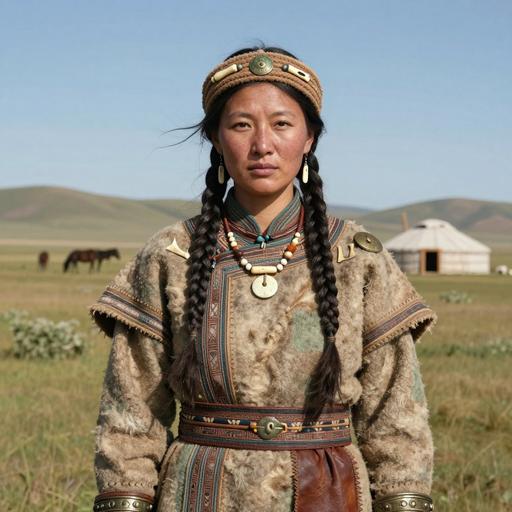
Portrait of ancient individual HNJ016 from Hungary, dated 664 CE - 711 CE
HNJ016
Hungary Middle Avar Period Hungary 664 CE - 711 CE Avar Culture G2a+152 Direct
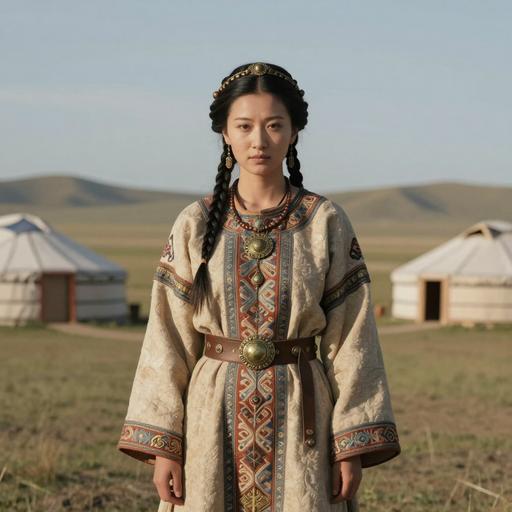
Portrait of ancient individual KFJ036 from Hungary, dated 670 CE - 804 CE
KFJ036
Hungary Middle to Late Avar Period 670 CE - 804 CE Avar G2a Direct
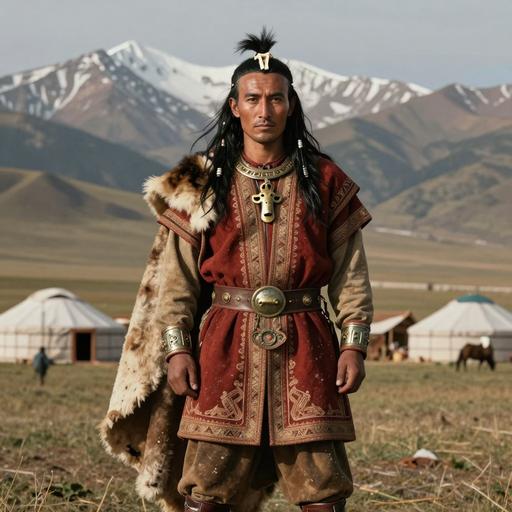
Portrait of ancient individual ARS017 from Mongolia, dated 1428 BCE - 1130 BCE
ARS017
Mongolia Late Bronze Age Khovsgol 6, Mongolia 1428 BCE - 1130 BCE Khovsgol Culture G2a Direct
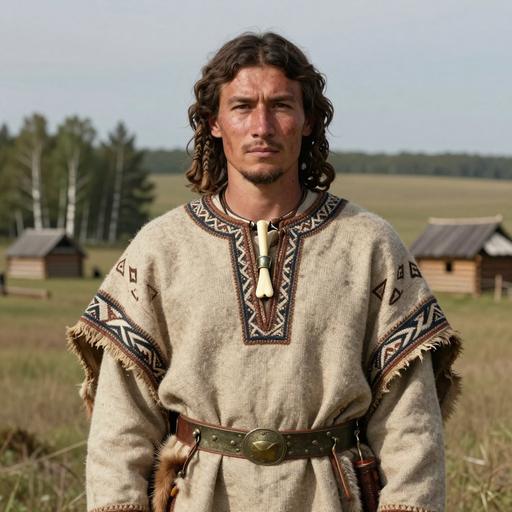
Portrait of ancient individual C1661 from China, dated 1435 CE - 1469 CE
C1661
China Historical Period Ayousaigoukou, Xinjiang, China 1435 CE - 1469 CE Ayousaigoukou Culture G2a+152 Direct
Portrait of ancient individual BUR004 from Mongolia, dated 40 BCE - 109 CE
BUR004
Mongolia Early Medieval Xiongnu 40 BCE - 109 CE Xiongnu G2a5 Downstream
Portrait of ancient individual TAK001 from Mongolia, dated 200 BCE - 100 CE
TAK001
Mongolia Xiongnu Period Khovd, Mongolia 200 BCE - 100 CE Xiongnu Khovd G2a1 Downstream
Portrait of ancient individual UVG001 from Mongolia, dated 200 BCE - 100 CE
UVG001
Mongolia Xiongnu Period Bulgan, Mongolia 200 BCE - 100 CE Xiongnu G2a2 Downstream
Portrait of ancient individual DA73 from Kyrgyzstan, dated 236 CE - 421 CE
DA73
Kyrgyzstan The Hun Period in Kyrgyzstan 236 CE - 421 CE Hunnic Period G2a1 Downstream
Portrait of ancient individual DA73 from Kyrgyzstan, dated 236 CE - 421 CE
DA73
Kyrgyzstan The Huns 236 CE - 421 CE G2a1 Downstream
Portrait of ancient individual DA130 from Kazakhstan, dated 373 BCE - 171 BCE
DA130
Kazakhstan Tian Shan Saka Culture, Kazakhstan 373 BCE - 171 BCE Saka Culture G2a1 Downstream
Chapter VI

Carrier Distribution Map

Geographic distribution of 48 ancient DNA samples (direct and subclade carriers of G2A)

Direct carrier Subclade carrier
Time Period Filter
All Time Periods
Showing all samples
Chapter VII

Temporal Distribution

Distribution of carriers across archaeological periods

Chapter VIII

Geographic Distribution

Distribution by country of origin (direct and subclade carriers shown by default)

Chapter IX

Country × Era Distribution

Cross-tabulation of carrier countries and archaeological periods (direct and subclade carriers shown by default)

Data

Data & Provenance

Source information and data quality

Last Updated 2026-06-14
Confidence Score 50/100
Coverage Low
Data Source

We use the latest phylotree for MTDNA haplogroup classification and data.