mtDNA · Maternal lineage

G2A3

mtDNA Haplogroup G2A3

A reference profile for one lineage branch. Shared haplogroups do not establish a family relationship or cultural identity.

Reference profile

Branch background

Historical context for mtDNA lineage branch G2A3

Origins and Evolution

mtDNA haplogroup G is an East Eurasian maternal lineage with deep roots in northern and eastern Asia. As a subclade under G2 and more narrowly under the intermediate clade described as G2A3 (positioned beneath the reported G2AA3 node in reference phylogenies), G2A3 represents a downstream lineage that likely arose after the initial diversification of G in Northeast Asia. Based on the phylogenetic position of G2 subclades and available coalescence estimates for related lineages, a plausible time depth for G2A3 is in the Late Pleistocene to early Holocene (roughly ~18 kya, acknowledging wide uncertainty). This estimate is provisional and should be treated cautiously until more complete sequence data and calibrated molecular-clock analyses are available.

Subclades

At present G2A3 is treated as an intermediate/terminal clade in PhyloTree-style references and may include further downstream branches that are either very rare or not yet well-characterized in public databases. Because G2A3 is comparatively scarce in published datasets, many internal branches remain unsampled or poorly resolved; targeted mitogenome sequencing of candidate populations could reveal additional substructure and refine the branching order beneath G2A3.

Geographical Distribution

Empirical observations and reasonable inference from the distribution of sister clades place G2A3 predominantly in Northeast Asia and adjacent Siberian regions, with occasional presence reported in some Central Asian and northern East Asian populations. The pattern for many G2 subclades is one of concentration in northern Asian groups (including Tungusic-, Mongolic- and some Turkic-speaking populations), with low-level detection in neighboring regions due to historical mobility and gene flow. Modern and ancient DNA samples from Siberia, Mongolia and northern China are the most informative sources for clarifying this distribution.

Historical and Cultural Significance

Because G2A3 is rare and under-sampled, direct cultural attributions are tentative. However, by analogy with better-sampled G lineages, G2A3 likely persisted among hunter-gatherer and early Holocene forager populations of Northeast Asia, and later became a component of the maternal gene pool of groups involved in Holocene regional demographic processes (for example, steppe-forest contacts, Bronze Age local cultural complexes, and later Turkic–Mongolic expansions). Its presence in populations historically occupying Siberia and adjacent regions means it may appear in ancient individuals from local Neolithic and Bronze Age contexts, but clear associations await more ancient mitogenome data.

Conclusion

G2A3 is an informative but currently under-characterized mtDNA subclade within haplogroup G2. It highlights the high diversity of maternal lineages in northern Eurasia and the need for expanded whole-mitogenome sampling in Siberian, Mongolian, and northern Chinese populations. Future studies that combine dense modern sampling with targeted ancient DNA will be necessary to refine the age estimate, geographic origin, and substructure of G2A3 and to place it more precisely within regional demographic histories.

Key Points

  • Origins and Evolution
  • Subclades
  • Geographical Distribution
  • Historical and Cultural Significance
  • Conclusion
Reference profile

Tree & Relationships

Phylogenetic context and subclades

Evolution Path

Follow the recorded parent branches toward G2A3. Dates are estimates and can change as reference data is revised.

Steps Haplogroup Age Estimate Archaeology Era Time Passed Immediate Descendants Tested Modern Descendants Ancient Connections
1 G2A3 Current ~18,000 years ago Mesolithic 18,000 years 1 0 0
2 G2AA3 - - - 1 0 0
3 G2AA - - - 4 20 0
4 G2A ~15,000 years ago Mesolithic 15,000 years 3 39 48
5 G2A'C - - - 2 41 0
6 G2 ~20,000 years ago Mesolithic 20,000 years 2 49 10
7 G ~35,000 years ago Paleolithic 35,000 years 4 382 3
8 M12'G - - - 2 383 0
9 M ~60,000 years ago Paleolithic 60,000 years 42 2,671 41
10 L3 ~70,000 years ago Paleolithic 70,000 years 7 30,162 6
11 L3'4 - - - 2 30,212 0
12 L3'4'6 - - - 2 30,216 0
13 L2'3'4'6 - - - 2 31,333 0
14 L2'3'4'5'6'7 - - - 2 31,349 0
15 L1'2'3'4'5'6'7 - - - 2 31,852 0
16 L ~160,000 years ago Paleolithic 160,000 years 2 32,236 5
Reference profile

Where in the World

Geographic distribution and modern presence

Recorded origin

Northeast Asia / Siberia

Modern Distribution

The populations where mtDNA haplogroup G2A3 is found include:

  1. Evenk and other indigenous Tungusic-speaking groups (Siberia)
  2. Yakut (Sakha) and other North Siberian populations
  3. Buryat and Mongolian populations (Mongolia / Lake Baikal region)
  4. Turkic-speaking groups in parts of Central Asia (occasional detections)
  5. Northern East Asian populations (e.g., some Korean/Japanese datasets show rare, related G2 subclades)
Historical context

A branch through time

Estimated formation in a broad historical timeline. Period markers provide context and do not imply a connection with particular cultures.

  1. ~20k years ago

    Last Glacial Maximum

    Peak of the last ice age, populations isolated

  2. ~18k years ago

    Haplogroup G2A3

    Estimated formation of this mtDNA branch; dates and locations are reference estimates.

    This branch
  3. ~10k years ago

    Neolithic Revolution

    Agriculture begins, settled communities form

  4. ~5k years ago

    Bronze Age

    Metalworking, writing, and early civilizations

  5. ~3k years ago

    Iron Age

    Iron tools, expanded trade networks

  6. ~2.5k years ago

    Classical Antiquity

    Greek and Roman civilizations flourish

  7. Present

    Present Day

    Modern era

Reference profile

Archaeological context

Recorded archaeological associations for mtDNA branch G2A3

Recorded associations

These labels describe archaeological contexts recorded for reference samples linked to G2A3. An association does not establish that all carriers belonged to a culture or followed a particular migration route.

Afanasievo Culture Avar Avar Culture Ayousaigoukou Culture China_Tibet_Gebusailu_IA Early Avar Iron Age Moldovan Khovsgol Culture Medieval Nomadic Russia_Omsk_HanMan Saka Culture Xiongnu Buryat
Culture assignments are based on archaeological context of ancient DNA samples and may represent regional associations during specific time periods.
Reference profile

Sample Catalog

3 direct carriers and 2 subclade carriers of haplogroup G2A3

5 shown · 5 matching samples

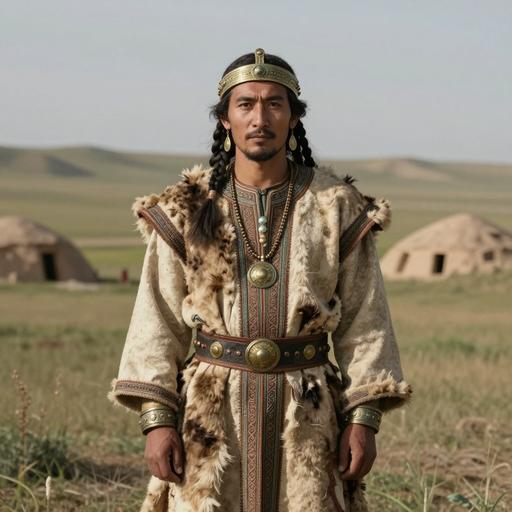
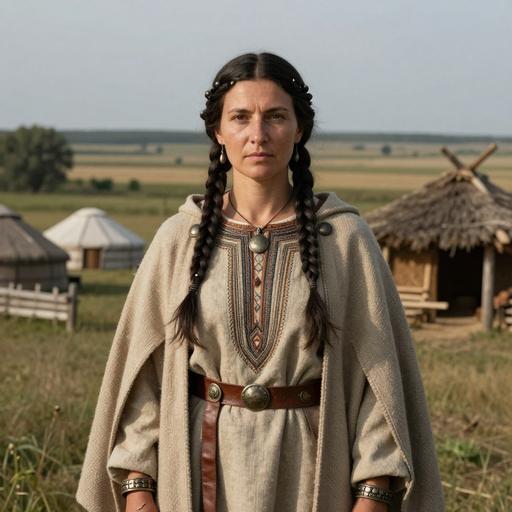
Portraits are AI-generated illustrations. Sample labels and accession IDs identify the reference records.

Portrait Sample Country Era Date Culture mtDNA Match
AI-generated illustrative portrait of IA Saka individual, Issyk-Kul Region. Ken-Su Village. Ken-Su #556, Kyrgyzstan (400-1 BCE)
Sample ID: KEN003
Kyrgyzstan Iron Age Saka Culture, Kyrgyzstan 400-1 BCE Saka Culture G2a3 Direct
AI-generated illustrative portrait of IA Saka-o individual, Almaty Region. Kerbulak District. Kaspan Valley. Kaspan-2. mound 3, Kazakhstan (401-179 BCE)
Sample ID: CSP001
Kazakhstan Iron Age Saka Culture, Kazakhstan 401-179 calBCE (2254±50 BP) Saka Culture G2a3 Direct
AI-generated illustrative portrait of IA Catacomb individual, Ialoveni District. Dănceni, Moldova (815-781 BCE)
Sample ID: I20071
Moldova Iron Age Moldova 815-781 calBCE (2625±20 BP, PSUAMS-9806) Iron Age Moldovan G2a3 Direct
AI-generated illustrative portrait of Early Avar-o Low East Asia individual, Rákóczifalva-Bagi-földek (Jász-Nagykun-Szolnok Coiunty, Szolnok), Hungary (550-700 CE)
Sample ID: RKF113
Hungary Hungary EarlyAvar 550-700 CE Early Avar G2a3a Subclade
AI-generated illustrative portrait of Early Avar-o Low East Asia individual, Rákóczifalva-Bagi-földek (Jász-Nagykun-Szolnok Coiunty, Szolnok), Hungary (550-700 CE)
Sample ID: RKF116
Hungary Hungary EarlyAvar 550-700 CE Early Avar G2a3a Subclade
MATERNAL LINEAGE · ANCIENT DNA

Ancient lineage evidence map

Follow parent clades toward this branch and explore where ancient carriers were found.

Loading ancient observations…

Markers are archaeological find locations. A dashed connector is an uncertain, proposed geographic transition between consecutive branches supported by multiple dated observations; it is not an exact travel route, birthplace or proof of direct descent. Parent-clade samples may belong to other descendant branches. Gaps remain where evidence is insufficient. Sample dates differ from haplogroup formation dates.

Reference profile

Carrier Distribution Map

Geographic distribution of 5 ancient DNA samples (direct and subclade carriers of G2A3)

Direct carrier Subclade carrier
Time Period Filter
All Time Periods
Showing all samples
Reference profile

Temporal Distribution

Distribution of carriers across archaeological periods

Reference profile

Geographic Distribution

Counts by recorded sample country. These reflect the available reference selection, not population frequencies.

Reference profile

Country × Era Distribution

Compare recorded sample counts across countries and archaeological periods. Select a populated cell to inspect a sample.

Data

Data & Provenance

Source information and data quality

Last Updated 2026-06-14
Confidence Score 50/100
Coverage Low

Data Source

Classification, estimated dates and geographic context reflect the recorded reference data and may change as evidence is revised. Sample coverage is uneven; recorded locations and archaeological associations do not establish personal origin or cultural identity.

A haplogroup follows one maternal or paternal line. The branch prediction depends on which markers the DNA file contains. How our analysis works