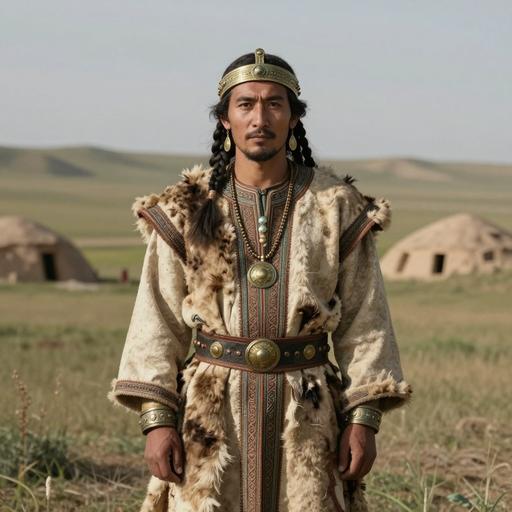
The Story
The journey of mtDNA haplogroup G2A3
Origins and Evolution
mtDNA haplogroup G is an East Eurasian maternal lineage with deep roots in northern and eastern Asia. As a subclade under G2 and more narrowly under the intermediate clade described as G2A3 (positioned beneath the reported G2AA3 node in reference phylogenies), G2A3 represents a downstream lineage that likely arose after the initial diversification of G in Northeast Asia. Based on the phylogenetic position of G2 subclades and available coalescence estimates for related lineages, a plausible time depth for G2A3 is in the Late Pleistocene to early Holocene (roughly ~18 kya, acknowledging wide uncertainty). This estimate is provisional and should be treated cautiously until more complete sequence data and calibrated molecular-clock analyses are available.
Subclades
At present G2A3 is treated as an intermediate/terminal clade in PhyloTree-style references and may include further downstream branches that are either very rare or not yet well-characterized in public databases. Because G2A3 is comparatively scarce in published datasets, many internal branches remain unsampled or poorly resolved; targeted mitogenome sequencing of candidate populations could reveal additional substructure and refine the branching order beneath G2A3.
Geographical Distribution
Empirical observations and reasonable inference from the distribution of sister clades place G2A3 predominantly in Northeast Asia and adjacent Siberian regions, with occasional presence reported in some Central Asian and northern East Asian populations. The pattern for many G2 subclades is one of concentration in northern Asian groups (including Tungusic-, Mongolic- and some Turkic-speaking populations), with low-level detection in neighboring regions due to historical mobility and gene flow. Modern and ancient DNA samples from Siberia, Mongolia and northern China are the most informative sources for clarifying this distribution.
Historical and Cultural Significance
Because G2A3 is rare and under-sampled, direct cultural attributions are tentative. However, by analogy with better-sampled G lineages, G2A3 likely persisted among hunter-gatherer and early Holocene forager populations of Northeast Asia, and later became a component of the maternal gene pool of groups involved in Holocene regional demographic processes (for example, steppe-forest contacts, Bronze Age local cultural complexes, and later Turkic–Mongolic expansions). Its presence in populations historically occupying Siberia and adjacent regions means it may appear in ancient individuals from local Neolithic and Bronze Age contexts, but clear associations await more ancient mitogenome data.
Conclusion
G2A3 is an informative but currently under-characterized mtDNA subclade within haplogroup G2. It highlights the high diversity of maternal lineages in northern Eurasia and the need for expanded whole-mitogenome sampling in Siberian, Mongolian, and northern Chinese populations. Future studies that combine dense modern sampling with targeted ancient DNA will be necessary to refine the age estimate, geographic origin, and substructure of G2A3 and to place it more precisely within regional demographic histories.
Key Points
- Origins and Evolution
- Subclades
- Geographical Distribution
- Historical and Cultural Significance
- Conclusion