mtDNA · Maternal lineage

H1B

mtDNA Haplogroup H1B

A reference profile for one lineage branch. Shared haplogroups do not establish a family relationship or cultural identity.

Reference profile

Branch background

Historical context for mtDNA lineage branch H1B

Origins and Evolution

mtDNA haplogroup H1B is a downstream subclade of the major Western European maternal lineage H1. H1 itself likely expanded after the Last Glacial Maximum from refugia on the Iberian/Atlantic fringe; H1B is inferred to have arisen later, during the early Holocene (roughly the Mesolithic to early Neolithic transition), as regional substructure developed within H1. The emergence of H1B fits a pattern of localized differentiation within H1 as small post‑glacial populations grew and dispersed.

Subclades

H1B sits beneath H1 in the phylogeny and may contain further sublineages defined by private mutations found in modern and ancient mitochondrial genomes. Compared with the larger H1 family, H1B is a relatively specific branch and often shows more geographically restricted variants consistent with regional demographic histories. Where well-sampled, H1B sublineages can help trace maternal lines within Western European, Iberian and adjacent North African contexts.

Geographical Distribution

H1B shows a Western European / Iberian-centered distribution with observable, lower-frequency presence in adjacent regions. Modern DNA surveys and ancient DNA recovery indicate H1B appears in:

  • Iberian populations (Spain, Portugal, including Basque groups) and Western France where H1 substructure is richest.
  • Parts of Western and Southern Europe (France, Britain, Italy, Sardinia) at low-to-moderate frequencies.
  • Northwest Africa (Morocco, Algeria and some Berber groups), reflecting prehistoric and historic gene flow across the western Mediterranean.
  • Scattered occurrences in Scandinavia and Central/Eastern Europe at lower frequencies, consistent with later movements and admixture.
  • Low-frequency presence in the Near East and Mediterranean island populations, likely reflecting historic exchanges and maritime contacts.

H1B is generally less frequent and more regionally patchy than the broader H1 haplogroup, but its spatial pattern mirrors H1’s history of post‑glacial expansion from Atlantic/Iberian refugia and subsequent dispersals during the Neolithic and later prehistoric periods.

Historical and Cultural Significance

Genetic and archaeological evidence supports a mixed set of processes that shaped the distribution of H1B:

  • Post‑glacial re‑expansion: The parent H1 expanded from Iberian/Atlantic refugia after the Last Glacial Maximum; H1B likely differentiates during this post‑glacial recolonization and local demographic build-up in the early Holocene.
  • Neolithic and later prehistoric movements: H1B may have spread modestly with Neolithic farmer expansions and with later prehistoric cultural phenomena that redistributed Western European maternal lineages, including maritime contacts across the Mediterranean and Atlantic coasts.
  • Bell Beaker/Cardial contexts: While H1 overall is observed in a range of Mesolithic, Neolithic and Bronze Age contexts, H1B specifically appears in some ancient contexts that overlap with Bell Beaker and earlier Neolithic (Cardial) horizons in Western Europe, consistent with both continuity and mobility in maternal lineages.
  • Northwest African presence: The presence of H1B in northwest Africa reflects prehistoric and historic cross‑Mediterranean gene flow, as seen for other H1 subclades.

Taken together, H1B provides a maternal genetic signal useful for studying regional continuity in Iberia and the western Mediterranean, and for tracing later dispersals within Europe.

Conclusion

H1B is a geographically informative subclade of H1 that likely arose in Western Europe in the early Holocene and shows a pattern of regional differentiation tied to post‑glacial recolonization and subsequent Neolithic and prehistoric movements. Its moderate concentration around the Iberian/Atlantic fringe and patchy distribution elsewhere make it a useful marker for studying maternal line continuity and migration in Western Europe and adjacent regions.

Key Points

  • Origins and Evolution
  • Subclades
  • Geographical Distribution
  • Historical and Cultural Significance
  • Conclusion

Reference profile

Tree & Relationships

Phylogenetic context and subclades

Evolution Path

Follow the recorded parent branches toward H1B. Dates are estimates and can change as reference data is revised.

Steps Haplogroup Age Estimate Archaeology Era Time Passed Immediate Descendants Tested Modern Descendants Ancient Connections
1 H1B Current ~9,000 years ago Neolithic 9,000 years 6 224 47
2 H1 ~15,000 years ago Mesolithic 15,000 years 56 2,667 74
3 H ~25,000 years ago Paleolithic 25,000 years 78 9,404 991
4 HV ~30,000 years ago Paleolithic 30,000 years 14 11,092 228
5 R0 ~15,000 years ago Mesolithic 15,000 years 2 11,230 4
6 R ~55,000 years ago Paleolithic 55,000 years 17 22,830 57
7 NA - - - 1 22,830 0
8 N ~60,000 years ago Paleolithic 60,000 years 16 26,150 13
9 L3 ~70,000 years ago Paleolithic 70,000 years 7 30,162 6
10 L3'4 - - - 2 30,212 0
11 L3'4'6 - - - 2 30,216 0
12 L2'3'4'6 - - - 2 31,333 0
13 L2'3'4'5'6'7 - - - 2 31,349 0
14 L1'2'3'4'5'6'7 - - - 2 31,852 0
15 L ~160,000 years ago Paleolithic 160,000 years 2 32,236 5
Reference profile

Where in the World

Geographic distribution and modern presence

Recorded origin

Iberian Peninsula / Western Europe

Modern Distribution

The populations where MTDNA haplogroup H1B is found include:

  1. Iberian populations (Spain, Portugal, including Basques)
  2. Western European populations (France, Britain, Ireland)
  3. Southern Europe (Italy, Sardinia, Sicily)
  4. Northwest African populations (Morocco, Algeria, Berber groups)
  5. Scandinavian populations (Norway, Sweden, Denmark) at low to moderate frequencies
  6. Central and Eastern European populations (Germany, Poland) at lower frequencies
  7. Near Eastern populations (Anatolia, Levant) at low frequencies
  8. Mediterranean island and some Jewish communities sporadically
Historical context

A branch through time

Estimated formation in a broad historical timeline. Period markers provide context and do not imply a connection with particular cultures.

  1. ~10k years ago

    Neolithic Revolution

    Agriculture begins, settled communities form

  2. ~9k years ago

    Haplogroup H1B

    Estimated formation of this mtDNA branch; dates and locations are reference estimates.

    This branch
  3. ~5k years ago

    Bronze Age

    Metalworking, writing, and early civilizations

  4. ~3k years ago

    Iron Age

    Iron tools, expanded trade networks

  5. ~2.5k years ago

    Classical Antiquity

    Greek and Roman civilizations flourish

  6. Present

    Present Day

    Modern era

Reference profile

Archaeological context

Recorded archaeological associations for mtDNA branch H1B

Recorded associations

These labels describe archaeological contexts recorded for reference samples linked to H1B. An association does not establish that all carriers belonged to a culture or followed a particular migration route.

Alemannic Austria_Avar Bell Beaker Etruscan Fatyanovo Culture Globular Amphora Kilteasheen Russia_Omsk_EMBA_Irtysh_SeimaTurbino-oYamnaya Russia_Tatarstan_EarlyMedieval_Karayakupovo Unetice Culture Viking Denmark Zealand Saxon
Culture assignments are based on archaeological context of ancient DNA samples and may represent regional associations during specific time periods.
Reference profile

Sample Catalog

16 direct carriers and 31 subclade carriers of haplogroup H1B

10 shown · 47 matching samples

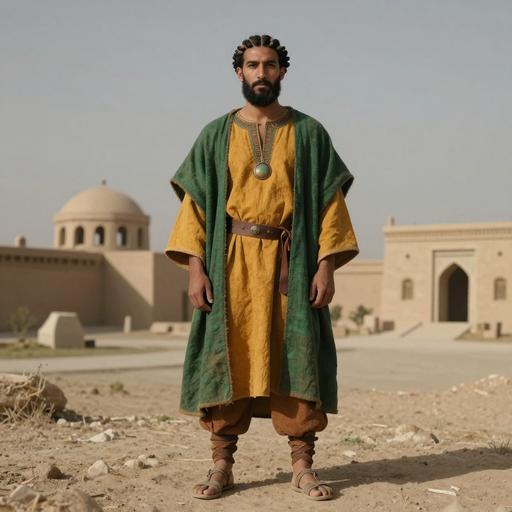
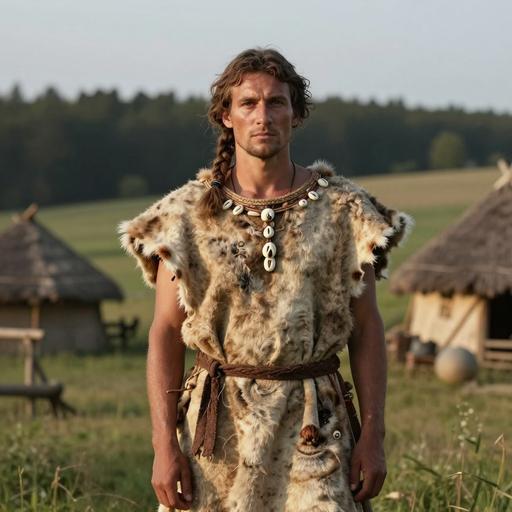
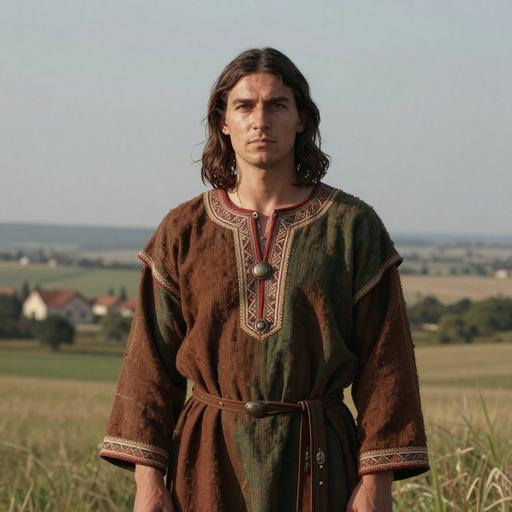
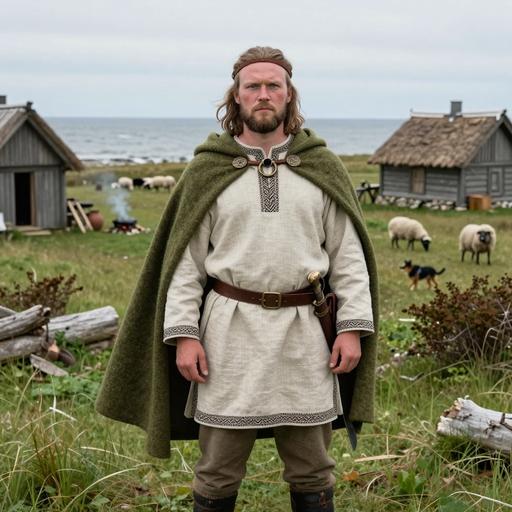
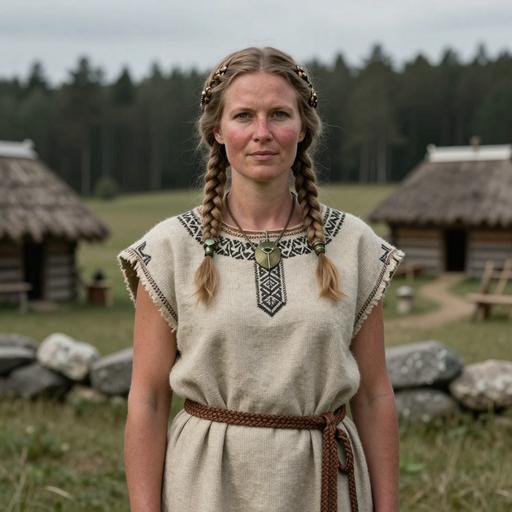
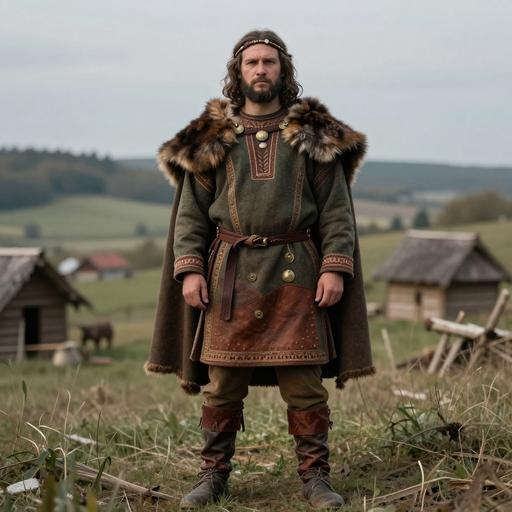
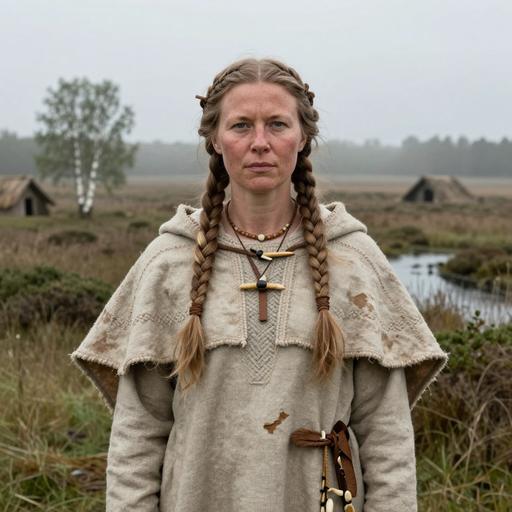
Portraits are AI-generated illustrations. Sample labels and accession IDs identify the reference records.

Portrait Sample Country Era Date Culture mtDNA Match
AI-generated illustrative portrait of Scotland IA individual, Orkney. Westray. Knowe of Skea, United Kingdom (25-215 CE)
Sample ID: KD043
United Kingdom Iron Age Orkney, Scotland 25-215 calCE (1915±35 BP, SUERC-8410) Orcadian Iron Age H1b Direct
AI-generated illustrative portrait of Antiquity individual, Surxondaryo Region, Rabat, Uzbekistan (44 BCE-77 CE)
Sample ID: L6301
Uzbekistan Iron Age Rabat Culture of Surxondaryo 44 calBCE - 77 calCE Rabat Culture H1b Direct
AI-generated illustrative portrait of Late Antiquity Imperial Roman individual, Viminacium-Pécine (Braničevo District, Požarevac Municipality, Kostolac), Serbia (255-409 CE)
Sample ID: I15535
Serbia Serbia Roman 255-409 calCE (1715±20 BP, PSUAMS-9564) Roman Provincial H1b Direct
AI-generated illustrative portrait of Scotland IA individual, Orkney. Westray. Knowe of Skea, United Kingdom (340 BCE-4 CE)
Sample ID: KD004
United Kingdom Iron Age Orkney, Scotland 340 calBCE - 4 calCE (2095±35 BP, SUERC-8410) Orcadian Iron Age H1b Direct
AI-generated illustrative portrait of England Early Medieval Saxon individual, England. North Yorkshire. Vale of Pickering. West Heslerton, United Kingdom (400-600 CE)
Sample ID: I11585
United Kingdom England EarlyMedieval Saxon 400-600 CE Anglo-Saxon H1b Direct
AI-generated illustrative portrait of Tuscany IA b IA Etruscan individual, Tuscany. Grosseto. Casenovole, Italy (600-200 BCE)
Sample ID: CSN007
Italy Etruscan Grosseto, Italy 600-200 BCE Etruscan H1b Direct
AI-generated illustrative portrait of Early Medieval individual, Roscommon. Kilteasheen, Ireland (700-1,300 CE)
Sample ID: KIL035
Ireland Anglo-Saxon Early Medieval Kilteasheen, Ireland 700-1300 CE Kilteasheen H1b Direct
AI-generated illustrative portrait of Norse individual, Funen. Rantzausminde, Denmark (850-900 CE)
Sample ID: VK313
Denmark Denmark Viking 850 CE - 900 CE Viking Denmark H1b Direct
AI-generated illustrative portrait of Viking individual, Funen. Rantzausminde, Denmark (850-900 CE)
Sample ID: VK313
Denmark The Viking Age 850 CE - 900 CE H1b Direct
AI-generated illustrative portrait of Medieval individual, Zealand. Kopenhagen, Denmark (1,000-1,100 CE)
Sample ID: KPN007
Denmark Saxon Medieval Zealand, Denmark 1000-1100 CE Zealand Saxon H1b Direct
MATERNAL LINEAGE · ANCIENT DNA

Ancient lineage evidence map

Follow parent clades toward this branch and explore where ancient carriers were found.

Loading ancient observations…

Markers are archaeological find locations. A dashed connector is an uncertain, proposed geographic transition between consecutive branches supported by multiple dated observations; it is not an exact travel route, birthplace or proof of direct descent. Parent-clade samples may belong to other descendant branches. Gaps remain where evidence is insufficient. Sample dates differ from haplogroup formation dates.


Reference profile

Carrier Distribution Map
Geographic distribution of 47 ancient DNA samples (direct and subclade carriers of H1B)

Direct carrier Subclade carrier
Time Period Filter
All Time Periods
Showing all samples
Reference profile

Temporal Distribution

Distribution of carriers across archaeological periods

Reference profile

Geographic Distribution

Counts by recorded sample country. These reflect the available reference selection, not population frequencies.

Reference profile

Country × Era Distribution

Compare recorded sample counts across countries and archaeological periods. Select a populated cell to inspect a sample.

Data

Data & Provenance

Source information and data quality

Last Updated 2026-02-16
Confidence Score 50/100
Coverage Low

Data Source

Classification, estimated dates and geographic context reflect the recorded reference data and may change as evidence is revised. Sample coverage is uneven; recorded locations and archaeological associations do not establish personal origin or cultural identity.

A haplogroup follows one maternal or paternal line. The branch prediction depends on which markers the DNA file contains. How our analysis works