Menu
Currency
mtDNA Haplogroup • Maternal Lineage

J1C3J

mtDNA Haplogroup J1C3J

~7,000 years ago
Near East / Caucasus
0 subclades
11 ancient samples
Scroll to explore
Chapter I

The Story

The journey of mtDNA haplogroup J1C3J

Origins and Evolution

mtDNA haplogroup J1C3J is a subclade of J1C3, itself nested within mitochondrial haplogroup J, a lineage that expanded widely from a Near Eastern/Caucasus core after the Last Glacial Maximum. As a derived branch of J1C3, J1C3J most likely arose during the Neolithic period (roughly around 7 thousand years ago, slightly younger than its parent clade) and represents one of several maternal lineages that participated in the movement of populations associated with the spread of agriculture and post‑glacial re-expansions across the Mediterranean basin, Europe and adjacent regions.

Because mtDNA accumulates changes relatively slowly, phylogenetic placement of J1C3J within published mtDNA trees indicates a Neolithic-era coalescence consistent with archaeological and ancient DNA records showing J‑lineage presence in early farming contexts of the Near East, Anatolia, the Balkans and southern Europe.

Subclades

As a specific terminal subclade, J1C3J may contain further downstream variation in high-resolution studies, but it is typically treated as a defined branch beneath J1C3 in current phylogenies. Where denser mitogenome sequencing has been performed, local substructure can appear reflecting regional founder events (for example island or coastal founder sublineages), but those deeper splits remain relatively rare and often localized. Continued mitogenome sequencing of ancient and modern samples is required to resolve any finer subclades within J1C3J.

Geographical Distribution

Modern occurrences of J1C3J are concentrated in the Near East and the Caucasus and are observed at low-to-moderate frequencies in southern and western Europe, parts of North Africa, and sporadically in Central Asia. The lineage is also reported among some Jewish communities (both Ashkenazi and Sephardi), consistent with historical Near Eastern links and later dispersals. In ancient DNA datasets, J1C3J (or close J1C3 derivatives) has been documented in Neolithic and later archaeological contexts (the database referenced contains 11 ancient occurrences), supporting a history of repeated local persistence and movement during the Neolithic and post‑Neolithic eras.

The distribution pattern is consistent with two principal dispersal mechanisms: (1) early Neolithic farmer expansions spreading from Anatolia/Levant into the Mediterranean and Europe, and (2) subsequent gene flow along coastal and inland trade or migration routes (including movements across the Mediterranean into North Africa and later historic-era mobility).

Historical and Cultural Significance

While mitochondrial lineages on their own do not define cultures, the presence of J1C3J in Neolithic contexts links it to the demographic processes that accompanied the spread of agriculture across the Near East into Europe. Where found in ancient burials associated with Early Neolithic, Cardial/Impressed Ware or later Mediterranean cultural complexes, J1C3J provides genetic evidence for maternal continuity or founder effects tied to these movements. Its detection in Jewish communities reflects both the Near Eastern origin of some maternal lines and later diasporic events.

J1C3J is not typically diagnostic of any single archaeological culture (it occurs across multiple cultural horizons), but its pattern of occurrence complements archaeological and genomic signals of Neolithic demic diffusion and subsequent regional differentiation.

Conclusion

mtDNA haplogroup J1C3J is a Neolithic‑era maternal sublineage of J1C3 that likely emerged in the Near East/Caucasus and spread into the Mediterranean, Europe and North Africa with early farmers and later migrations. It is observed at low to moderate frequencies today and appears in multiple ancient DNA contexts, making it a useful marker for tracing maternal contributions from Near Eastern sources into adjacent regions. Continued full mitogenome sampling in both modern and ancient populations will refine its internal structure and historical dynamics.

Key Points

  • Origins and Evolution
  • Subclades
  • Geographical Distribution
  • Historical and Cultural Significance
  • Conclusion
Chapter II

Tree & Relationships

Phylogenetic context and subclades

Evolution Path

This haplogroup's evolutionary journey from its earliest ancestor to the present.

Steps Haplogroup Age Estimate Archaeology Era Time Passed Immediate Descendants Tested Modern Descendants Ancient Connections
1 J1C3J Current ~7,000 years ago ?? Neolithic 7,000 years 0 54 11
2 J1C3 ~9,000 years ago ?? Neolithic 9,000 years 9 155 0
3 J1C ~12,000 years ago ?? Neolithic 12,000 years 15 732 319
4 J1 ~30,000 years ago ?? Paleolithic 30,000 years 4 1,751 55
5 J ~45,000 years ago ?? Paleolithic 45,000 years 2 2,144 16
6 JT ~40,000 years ago ?? Paleolithic 40,000 years 2 4,094 1
7 R2'JT - - - 2 4,133 0
8 R ~55,000 years ago ?? Paleolithic 55,000 years 17 22,830 57
9 NA - - - 1 22,830 0
10 N ~60,000 years ago ?? Paleolithic 60,000 years 16 26,150 13
11 L3 ~70,000 years ago ?? Paleolithic 70,000 years 7 30,162 6
12 L3'4 - - - 2 30,212 0
13 L3'4'6 - - - 2 30,216 0
14 L2'3'4'6 - - - 2 31,333 0
15 L2'3'4'5'6'7 - - - 2 31,349 0
16 L1'2'3'4'5'6'7 - - - 2 31,852 0
17 L ~160,000 years ago ?? Paleolithic 160,000 years 2 32,236 5

Subclades (0)

Terminal branch - no known subclades

Siblings (8)

Other branches from the same parent haplogroup

Chapter III

Where in the World

Geographic distribution and modern presence

Place of Origin

Near East / Caucasus

Modern Distribution

The populations where MTDNA haplogroup J1C3J is found include:

  1. Southern and Western European populations
  2. Middle Eastern populations
  3. North African populations
  4. Caucasus region populations
  5. Some populations in Central Asia
  6. Jewish populations (Ashkenazi and Sephardi)
CHAPTER IV

When in Time

Your haplogroup in the context of human history

~10k years ago

Neolithic Revolution

Agriculture begins, settled communities form

~7k years ago

Haplogroup J1C3J

Your mtDNA haplogroup emerged in Near East / Caucasus

Near East / Caucasus
~5k years ago

Bronze Age

Metalworking, writing, and early civilizations

~3k years ago

Iron Age

Iron tools, expanded trade networks

~2k years ago

Classical Antiquity

Greek and Roman civilizations flourish

Present

Present Day

Modern era

Your Haplogroup
Historical Era
Chapter IV-B

Linked Cultures

Ancient cultures associated with mtDNA haplogroup J1C3J

Cultural Heritage

These ancient cultures have been linked to haplogroup J1C3J based on matching ancient DNA samples from archaeological excavations. The presence of this haplogroup in these cultures provides insights into the migrations and population movements of populations carrying this haplogroup.

Cardial Culture Danish Early Neolithic Early Hungarian Iron Age French Early Neolithic French Neolithic German Late Neolithic Italian Neolithic Monte Claro Culture Nuragic Culture Occitanie Iron Age Poland_BA_Trzciniec Proto-Nuragic
Culture assignments are based on archaeological context of ancient DNA samples and may represent regional associations during specific time periods.
Chapter V

Sample Catalog

11 direct carriers of haplogroup J1C3J

11 / 11 samples
Portrait Sample Country Era Date Culture mtDNA Match
Reconstructed portrait of Occitanie Aude individual, Occitanie (South). Sigean. Pech Maho, France (600-300 BCE)
Occitanie Aude individual, France Sample ID: PECH8
France France Occitanie IA2 600-300 BCE Occitanie Iron Age J1c3j Direct
Reconstructed portrait of EIA-3 individual, Nógrád county. Nógrádkövesd-Víztározó, Hungary (800-400 BCE)
EIA-3 individual, Hungary Sample ID: I25525
Hungary Hungary EIA 800-400 BCE Early Hungarian Iron Age J1c3j Direct
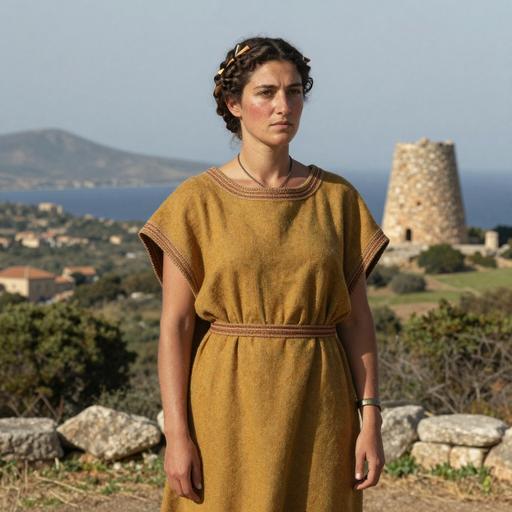
Reconstructed portrait of Sardinia LBA individual, Sardinia. Perdasdefogu, Italy (1,261-1,059 BCE)
Sardinia LBA individual, Italy Sample ID: I10554
Italy Italy Sardinia LBA 1261-1059 calBCE (2960±20 BP, PSUAMS-4877) Nuragic Culture J1c3j Direct
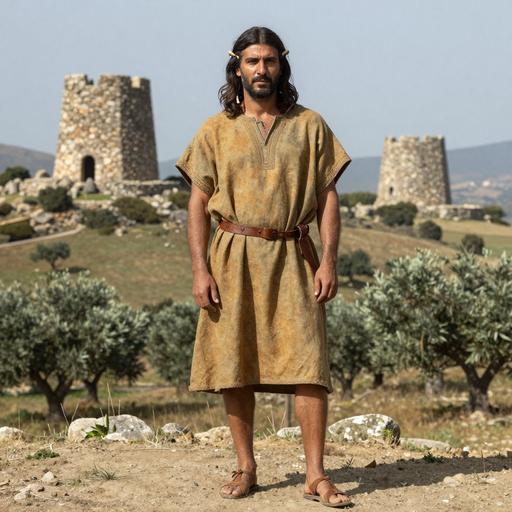
Reconstructed portrait of Sardinia Anghelu Ruju MBA individual, Sardinia. Anghelu Ruju, Italy (1,534-1,438 BCE)
Sardinia Anghelu Ruju MBA individual, Italy Sample ID: I16161
Italy Italy Sardinia MBA 1534-1438 calBCE (3230±25 BP, PSUAMS-6681) Proto-Nuragic J1c3j Direct
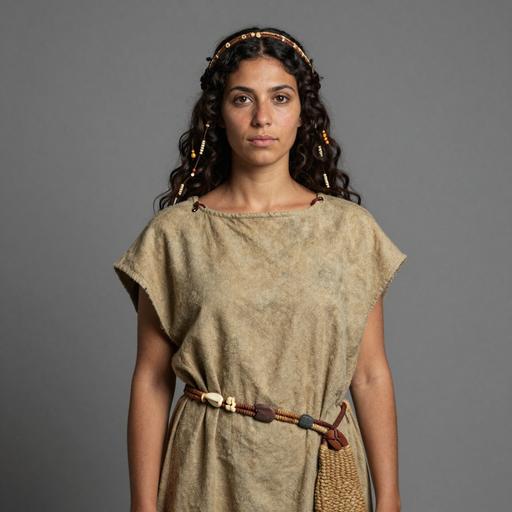
Reconstructed portrait of Sardinia MBA individual, Sardinia. Anghelu Ruju, Italy (1,800-1,300 BCE)
Sardinia MBA individual, Italy Sample ID: I15939
Italy Italy Sardinia MBA 1800-1300 BCE Proto-Nuragic J1c3j Direct
Reconstructed portrait of Mediterranean Prehistoric Cultures individual, Sardinia. Serra Cabriles, Italy (2,200-2,030 BCE)
Mediterranean Prehistoric Cultures individual, Italy Sample ID: I14676
Italy Italy Sardinia C MonteClaro 2200 BCE - 2030 BCE Monte Claro Culture J1c3j Direct
Reconstructed portrait of Sardinia Ch individual, Sardinia. Serra Cabriles, Italy (2,200-2,030 BCE)
Sardinia Ch individual, Italy Sample ID: I14676
Italy Chalcolithic Sardinia 2200 BCE - 2030 BCE J1c3j Direct
Reconstructed portrait of Ostorf LN-o Oberkassel1 individual, Ostorf (Mecklenburg-Vorpommern), Germany (3,364-3,102 BCE)
Ostorf LN-o Oberkassel1 individual, Germany Sample ID: OST003
Germany Late Neolithic Germany 3364-3102 calBCE (4530±27 BP, AAR-18017) German Late Neolithic J1c3j Direct
Reconstructed portrait of EN individual, Bygholm Nørremark (Jutland region), Denmark (3,700-3,527 BCE)
EN individual, Denmark Sample ID: NEO564
Denmark Danish Early Neolithic 3700-3527 calBCE (4836±35 BP, UBA-38227) Danish Early Neolithic J1c3j Direct
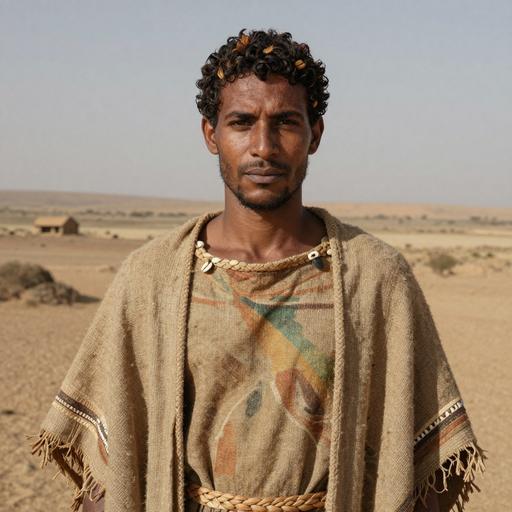
Reconstructed portrait of EN individual, Kaf Taht el-Ghar, Morocco (5,297-5,045 BCE)
EN individual, Morocco Sample ID: ktg006
Morocco Early Neolithic Cardial in North Africa 5298-5046calBCE (6206±33; Ua-56455) Cardial Culture J1c3j Direct
MATERNAL LINEAGE · ANCIENT DNA

Ancient lineage evidence map

Follow parent clades toward this branch and explore where ancient carriers were found.

Loading ancient observations…

Markers are archaeological find locations. A dashed connector is an uncertain, proposed geographic transition between consecutive branches supported by multiple dated observations; it is not an exact travel route, birthplace or proof of direct descent. Parent-clade samples may belong to other descendant branches. Gaps remain where evidence is insufficient. Sample dates differ from haplogroup formation dates.

Chapter VI

Carrier Distribution Map

Geographic distribution of 11 ancient DNA samples (direct and subclade carriers of J1C3J)

Direct carrier
Time Period Filter
All Time Periods
Showing all samples
Chapter VII

Temporal Distribution

Distribution of carriers across archaeological periods

Chapter VIII

Geographic Distribution

Distribution by country of origin (direct and subclade carriers shown by default)

Chapter IX

Country × Era Distribution

Cross-tabulation of carrier countries and archaeological periods (direct and subclade carriers shown by default)

Data

Data & Provenance

Source information and data quality

Last Updated 2026-02-16
Confidence Score 50/100
Coverage Low
Data Source

We use the latest phylotree for MTDNA haplogroup classification and data.