The Story
The journey of mtDNA haplogroup P1F
Origins and Evolution
mtDNA haplogroup P1F is an intermediate subclade nested within the P1 branch of haplogroup P, a maternal lineage with deep roots in Near Oceania. Haplogroup P is widely recognized in population genetics as one of the lineages that diversified after the first modern human settlement of Sahul (the combined Pleistocene landmass of New Guinea and Australia). Based on the phylogenetic position of P1F under the parent clade P1A and comparisons with other P subclades, a reasonable estimate places the origin of P1F in the Late Pleistocene to early Holocene (on the order of tens of thousands of years ago), most plausibly in the New Guinea region or adjacent islands. This estimate is provisional and depends on further complete mitogenome sequencing and calibration with ancient DNA.
Molecular-clock dating for P-lineages typically yields deep time depths (many P-subclades >20–40 kya). As an internal branch of P1, P1F likely formed after early P diversification but before recent Holocene demographic events that reshaped maternal lineages in Near Oceania.
Subclades
At present, P1F is treated as an intermediate clade with relatively few well-characterized downstream lineages described in public phylogenies; many named subclades of P derive from increased whole-mtDNA sampling across Melanesia and Near Oceania. Additional targeted mitogenome sequencing in New Guinea and neighboring archipelagos is likely to reveal further internal structure beneath P1F and to clarify whether P1F splits into geographically structured subclades (for example island-restricted branches versus inland highland lineages).
Geographical Distribution
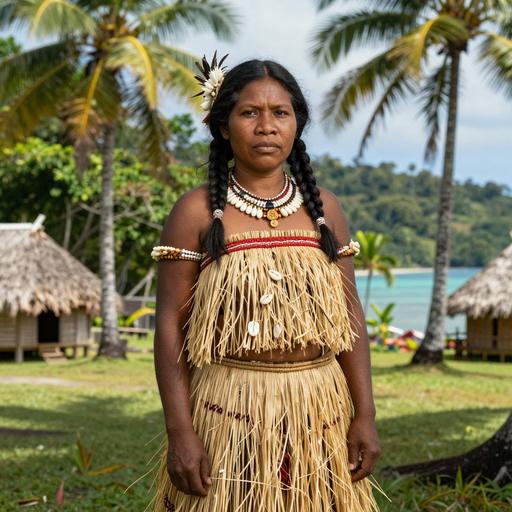
The distribution of P1F is inferred from the known biogeography of related P1/P lineages and limited sampling: it is concentrated in Near Oceania, especially among Papuan and Melanesian groups in mainland New Guinea and the surrounding island chains (Bismarck Archipelago, Solomon Islands, and some Near Oceanic outliers). It may occur at lower frequencies among neighboring island populations affected by Austronesian expansions, where P lineages admixed with incoming maternal lineages such as B4a-derived haplotypes. Occurrence in Indigenous Australian samples is possible but likely at low frequency relative to other P subclades.
Because comprehensive mitogenome surveys are still incomplete for many islands and inland Papuan groups, precise frequency maps for P1F remain provisional. Ancient DNA from prehistoric Near Oceanian contexts would be especially valuable for confirming antiquity and local continuity.
Historical and Cultural Significance
P1F represents part of the maternal legacy of the early settlers of Sahul and Near Oceania. As such, it contributes to reconstructions of prehistoric population structure and migration in the region. Its persistence into the present among Papuan and Melanesian populations indicates continuity through the Late Pleistocene and Holocene, surviving later demographic processes such as the Austronesian Lapita expansion (~3–3.5 kya), which introduced new maternal lineages to coastal and island populations. Thus, P1F is important for disentangling pre-Austronesian (indigenous) maternal substrata from subsequent gene flow events.
Conclusion
mtDNA haplogroup P1F is best understood as a Near Oceanian maternal lineage branching within the P1 clade and reflecting deep-time population history of New Guinea and adjacent islands. Current evidence supports a Late Pleistocene or early Holocene origin in the New Guinea region, but more whole-mtDNA sequencing and ancient DNA sampling are needed to refine age estimates, resolve downstream substructure, and map its detailed geographic distribution. Continued study of P1F will improve our understanding of the first peopling of Sahul and the demographic interactions between indigenous Papuan groups and later Austronesian arrivals.
Key Points
- Origins and Evolution
- Subclades
- Geographical Distribution
- Historical and Cultural Significance
- Conclusion