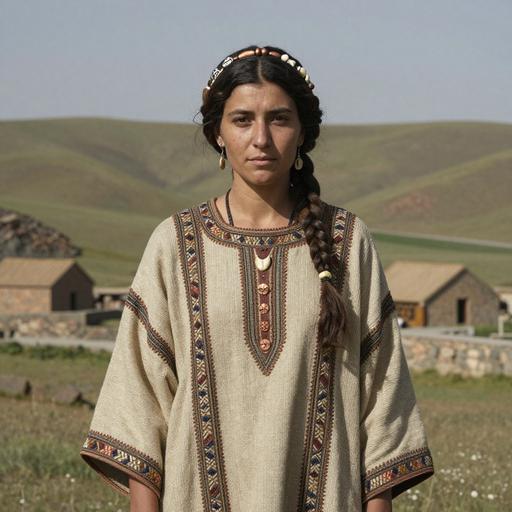
The Story
The journey of mtDNA haplogroup R0A3
Origins and Evolution
mtDNA haplogroup R0A3 is a downstream branch of the R0a phylogeny (through R0A2'3) and therefore part of the broader R0/HV sector of macro-haplogroup R. The deeper R0a clade has been repeatedly inferred by population genetic studies to have a Late Glacial to early Holocene time depth, with a major demographic expansion centered on the Arabian Peninsula and southern Near East. As a named subclade, R0A3 most likely arose in the Holocene (several thousand years ago) as a regional diversification of these earlier lineages, reflecting localized maternal lineage differentiation following postglacial population expansions and Neolithic demographic shifts.
Subclades
R0A3 sits below the R0A2'3 node in current phylogenies and may have additional internal structure (further subclades) that require complete mitogenome sampling to resolve. Because R0a lineages are often defined by control-region and coding-region mutations, high-resolution whole-mtDNA sequencing is necessary to map and name descendant clades reliably. At present, R0A3 functions as an intermediate/derived clade connecting its parent (R0A2'3) with any downstream subbranches identified in targeted sequencing efforts.
Geographical Distribution
The geographical pattern of R0a3 is inferred from the distribution of R0a generally and targeted reports of R0a sublineages. R0a3 is most plausibly concentrated in:
- The southern Arabian Peninsula (Yemen, southern Oman, southwest Saudi Arabia), where many R0a lineages show high diversity and frequency.
- The Horn of Africa (Ethiopia, Somalia, Eritrea), where gene flow across the Red Sea and historical coastal contacts have introduced and diversified R0a lineages.
- The southern Levant and eastern Mediterranean in lower frequencies, reflecting Holocene movements and later historical contacts.
Observed frequencies of R0a subclades are highest in southern Arabia and decline outward; therefore R0A3 likely follows this clinal distribution, with sporadic occurrences in Mediterranean island and southern European samples attributable to later historical mobility.
Historical and Cultural Significance
Although direct association of a single mtDNA subclade with an archaeological culture is often speculative, the demographic signal carried by R0a and its subclades like R0A3 ties to several broad processes:
- Postglacial/late Pleistocene refugium and Holocene expansions: The broader R0a expansion is often interpreted as a signature of populations surviving and expanding from an Arabian refugium after the Last Glacial Maximum.
- Neolithic and Early Holocene coastal movements: R0a sublineages are consistent with maternal lineages that participated in coastal and maritime dispersals across the southern Near East and the Red Sea during the early Holocene, contributing ancestry to populations in the Horn of Africa and the Levant.
- Historical trade and movement: Later historic periods (Bronze Age onward) involving Red Sea and Indian Ocean trade, Arabian migrations, and Levantine exchanges likely redistributed R0a3 lineages at low frequencies beyond their core range.
Because R0A3 is a relatively derived clade within R0a, its expansion and current pattern probably reflect localized Holocene demographic events associated with Neolithic-era subsistence changes and continued regional mobility rather than a single well-defined archaeological culture.
Conclusion
R0A3 is best understood as a Holocene maternal lineage derived from the R0a radiation centered on the Arabian Peninsula. Its highest diversity and inferred origin are in southern Arabia, with important presence in the Horn of Africa and traces in the eastern Mediterranean. Precise dating and fine-scale distribution of R0A3 require more whole-mitochondrial-genome sampling across these regions to resolve internal substructure and to link specific subbranches to archaeological or historical episodes with confidence.
Key Points
- Origins and Evolution
- Subclades
- Geographical Distribution
- Historical and Cultural Significance
- Conclusion