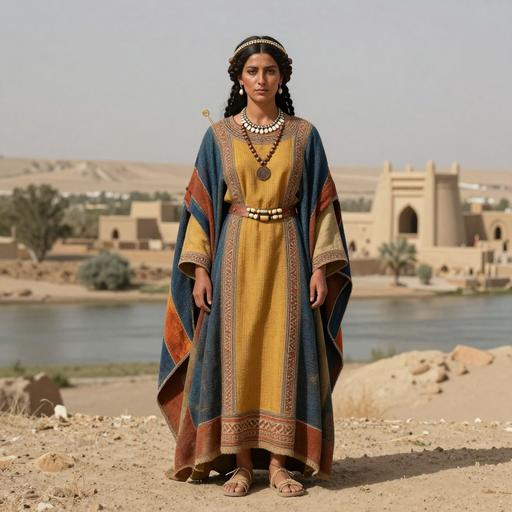
Menu
mtDNA Haplogroup • Maternal Lineage

T1A3

mtDNA Haplogroup T1A3

~4,000 years ago
Near East
1 subclades
Scroll to explore
Chapter I

The Story

The journey of mtDNA haplogroup T1A3

Origins and Evolution

mtDNA haplogroup T1A3 is a subclade of T1A, itself a daughter lineage of haplogroup T1 that is associated with early Near Eastern farming populations. Based on the phylogenetic position of T1A3 beneath T1A and comparative coalescent estimates for related T1A subclades, T1A3 most likely arose after the initial Neolithic expansions from the Near East, plausibly in the mid to late Holocene (on the order of ~4–6 kya). Its emergence fits a pattern in which early Near Eastern maternal lineages diversified further as they dispersed into the Mediterranean basin and adjacent regions.

Subclades

T1A3 sits beneath the T1A node; depending on the resolution of available sequencing data, T1A3 can contain further downstream branches defined by private coding-region or control-region mutations. High-resolution mitogenomes are required to resolve internal structure fully; at present T1A3 is treated as a coherent subclade in phylogenies but may be split into additional named subbranches as more whole-mtDNA sequences become available.

Geographical Distribution

T1A3 shows a distribution that mirrors that of many Near Eastern-derived maternal lineages: it is most commonly observed in the Near East and the Mediterranean rim, with occurrences in Southern Europe (Italy, Greece, Iberia), parts of the Balkans and Black Sea region, and sporadic detections in North Africa and Central Asia. Frequencies are generally low to moderate at the population level, and the clade is often encountered as isolated lineages rather than as a dominant maternal component. A small number of ancient DNA and modern mitogenome samples place T1A3 in archaeological and historical contexts tied to Mediterranean and Near Eastern population movements.

Historical and Cultural Significance

The phylogeographic pattern of T1A3 is consistent with expansion scenarios tied to Neolithic farming dispersals from the Near East followed by continued movement and gene flow across the Mediterranean during the Bronze Age and later historical periods (trade, colonization, and empire-era migrations). Because T1A (the parent clade) is known from some Jewish communities (including certain Ashkenazi lineages), T1A3 may also appear occasionally in Jewish maternal lineages, although it is not a defining or high-frequency marker of any single modern ethnoreligious group. In archaeological terms, T1A3 is thus best interpreted as part of the ensemble of Near Eastern maternal lineages that contributed to the mitochondrial diversity of Neolithic farmers and their descendants in Europe and North Africa.

Conclusion

T1A3 is a moderately young mtDNA subclade derived from Near Eastern Neolithic maternal diversity. It is informative for tracing Mediterranean and Near Eastern maternal connections in both modern and ancient populations, but its relatively low frequency and limited ancient representation mean that robust population-level inferences require larger mitogenome sample sets. Continued whole-mitogenome sequencing and targeted ancient DNA sampling across the Mediterranean and Near East will clarify the finer-scale history and substructure of T1A3.

Key Points

  • Origins and Evolution
  • Subclades
  • Geographical Distribution
  • Historical and Cultural Significance
  • Conclusion
Chapter II

Tree & Relationships

Phylogenetic context and subclades

Evolution Path

This haplogroup's evolutionary journey from its earliest ancestor to the present.

Steps Haplogroup Age Estimate Archaeology Era Time Passed Immediate Descendants Tested Modern Descendants Ancient Connections
1 T1A3 Current ~4,000 years ago 🔶 Bronze Age 4,500 years 1 5 0
2 T1A ~9,000 years ago 🌾 Neolithic 9,000 years 7 196 175
3 T1 ~10,000 years ago 🌾 Neolithic 10,000 years 3 200 28
4 T ~27,000 years ago 🦴 Paleolithic 27,000 years 2 1,615 84
5 JT ~45,000 years ago 🦴 Paleolithic 45,000 years 2 3,237 1
6 N ~60,000 years ago 🦴 Paleolithic 60,000 years 15 15,452 13
7 L3 ~70,000 years ago 🦴 Paleolithic 70,000 years 11 17,621 6
8 L ~160,000 years ago 🦴 Paleolithic 160,000 years 7 18,987 5

Siblings (6)

Other branches from the same parent haplogroup

Chapter III

Where in the World

Geographic distribution and modern presence

Place of Origin

Near East

Modern Distribution

The populations where mtDNA haplogroup T1A3 is found include:

  1. Middle Eastern populations
  2. North African populations (Mediterranean coast)
  3. Southern European populations (Italy, Greece, Iberia)
  4. Eastern European populations (Balkans, parts of the Black Sea region)
  5. Central Asian populations (sporadic occurrence)
  6. Jewish populations, notably some Ashkenazi maternal lineages (occasional)
CHAPTER IV

When in Time

Your haplogroup in the context of human history

~10k years ago

Neolithic Revolution

Agriculture begins, settled communities form

~5k years ago

Bronze Age

Metalworking, writing, and early civilizations

~4k years ago

Haplogroup T1A3

Your mtDNA haplogroup emerged in Near East

Near East
~3k years ago

Iron Age

Iron tools, expanded trade networks

~2k years ago

Classical Antiquity

Greek and Roman civilizations flourish

Present

Present Day

Modern era

Your Haplogroup
Historical Era
Chapter IV-B

Linked Cultures

Ancient cultures associated with mtDNA haplogroup T1A3

Cultural Heritage

These ancient cultures have been linked to haplogroup T1A3 based on matching ancient DNA samples from archaeological excavations. The presence of this haplogroup in these cultures provides insights into the migrations and population movements of populations carrying this haplogroup.

Alföld Linear Pottery Armenian Neolithic Avar Bulgarian Neolithic Linear Pottery Culture Peloponnesian Neolithic PPNB Shahr-i Sokhta Culture Tisza Culture
Culture assignments are based on archaeological context of ancient DNA samples and may represent regional associations during specific time periods.
Chapter V

Sample Catalog

2 direct carriers and 2 subclade carriers of haplogroup T1A3

4 / 4 samples
Portrait Sample Country Era Date Culture mtDNA Match
Portrait of ancient individual RKF091 from Hungary, dated 580 CE - 720 CE
RKF091
Hungary Early Middle Avar Period 580 CE - 720 CE Avar T1a3 Direct
Portrait of ancient individual I11476 from Iran, dated 3200 BCE - 2100 BCE
I11476
Iran Shahr-i Sokhta Bronze Age 3200 BCE - 2100 BCE Shahr-i Sokhta Culture T1a3 Direct
Portrait of ancient individual I20654 from United Kingdom, dated 400 CE - 600 CE
I20654
United Kingdom Early Medieval Saxon England 400 CE - 600 CE Anglo-Saxon T1a3a Downstream
Portrait of ancient individual PCA0337 from Poland, dated 1000 CE - 1200 CE
PCA0337
Poland Iron Age Ostrów Lednicki Culture 1000 CE - 1200 CE Ostrów Lednicki Culture T1a3a Downstream
Chapter VI

Carrier Distribution Map

Geographic distribution of 4 ancient DNA samples (direct and subclade carriers of T1A3)

Direct carrier Subclade carrier
Time Period Filter
All Time Periods
Showing all samples
Chapter VII

Temporal Distribution

Distribution of carriers across archaeological periods

Chapter VIII

Geographic Distribution

Distribution by country of origin (direct and subclade carriers shown by default)

Chapter IX

Country × Era Distribution

Cross-tabulation of carrier countries and archaeological periods (direct and subclade carriers shown by default)

Data

Data & Provenance

Source information and data quality

Last Updated 2026-02-16
Confidence Score 50/100
Coverage Low
Data Source

We use the latest phylotree for MTDNA haplogroup classification and data.