Menu
Currency
mtDNA Haplogroup • Maternal Lineage

U3A3

mtDNA Haplogroup U3A3

~6,000 years ago
Near East / Anatolia
0 subclades
Scroll to explore
Chapter I

The Story

The journey of mtDNA haplogroup U3A3

Origins and Evolution

U3A3 is a downstream branch of the broader maternal lineage U3, itself a subclade of haplogroup U. Haplogroup U3 shows its greatest diversity in the Near East and the Caucasus, and many of its subclades are interpreted as having arisen and diversified in Western Asia before spreading into neighboring regions. As a third‑order subclade (U3 → U3A → U3AA → U3A3), U3A3 is expected to be substantially younger than the root U3 lineage. Based on the topology of U3 and the geographic patterning of sister clades, a conservative estimate places the origin of U3A3 in the Neolithic to Chalcolithic period (several thousand years ago), consistent with population movements of farming and later Bronze Age interactions across Anatolia, the Levant and the Caucasus.

Subclades

As an intermediate/terminal subclade, U3A3 currently represents a narrow branch within the U3 phylogeny. Published phylogenies and mtDNA databases indicate that many U3 sublineages are uncommon and often geographically localized; U3A3 behaves similarly, with few internal branches reported so far. Continued full mtDNA sequencing and targeted sampling in understudied regions may reveal further diversification or closely related sister clades (for example other U3A* or U3AA* lineages).

Geographical Distribution

U3A3 has been detected only sporadically in modern population surveys and in limited sequencing datasets. The pattern is consistent with a Near Eastern/Anatolian origin and subsequent low‑frequency presence in neighboring regions:

  • Caucasus and Western Asia (Anatolia, Levant): most likely focal area for origin and present-day detections.
  • Southern Europe and the Mediterranean: occasional low-frequency occurrences, likely reflecting Neolithic and later historical contacts across the Mediterranean.
  • North Africa: isolated detections compatible with ancient Mediterranean and historical movements (trade, migration, and diasporas).

Because U3A3 is rare, frequency estimates remain low and geographic assignments should be treated as provisional pending larger and geographically targeted datasets.

Historical and Cultural Significance

The temporal and geographic profile of U3A3 makes it plausible that the lineage was carried by populations associated with Neolithic farmer expansions from Anatolia and the Near East, and later by continuing regional mobility in the Bronze Age and historic periods. In modern genetic surveys, related U3 lineages are sometimes reported among populations with complex histories in the Eastern Mediterranean — including Anatolian, Levantine, Caucasian and some Jewish communities — suggesting that small U3 subclades like U3A3 may have been transported by multiple demographic processes (agricultural expansion, episodic migrations, trade networks, and diasporas).

However, because U3A3 is rare and under-sampled, it has not been tied conclusively to any single archaeological culture such as Bell Beaker or Corded Ware; its likely associations are with the broad Neolithic and Bronze Age transitions in Western Asia and the Mediterranean rather than with pan‑European steppe cultures.

Conclusion

U3A3 is a low-frequency, regionally focused mtDNA subclade within the U3 family whose best-supported origin is the Near East/Anatolia during the mid to late Holocene. It illustrates how deeper maternal lineages diversify into localized branches that persist at low frequency across neighboring regions. Resolving the precise age, migration routes and cultural associations of U3A3 will require additional full mtDNA sequences from the Near East, the Caucasus, Anatolia and ancient DNA samples from Neolithic to Bronze Age contexts.

Key Points

  • Origins and Evolution
  • Subclades
  • Geographical Distribution
  • Historical and Cultural Significance
  • Conclusion
Chapter II

Tree & Relationships

Phylogenetic context and subclades

Evolution Path

This haplogroup's evolutionary journey from its earliest ancestor to the present.

Steps Haplogroup Age Estimate Archaeology Era Time Passed Immediate Descendants Tested Modern Descendants Ancient Connections
1 U3A3 Current ~6,000 years ago 🪨 Chalcolithic 6,000 years 0 3 0
2 U3AA 3 88 0
3 U3A ~12,000 years ago 🌾 Neolithic 12,000 years 1 101 40
4 U3A'C 2 102 0
5 U3 ~20,000 years ago 🏹 Mesolithic 20,000 years 2 184 10
6 U2'3'4'7'8'9 5 2,860 0
7 U ~46,000 years ago 🦴 Paleolithic 46,000 years 5 4,314 110
8 R ~55,000 years ago 🦴 Paleolithic 55,000 years 17 17,854 57
9 NA 1 17,854 0
10 N ~60,000 years ago 🦴 Paleolithic 60,000 years 16 20,371 13
11 L3 ~70,000 years ago 🦴 Paleolithic 70,000 years 7 23,542 6
12 L3'4 2 23,581 0
13 L3'4'6 2 23,584 0
14 L2'3'4'6 2 24,475 0
15 L2'3'4'5'6'7 2 24,488 0
16 L1'2'3'4'5'6'7 2 24,903 0
17 L ~160,000 years ago 🦴 Paleolithic 160,000 years 2 25,205 5

Subclades (0)

Terminal branch - no known subclades

Siblings (2)

Other branches from the same parent haplogroup

Chapter III

Where in the World

Geographic distribution and modern presence

Place of Origin

Near East / Anatolia

Modern Distribution

The populations where mtDNA haplogroup U3A3 is found include:

  1. Armenians and other Caucasus populations
  2. Anatolian (modern Turkish) populations
  3. Levantine populations (Lebanon, Syria, Israel/Palestine)
  4. Southern European populations (coastal Italy, Greece, Iberia) at low frequency
  5. North African populations (Maghreb) in isolated occurrences
  6. Small representation in some Mediterranean Jewish communities (reported infrequently)
CHAPTER IV

When in Time

Your haplogroup in the context of human history

~10k years ago

Neolithic Revolution

Agriculture begins, settled communities form

~6k years ago

Haplogroup U3A3

Your mtDNA haplogroup emerged in Near East / Anatolia

Near East / Anatolia
~5k years ago

Bronze Age

Metalworking, writing, and early civilizations

~3k years ago

Iron Age

Iron tools, expanded trade networks

~2k years ago

Classical Antiquity

Greek and Roman civilizations flourish

Present

Present Day

Modern era

Your Haplogroup
Historical Era
Chapter IV-B

Linked Cultures

Ancient cultures associated with mtDNA haplogroup U3A3

Cultural Heritage

These ancient cultures have been linked to haplogroup U3A3 based on matching ancient DNA samples from archaeological excavations. The presence of this haplogroup in these cultures provides insights into the migrations and population movements of populations carrying this haplogroup.

Anatolian Iron Age Anatolian Neolithic Byzantine Anatolia Canaanite Corded Ware Dzharkutan Iranian Chalcolithic Late Bronze Jordan Multi Cordoned Ware Culture Ostrów Lednicki Culture San Giovanni Culture Sicilian Iron Age Xiongnu
Culture assignments are based on archaeological context of ancient DNA samples and may represent regional associations during specific time periods.
Chapter V

Sample Catalog

1 direct carrier of haplogroup U3A3

1 / 1 samples
Portrait Sample Country Era Date Culture mtDNA Match
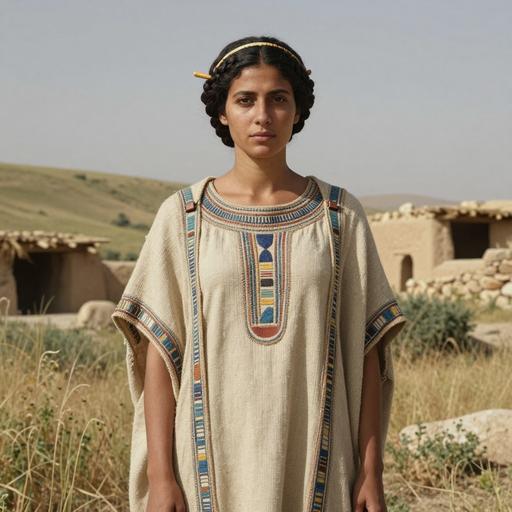
Portrait of ancient individual I6462 from Jordan, dated 1550 BCE - 1150 BCE
I6462
Jordan Late Bronze Age Jordan 1550 BCE - 1150 BCE Late Bronze Jordan U3a3 Direct
Chapter VI

Carrier Distribution Map

Geographic distribution of 1 ancient DNA sample (direct and subclade carriers of U3A3)

Direct carrier
Time Period Filter
All Time Periods
Showing all samples
Chapter VII

Temporal Distribution

Distribution of carriers across archaeological periods

Chapter VIII

Geographic Distribution

Distribution by country of origin (direct and subclade carriers shown by default)

Chapter IX

Country × Era Distribution

Cross-tabulation of carrier countries and archaeological periods (direct and subclade carriers shown by default)

Data

Data & Provenance

Source information and data quality

Last Updated 2026-06-14
Confidence Score 50/100
Coverage Low
Data Source

We use the latest phylotree for MTDNA haplogroup classification and data.