Menu
mtDNA Haplogroup • Maternal Lineage

U3B3

mtDNA Haplogroup U3B3

~9,000 years ago
Near East / Caucasus
0 subclades
Scroll to explore
Chapter I

The Story

The journey of mtDNA haplogroup U3B3

Origins and Evolution

mtDNA haplogroup U3B3 is a fine‑scale subclade nested within U3B, itself a branch of haplogroup U3. The parent clade U3B is generally placed in the Near East/Caucasus with an estimated origin in the Late Glacial to Early Holocene. U3B3 likely coalesced slightly later than its parent, during the early Holocene (~9 kya), consistent with post‑glacial demographic expansions and the onset of Neolithic population movements across the Near East and adjacent regions.

Phylogenetic resolution for U3B3 is still limited by sample size in modern and ancient datasets; the clade is defined by a small number of coding‐region and control‑region mutations that separate it from other U3B branches. As more complete mitogenomes are obtained from under‑sampled populations (especially in the Caucasus, Levant, and Anatolia), the internal structure of U3B3 and its sublineages will become clearer.

Subclades (if applicable)

At present, U3B3 appears as a distinct branch within U3B with one or more internal variants observed in modern mitogenomes and a limited number of ancient samples. Because sampling is incomplete, clearly named downstream subclades of U3B3 are not yet widely established in published phylogenies; researchers typically report U3B3 and any private or regional variants observed within it. Future high‑coverage mitogenomes from the Near East and neighbouring regions may resolve additional named subclades under U3B3.

Geographical Distribution

U3B3 is concentrated in the Near East and Caucasus region, with lower but detectable frequencies extending into adjacent regions. Modern occurrences are most common among Levantine and Caucasus populations and are also found in Anatolia. Sporadic occurrences appear in North Africa (notably some Berber groups), parts of southern Europe (Italy, Greece, Iberia) at low to moderate frequencies, and at very low frequencies in South Asia and Central Asia. The pattern is consistent with a Near Eastern origin followed by localized expansions and later historic dispersals (trade, migration, diasporas).

Ancient DNA evidence for U3B/U3B3 and related U3 lineages in archaeological contexts in the Near East and Mediterranean supports a Holocene presence and episodic mobility during the Neolithic and later periods.

Historical and Cultural Significance

Because of its Near Eastern/Caucasus origin and Holocene time depth, U3B3 is most plausibly associated with post‑glacial hunter‑forager continuity and early farming communities in the eastern Mediterranean and adjacent regions. The clade's later appearances at low frequencies in North Africa and southern Europe may reflect Neolithic farmer dispersals, maritime contacts (for example, Anatolian/Levantine seafaring and trade), and historic population movements including Phoenician, Greek and Roman era connectivity and Jewish diasporas.

In modern genetic surveys, U3 lineages, including U3B3, are sometimes observed in communities with historically documented long‑distance connections (e.g., coastal trading networks and diasporic communities). However, U3B3 is not a high‑frequency marker of any single archaeological culture; rather it contributes to the mosaic of maternal diversity that accompanied Near Eastern demographic expansions.

Conclusion

U3B3 is a Near Eastern/Caucasus‑rooted mtDNA lineage that likely emerged in the early Holocene and persisted through Neolithic and later periods, dispersing at low to moderate frequencies into neighbouring regions. Its relatively low frequency and limited sampling mean its finer phylogeny and precise migratory episodes remain incompletely resolved, but available genetic and archaeological evidence places it among maternal lineages that track postglacial continuity and Neolithic‑era expansions from the Near East into the Mediterranean and North Africa.

Key Points

  • Origins and Evolution
  • Subclades (if applicable)
  • Geographical Distribution
  • Historical and Cultural Significance
  • Conclusion
Chapter II

Tree & Relationships

Phylogenetic context and subclades

Evolution Path

This haplogroup's evolutionary journey from its earliest ancestor to the present.

Steps Haplogroup Age Estimate Archaeology Era Time Passed Immediate Descendants Tested Modern Descendants Ancient Connections
1 U3B3 Current ~9,000 years ago 🌾 Neolithic 9,000 years 0 1 0
2 U3B ~12,000 years ago 🌾 Neolithic 12,000 years 4 75 33
3 U3 ~25,000 years ago 🦴 Paleolithic 25,000 years 3 183 10
4 U ~46,000 years ago 🦴 Paleolithic 46,000 years 12 2,835 110
5 R ~60,000 years ago 🦴 Paleolithic 60,000 years 12 10,987 57
6 N ~60,000 years ago 🦴 Paleolithic 60,000 years 15 15,452 13
7 L3 ~70,000 years ago 🦴 Paleolithic 70,000 years 11 17,621 6
8 L ~160,000 years ago 🦴 Paleolithic 160,000 years 7 18,987 5

Subclades (0)

Terminal branch - no known subclades

Siblings (3)

Other branches from the same parent haplogroup

Chapter III

Where in the World

Geographic distribution and modern presence

Place of Origin

Near East / Caucasus

Modern Distribution

The populations where MTDNA haplogroup U3B3 is found include:

  1. Levantine populations (Lebanese, Syrians, Palestinians)
  2. Caucasus groups (Armenians, Georgians, Azerbaijanis)
  3. Anatolian/Turkish populations
  4. North African populations (notably some Berber groups)
  5. Southern European populations (Italy, Greece, Iberia at low-to-moderate frequencies)
  6. Jewish communities (certain Ashkenazi and Sephardic maternal lineages)
  7. South Asian populations (low frequencies in parts of India and Pakistan)
  8. Central Asian populations (sporadic occurrences)
CHAPTER IV

When in Time

Your haplogroup in the context of human history

~10k years ago

Neolithic Revolution

Agriculture begins, settled communities form

~9k years ago

Haplogroup U3B3

Your mtDNA haplogroup emerged in Near East / Caucasus

Near East / Caucasus
~5k years ago

Bronze Age

Metalworking, writing, and early civilizations

~3k years ago

Iron Age

Iron tools, expanded trade networks

~2k years ago

Classical Antiquity

Greek and Roman civilizations flourish

Present

Present Day

Modern era

Your Haplogroup
Historical Era
Chapter IV-B

Linked Cultures

Ancient cultures associated with mtDNA haplogroup U3B3

Cultural Heritage

These ancient cultures have been linked to haplogroup U3B3 based on matching ancient DNA samples from archaeological excavations. The presence of this haplogroup in these cultures provides insights into the migrations and population movements of populations carrying this haplogroup.

Anatolian Bronze Age Canaanite Cernavoda Culture Early Bronze Anatolia Hasanlu Culture Iranian Bronze-Iron Transition Jordanian Iron Late Bronze Age Armenian Late Bronze Jordan Late Iron Age Armenian Odigitria Culture Transitional Anatolian
Culture assignments are based on archaeological context of ancient DNA samples and may represent regional associations during specific time periods.
Chapter V

Sample Catalog

10 direct carriers of haplogroup U3B3

10 / 10 samples
Portrait Sample Country Era Date Culture mtDNA Match
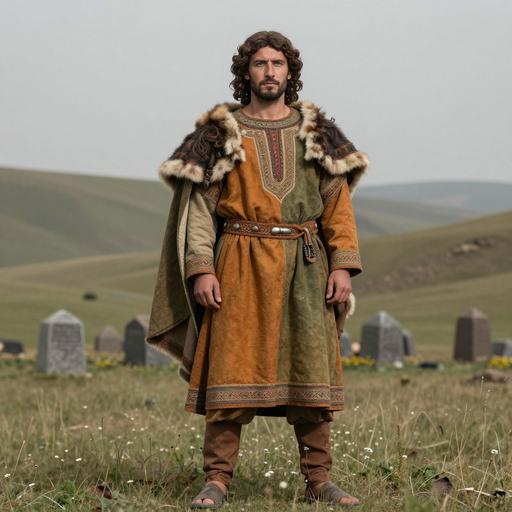
Portrait of ancient individual I18161 from Armenia, dated 680 BCE - 550 BCE
I18161
Armenia Late Iron Age Armenia 680 BCE - 550 BCE Late Iron Age Armenian U3b3 Direct
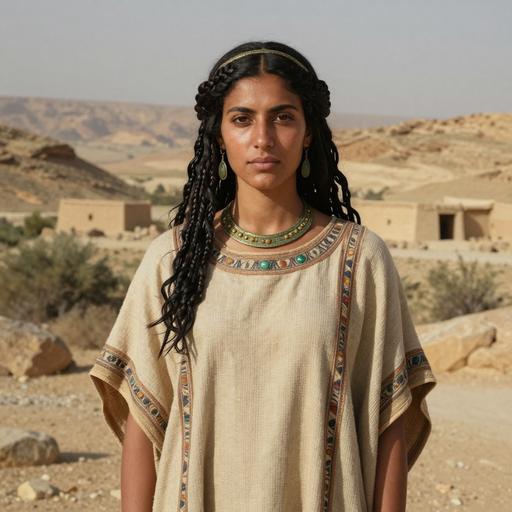
Portrait of ancient individual I4356 from Iran, dated 1111 BCE - 931 BCE
I4356
Iran The Iron Age in Hasanlu, Iran 1111 BCE - 931 BCE Hasanlu Culture U3b3 Direct
Portrait of ancient individual I4238 from Iran, dated 1224 BCE - 1056 BCE
I4238
Iran The Transition from Bronze Age to Iron Age in Iran 1224 BCE - 1056 BCE Iranian Bronze-Iron Transition U3b3 Direct
Portrait of ancient individual I16220 from Armenia, dated 1382 BCE - 1134 BCE
I16220
Armenia Late Bronze Age Armenia 1382 BCE - 1134 BCE Late Bronze Age Armenian U3b3 Direct
Portrait of ancient individual I6564 from Jordan, dated 1550 BCE - 1150 BCE
I6564
Jordan Late Bronze Age Jordan 1550 BCE - 1150 BCE Late Bronze Jordan U3b3 Direct
Portrait of ancient individual I3703 from Jordan, dated 1550 BCE - 1150 BCE
I3703
Jordan Iron Age Jordan 1550 BCE - 1150 BCE Jordanian Iron U3b3 Direct
Portrait of ancient individual I9130 from Greece, dated 2210 BCE - 1680 BCE
I9130
Greece Minoan Odigitria, Greece 2210 BCE - 1680 BCE Odigitria Culture U3b3 Direct
Portrait of ancient individual I4619 from Turkey, dated 2859 BCE - 2504 BCE
I4619
Turkey Early Bronze Age Turkey 2859 BCE - 2504 BCE Early Bronze Anatolia U3b3 Direct
Portrait of ancient individual I4617 from Turkey, dated 3700 BCE - 2400 BCE
I4617
Turkey Late Chalcolithic to Early Bronze Age Turkey 3700 BCE - 2400 BCE Transitional Anatolian U3b3 Direct
Portrait of ancient individual KTL005 from Ukraine, dated 3765 BCE - 3637 BCE
KTL005
Ukraine Cernavoda I-Kartal Culture 3765 BCE - 3637 BCE Cernavoda Culture U3b3 Direct
Chapter VI

Carrier Distribution Map

Geographic distribution of 10 ancient DNA samples (direct and subclade carriers of U3B3)

Direct carrier
Time Period Filter
All Time Periods
Showing all samples
Chapter VII

Temporal Distribution

Distribution of carriers across archaeological periods

Chapter VIII

Geographic Distribution

Distribution by country of origin (direct and subclade carriers shown by default)

Chapter IX

Country × Era Distribution

Cross-tabulation of carrier countries and archaeological periods (direct and subclade carriers shown by default)

Data

Data & Provenance

Source information and data quality

Last Updated 2026-02-16
Confidence Score 50/100
Coverage Low
Data Source

We use the latest phylotree for MTDNA haplogroup classification and data.