mtDNA · Maternal lineage

U4A1A

mtDNA Haplogroup U4A1A

A reference profile for one lineage branch. Shared haplogroups do not establish a family relationship or cultural identity.

Reference profile

Branch background

Historical context for mtDNA lineage branch U4A1A

Origins and Evolution

mtDNA haplogroup U4A1A derives from the broader U4A1 branch of haplogroup U4, a maternal lineage that expanded in northern Eurasia after the Last Glacial Maximum. Based on its position within U4A1 and the archaeological contexts in which related lineages appear, U4A1A most likely arose in a northern Eurasian population during the Early Holocene (roughly around 9 thousand years ago) as hunter-gatherer groups recolonized formerly glaciated landscapes. Like other U4 subclades, U4A1A reflects a long-standing Mesolithic maternal substrate in the Baltic, Fennoscandia, and parts of Eastern Europe and shows later, low-frequency penetration into Siberia and Central Asia through prehistoric and historic population movements.

Subclades

U4A1A is a relatively deep but internally modestly diversified subclade: many reported U4A1A assignments in modern and ancient samples are resolved only with whole-mitogenome sequencing, and local microclades have been reported in northern and northeastern Europe. Where present, these microclades can help distinguish regional post-glacial expansions and later demographic continuity (for example, differentiation between Baltic, Finnish, and Russian lineages). Ongoing mitogenome sampling continues to refine the internal branching and geographic structure within U4A1A.

Geographical Distribution

U4A1A is concentrated in northern and eastern Europe with lower-frequency occurrences extending into western Siberia and parts of Central Asia. Modern carrier populations include Scandinavians, Finns, Baltic groups, and various Russian populations; indigenous northern Siberian groups and some Central Asian populations also carry U4A1A at low levels, consistent with gene flow along northern Eurasian corridors. In ancient DNA studies, U4-related lineages (including U4A1 and its subclades) are common in Mesolithic hunter-gatherer remains from northern and eastern Europe and appear sporadically in Neolithic and later contexts, indicating persistence of hunter-gatherer maternal ancestry alongside incoming farmer and steppe-associated groups.

Historical and Cultural Significance

Because U4A1A sits within the broader U4 hunter-gatherer lineage, it is an informative marker for studies of post-glacial recolonization of northern Europe and the persistence of Mesolithic maternal ancestry into later archaeological cultures. U4 lineages (including U4A1A) often contrast with farmer-associated mtDNA lineages (e.g., H, J, T) and therefore serve as a genetic signature of pre-Neolithic populations in the region. The presence of U4A1A in both ancient and modern northern European populations supports models where substantial maternal continuity remained in parts of Fennoscandia and the Baltic despite Neolithic and Bronze Age demographic shifts.

Conclusion

U4A1A is a northern Eurasian maternal sublineage that emerged in the Early Holocene and preserves a signal of Mesolithic hunter-gatherer ancestry across northern and eastern Europe, with additional traces into Siberia and Central Asia. Continued mitogenome sequencing in both modern populations and ancient remains will further resolve its internal structure and clarify regional demographic histories tied to post-glacial expansion and later cultural transformations.

Key Points

  • Origins and Evolution
  • Subclades
  • Geographical Distribution
  • Historical and Cultural Significance
  • Conclusion
Reference profile

Tree & Relationships

Phylogenetic context and subclades

Evolution Path

Follow the recorded parent branches toward U4A1A. Dates are estimates and can change as reference data is revised.

Steps Haplogroup Age Estimate Archaeology Era Time Passed Immediate Descendants Tested Modern Descendants Ancient Connections
1 U4A1A Current ~9,000 years ago Neolithic 9,000 years 4 32 18
2 U4A1 ~12,000 years ago Neolithic 12,000 years 5 63 0
3 U4A ~20,000 years ago Mesolithic 20,000 years 5 150 123
4 U4 ~25,000 years ago Paleolithic 25,000 years 6 350 31
5 U4'9 - - - 2 361 0
6 U2'3'4'7'8'9 - - - 5 3,500 0
7 U ~46,000 years ago Paleolithic 46,000 years 5 5,557 110
8 R ~55,000 years ago Paleolithic 55,000 years 17 22,830 57
9 NA - - - 1 22,830 0
10 N ~60,000 years ago Paleolithic 60,000 years 16 26,150 13
11 L3 ~70,000 years ago Paleolithic 70,000 years 7 30,162 6
12 L3'4 - - - 2 30,212 0
13 L3'4'6 - - - 2 30,216 0
14 L2'3'4'6 - - - 2 31,333 0
15 L2'3'4'5'6'7 - - - 2 31,349 0
16 L1'2'3'4'5'6'7 - - - 2 31,852 0
17 L ~160,000 years ago Paleolithic 160,000 years 2 32,236 5

Siblings (4)

Other branches from the same parent haplogroup

Reference profile

Where in the World

Geographic distribution and modern presence

Recorded origin

Northern Eurasia

Modern Distribution

The populations where mtDNA haplogroup U4A1A is found include:

  1. Scandinavians (Swedes, Norwegians)
  2. Finns and other Fennoscandian groups
  3. Eastern Europeans (Russians, Balts)
  4. Indigenous Siberian groups (e.g., Nenets, Evenks) at low frequency
  5. Central Asian populations (e.g., Altai region) at low frequency
  6. Caucasus populations (very low frequency)
  7. Isolated occurrences in South Asia (very low frequency)
  8. Ancient Mesolithic and Neolithic remains from northern and eastern Europe
Historical context

A branch through time

Estimated formation in a broad historical timeline. Period markers provide context and do not imply a connection with particular cultures.

  1. ~10k years ago

    Neolithic Revolution

    Agriculture begins, settled communities form

  2. ~9k years ago

    Haplogroup U4A1A

    Estimated formation of this mtDNA branch; dates and locations are reference estimates.

    This branch
  3. ~5k years ago

    Bronze Age

    Metalworking, writing, and early civilizations

  4. ~3k years ago

    Iron Age

    Iron tools, expanded trade networks

  5. ~2.5k years ago

    Classical Antiquity

    Greek and Roman civilizations flourish

  6. Present

    Present Day

    Modern era

Reference profile

Archaeological context

Recorded archaeological associations for mtDNA branch U4A1A

Recorded associations

These labels describe archaeological contexts recorded for reference samples linked to U4A1A. An association does not establish that all carriers belonged to a culture or followed a particular migration route.

Danish Bronze Age Lech Valley Bronze Age Russia_Eneolithic_EBA_Caucasus Russia_Rostov_EBA_Yamnaya-o Scottish Bronze Age Singen Culture Viking Culture Yamnaya Culture
Culture assignments are based on archaeological context of ancient DNA samples and may represent regional associations during specific time periods.
Reference profile

Sample Catalog

15 direct carriers and 3 subclade carriers of haplogroup U4A1A

10 shown · 18 matching samples

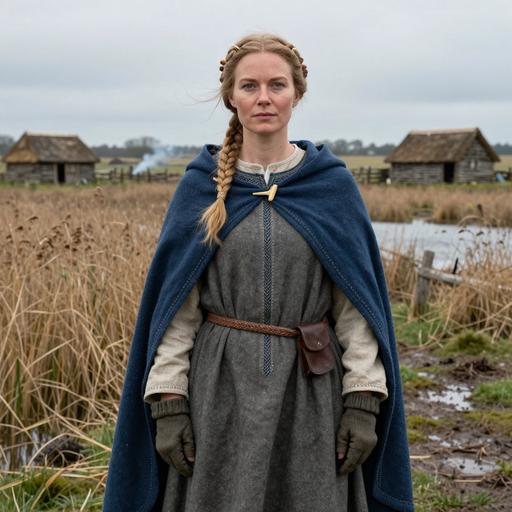
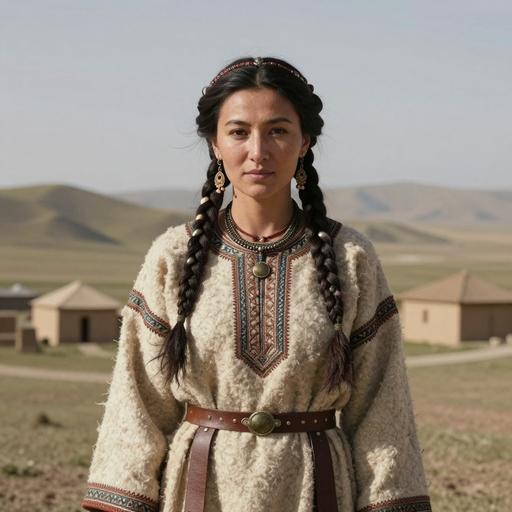
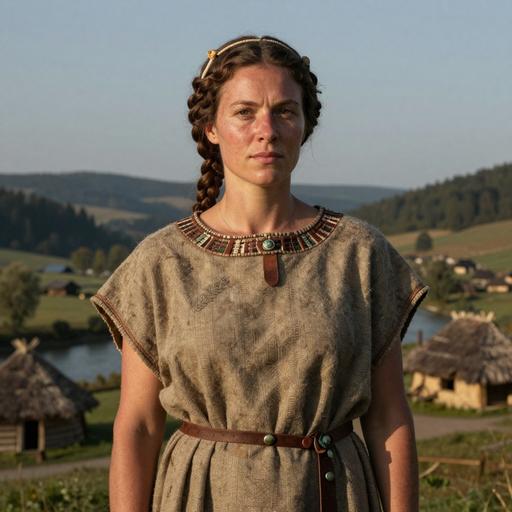
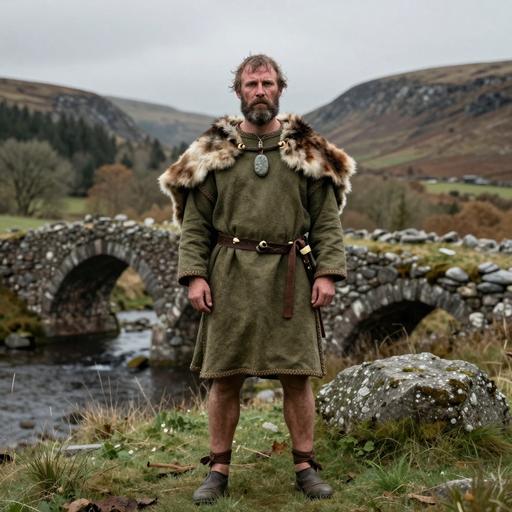
Portraits are AI-generated illustrations. Sample labels and accession IDs identify the reference records.

Portrait Sample Country Era Date Culture mtDNA Match
AI-generated illustrative portrait of Friesland Medieval Saxon individual, Friesland. Midlum, Netherlands (431-635 CE)
Sample ID: MDM005
Netherlands Saxon Medieval Friesland, Netherlands 431-635 calCE Saxon Culture U4a1a Direct
AI-generated illustrative portrait of IA Saka individual, Issyk-Kul Region. Ken-Su Village. Ken-Su #651, Kyrgyzstan (540-397 BCE)
Sample ID: KEN002
Kyrgyzstan Iron Age Saka Culture, Kyrgyzstan 540-397 calBCE (2386±22 BP) Saka Culture U4a1a Direct
AI-generated illustrative portrait of Lazio IA b Volsci Hernici individual, Boville Ernica, Italy (700-600 BCE)
Sample ID: R1021
Italy Iron Age Roman Republic 700-600 BCE Roman Republic U4a1a Direct
AI-generated illustrative portrait of Early Medieval individual, Roscommon. Kilteasheen, Ireland (700-1,300 CE)
Sample ID: KIL032
Ireland Anglo-Saxon Early Medieval Kilteasheen, Ireland 700-1300 CE Kilteasheen U4a1a Direct
AI-generated illustrative portrait of Norse individual, Ladoga, Russia (900-1,200 CE)
Sample ID: VK23
Russia Russia Viking 900 CE - 1200 CE Viking Culture U4a1a Direct
AI-generated illustrative portrait of Viking individual, Ladoga, Russia (900-1,200 CE)
Sample ID: VK23
Russia The Viking Age 900 CE - 1200 CE U4a1a Direct
AI-generated illustrative portrait of BA individual, Hove A (Zealand region), Denmark (1,383-1,052 BCE)
Sample ID: NEO946
Denmark Danish Bronze Age 1383-1052 calBCE (2982±44 BP, UBA-39154) Danish Bronze Age U4a1a Direct
AI-generated illustrative portrait of Kleinaitingen Gewerbegebiet Nord EBA individual, Kleinaitingen - Gewerbegebiet Nord, Germany (1,870-1,623 BCE)
Sample ID: AITI_120
Germany Early Bronze Age Lech Valley, Germany 1870-1623 calBCE (3417±27 BP, MAMS-21595) Lech Valley Bronze Age U4a1a Direct
AI-generated illustrative portrait of Central European Bronze Age Cultures individual, Kleinaitingen - Gewerbegebiet Nord, Germany (1,875-1,630 BCE)
Sample ID: AITI_87
Germany Early Bronze Age Lech Valley, Germany 1875 BCE - 1630 BCE Lech Valley Bronze Age U4a1a Direct
AI-generated illustrative portrait of Ceu Eba individual, Kleinaitingen - Gewerbegebiet Nord, Germany (1,875-1,630 BCE)
Sample ID: AITI_87
Germany Early Bronze Age Central Europe 1875 BCE - 1630 BCE U4a1a Direct
MATERNAL LINEAGE · ANCIENT DNA

Ancient lineage evidence map

Follow parent clades toward this branch and explore where ancient carriers were found.

Loading ancient observations…

Markers are archaeological find locations. A dashed connector is an uncertain, proposed geographic transition between consecutive branches supported by multiple dated observations; it is not an exact travel route, birthplace or proof of direct descent. Parent-clade samples may belong to other descendant branches. Gaps remain where evidence is insufficient. Sample dates differ from haplogroup formation dates.

Reference profile

Carrier Distribution Map

Geographic distribution of 18 ancient DNA samples (direct and subclade carriers of U4A1A)

Direct carrier Subclade carrier
Time Period Filter
All Time Periods
Showing all samples
Reference profile

Temporal Distribution

Distribution of carriers across archaeological periods

Reference profile

Geographic Distribution

Counts by recorded sample country. These reflect the available reference selection, not population frequencies.

Reference profile

Country × Era Distribution

Compare recorded sample counts across countries and archaeological periods. Select a populated cell to inspect a sample.

Data

Data & Provenance

Source information and data quality

Last Updated 2026-02-16
Confidence Score 50/100
Coverage Low

Data Source

Classification, estimated dates and geographic context reflect the recorded reference data and may change as evidence is revised. Sample coverage is uneven; recorded locations and archaeological associations do not establish personal origin or cultural identity.

A haplogroup follows one maternal or paternal line. The branch prediction depends on which markers the DNA file contains. How our analysis works