mtDNA · Maternal lineage

U4B3

mtDNA Haplogroup U4B3

A reference profile for one lineage branch. Shared haplogroups do not establish a family relationship or cultural identity.

Reference profile

Branch background

Historical context for mtDNA lineage branch U4B3

Origins and Evolution

mtDNA haplogroup U4B3 is a downstream lineage of U4B, itself a branch of the broader U4 clade that is strongly associated with Late Glacial and postglacial hunter-gatherer groups of northern and eastern Europe. Based on its phylogenetic position under U4B and the temporal pattern of related lineages in ancient DNA, U4B3 most likely diversified in the Late Glacial or Early Holocene (roughly 12 kya) in the forest-steppe and boreal regions of northeastern Europe. Its emergence fits the pattern of maternal lineages that expanded locally as climates warmed and Mesolithic populations recolonized northern latitudes after the Last Glacial Maximum.

Because full mitogenome sampling for rare downstream subclades remains incomplete, precise node-age estimates vary; however, U4B3 is plausibly younger than the parent U4B cluster (often placed around ~15 kya) and shows the geographic footprint typical of postglacial northern European lineages.

Subclades (if applicable)

U4B3 is defined as a terminal subclade beneath U4B. At present, published and database mitogenomes indicate limited internal diversity within U4B3 compared with larger U4 subclades, suggesting either a relatively recent radiation or undersampling. Additional complete mitogenome sequencing from both modern and ancient individuals is needed to resolve internal branches (e.g., U4B3a, U4B3b if present) and to clarify demographic history.

Geographical Distribution

The distribution of U4B3 mirrors the northern/eastern European-centered pattern of its parent clade but at lower and patchier frequencies. Detectable occurrences are concentrated in:

  • Northern Europe and the Baltic / Scandinavian region, where U4-derived lineages persisted after the LGM;
  • Northwest Russia and other parts of Eastern Europe, consistent with Mesolithic and later continuity;
  • Parts of Siberia and northern Eurasia, where U4-lineage spillover and gene flow connected eastern and western forager groups; and
  • Central Asia and the Caucasus at low frequencies, likely reflecting long-distance movements and later admixture.

U4B3 appears in a small number of ancient DNA samples (six in the referenced database), which supports a long-standing but low-frequency presence in archaeological contexts spanning Mesolithic through Bronze Age horizons in northern Eurasia.

Historical and Cultural Significance

U4 and its subclades are commonly interpreted as markers of postglacial hunter-gatherer populations in Europe. U4B3 likely reflects maternal continuity from Mesolithic forager communities in northeast Europe into later periods, with the lineage sometimes retained among populations that experienced farmer influxes and Bronze Age mobility. Its sporadic presence in Bronze Age and later contexts suggests survival in pockets (especially in the far north and among groups with limited early farmer admixture) and occasional incorporation into expanding cultural complexes.

Archaeological cultures relevant to the broader U4/U4B signal include Mesolithic hunter-gatherer groups (primary association), and later contexts where U4 variants are found include Corded Ware and Yamnaya-related Bronze Age horizons in some regions — though U4B3 itself is not a defining marker of these steppe cultures but rather an element of the regional maternal gene pool that could be assimilated into such populations.

Conclusion

U4B3 is a specialist, northerly subclade of the ancient U4 maternal radiation that documents postglacial maternal line continuity in northeastern Europe and adjacent regions of northern Eurasia. Its low but persistent frequency in both ancient and modern datasets highlights the complex mosaic of hunter-gatherer persistence, later migrations, and regional admixture. Expanded mitogenome sampling, particularly from under-sampled regions and archaeological contexts, will clarify its internal structure and finer-scale demographic history.

Key Points

  • Origins and Evolution
  • Subclades (if applicable)
  • Geographical Distribution
  • Historical and Cultural Significance
  • Conclusion
Reference profile

Tree & Relationships

Phylogenetic context and subclades

Evolution Path

Follow the recorded parent branches toward U4B3. Dates are estimates and can change as reference data is revised.

Steps Haplogroup Age Estimate Archaeology Era Time Passed Immediate Descendants Tested Modern Descendants Ancient Connections
1 U4B3 Current ~12,000 years ago Neolithic 12,000 years 0 13 0
2 U4B ~15,000 years ago Mesolithic 15,000 years 2 116 15
3 U4 ~25,000 years ago Paleolithic 25,000 years 6 350 31
4 U4'9 - - - 2 361 0
5 U2'3'4'7'8'9 - - - 5 3,500 0
6 U ~46,000 years ago Paleolithic 46,000 years 5 5,557 110
7 R ~55,000 years ago Paleolithic 55,000 years 17 22,830 57
8 NA - - - 1 22,830 0
9 N ~60,000 years ago Paleolithic 60,000 years 16 26,150 13
10 L3 ~70,000 years ago Paleolithic 70,000 years 7 30,162 6
11 L3'4 - - - 2 30,212 0
12 L3'4'6 - - - 2 30,216 0
13 L2'3'4'6 - - - 2 31,333 0
14 L2'3'4'5'6'7 - - - 2 31,349 0
15 L1'2'3'4'5'6'7 - - - 2 31,852 0
16 L ~160,000 years ago Paleolithic 160,000 years 2 32,236 5

Subclades (0)

Terminal branch - no recorded subclades

Siblings (1)

Other branches from the same parent haplogroup

Reference profile

Where in the World

Geographic distribution and modern presence

Recorded origin

Northern/Eastern Europe

Modern Distribution

The populations where mitochondrial haplogroup U4B3 is found include:

  1. Northern European populations (e.g., Scandinavia, Baltic region)
  2. Eastern European populations (e.g., northwest Russia, Baltic states, Ukraine)
  3. Siberian indigenous groups and northern Eurasian populations
  4. Central Asian populations (low to moderate frequency)
  5. Caucasus populations (low frequency)
  6. South Asian populations (very low frequency/incidental)
Historical context

A branch through time

Estimated formation in a broad historical timeline. Period markers provide context and do not imply a connection with particular cultures.

  1. ~12k years ago

    Haplogroup U4B3

    Estimated formation of this mtDNA branch; dates and locations are reference estimates.

    This branch
  2. ~10k years ago

    Neolithic Revolution

    Agriculture begins, settled communities form

  3. ~5k years ago

    Bronze Age

    Metalworking, writing, and early civilizations

  4. ~3k years ago

    Iron Age

    Iron tools, expanded trade networks

  5. ~2.5k years ago

    Classical Antiquity

    Greek and Roman civilizations flourish

  6. Present

    Present Day

    Modern era

Reference profile

Archaeological context

Recorded archaeological associations for mtDNA branch U4B3

Recorded associations

These labels describe archaeological contexts recorded for reference samples linked to U4B3. An association does not establish that all carriers belonged to a culture or followed a particular migration route.

Afanasievo Byzantine Anatolia Mesolithic Ukrainian Moldova_EBA_Yamnaya Poprad Culture Russia_Rostov_EBA_Don_Yamnaya Russia_Tatarstan_Roman_Mazunino Russia_Udmurtia_Roman_Mazunino Ukrainian Neolithic
Culture assignments are based on archaeological context of ancient DNA samples and may represent regional associations during specific time periods.
Reference profile

Sample Catalog

8 direct carriers of haplogroup U4B3

8 shown · 8 matching samples

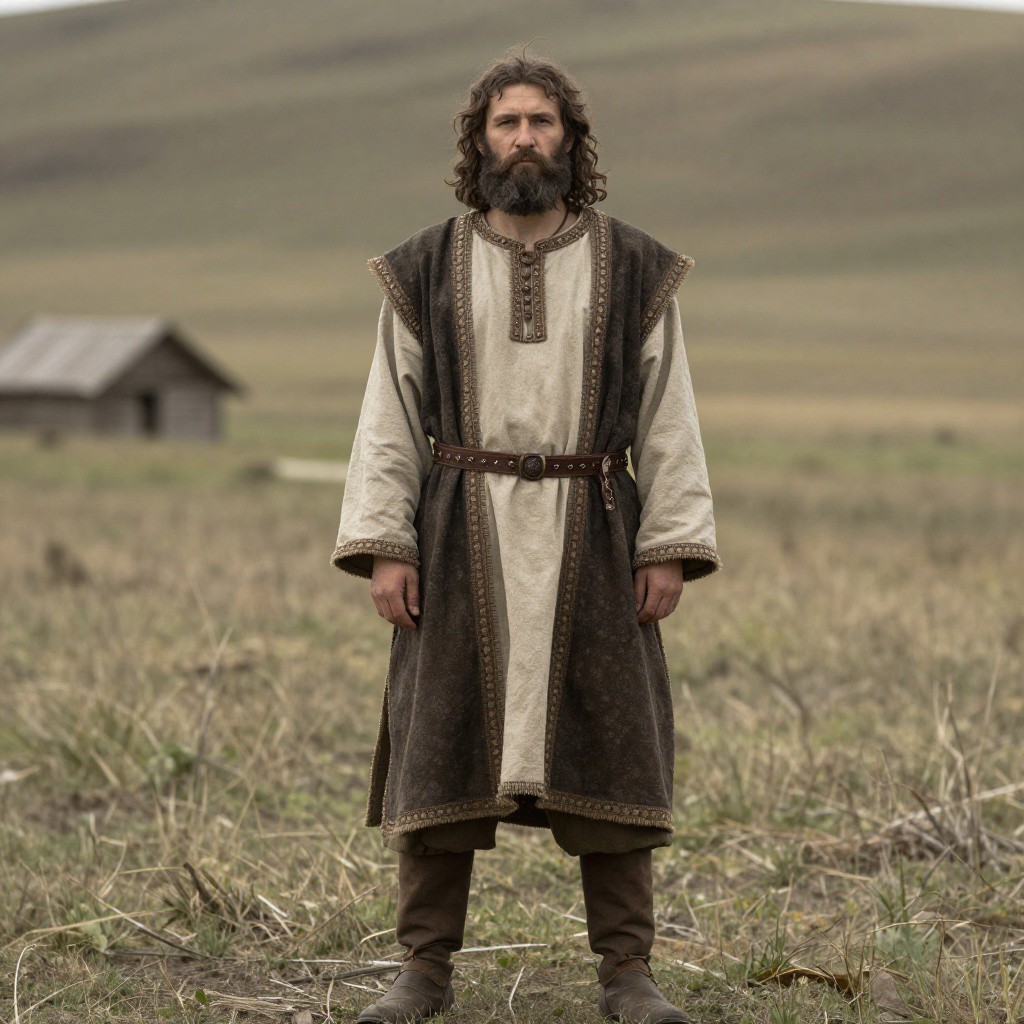
Portraits are AI-generated illustrations. Sample labels and accession IDs identify the reference records.

Portrait Sample Country Era Date Culture mtDNA Match
AI-generated illustrative portrait of Tatarstan Roman Mazunino individual, Turaevo-1 (Tatarstan Republic of, Mendeleevsky District, Turaevo Village), Russia (200-350 CE)
Sample ID: I32621
Russia Russia Tatarstan Roman Mazunino 200-350 CE Russia_Tatarstan_Roman_Mazunino U4b3 Direct
AI-generated illustrative portrait of Slavic individual, Slovakia (200-500 CE)
Sample ID: DA119
Slovakia Poprad Site, Slovakia 200 CE - 500 CE Poprad Culture U4b3 Direct
AI-generated illustrative portrait of Germanic individual, Slovakia (200-500 CE)
Sample ID: DA119
Slovakia The Germanic Tribes 200 CE - 500 CE U4b3 Direct
AI-generated illustrative portrait of Udmurtia Roman Mazunino individual, Boyarka "Aray" (Udmurtia, Karakulinsky District, Boyarka Village), Russia (250-450 CE)
Sample ID: I32631
Russia Russia Udmurtia Roman Mazunino 250-450 CE Russia_Udmurtia_Roman_Mazunino U4b3 Direct
AI-generated illustrative portrait of Medieval Byzantine-1 individual, Tilbeşar Höyük (Southeast. Gaziantep), Turkey (1,100-1,300 CE)
Sample ID: I14650
Turkey Southeast Byzantine Turkey 1100-1300 CE Byzantine Anatolia U4b3 Direct
AI-generated illustrative portrait of Rostov EBA Don Yamnaya individual, Krivyansky-9 (Rostov Oblast, Oktyabrsky District, Krivyanskaya Village), Russia (2,862-2,573 BCE)
Sample ID: I26782
Russia Russia Rostov EBA Don Yamnaya 2862-2573 calBCE (4105±25 BP, PSUAMS-10821) Russia_Rostov_EBA_Don_Yamnaya U4b3 Direct
AI-generated illustrative portrait of EBA Yamnaya individual, Crihana-Veche (Cahul District), Moldova (2,900-2,500 BCE)
Sample ID: I10206
Moldova Moldova EBA Yamnaya 2900-2500 BCE Moldova_EBA_Yamnaya U4b3 Direct
AI-generated illustrative portrait of Khakassia Afanasievo individual, Altai Mountains. Yenisey River. left bank of Karasuk tributary. Karasuk III, Russia (2,950-2,550 BCE)
Sample ID: I6715
Russia Russia Afanasievo 2950-2550 BCE Afanasievo U4b3 Direct
MATERNAL LINEAGE · ANCIENT DNA

Ancient lineage evidence map

Follow parent clades toward this branch and explore where ancient carriers were found.

Loading ancient observations…

Markers are archaeological find locations. A dashed connector is an uncertain, proposed geographic transition between consecutive branches supported by multiple dated observations; it is not an exact travel route, birthplace or proof of direct descent. Parent-clade samples may belong to other descendant branches. Gaps remain where evidence is insufficient. Sample dates differ from haplogroup formation dates.

Reference profile

Carrier Distribution Map

Geographic distribution of 8 ancient DNA samples (direct and subclade carriers of U4B3)

Direct carrier
Time Period Filter
All Time Periods
Showing all samples
Reference profile

Temporal Distribution

Distribution of carriers across archaeological periods

Reference profile

Geographic Distribution

Counts by recorded sample country. These reflect the available reference selection, not population frequencies.

Reference profile

Country × Era Distribution

Compare recorded sample counts across countries and archaeological periods. Select a populated cell to inspect a sample.

Data

Data & Provenance

Source information and data quality

Last Updated 2026-02-16
Confidence Score 50/100
Coverage Low

Data Source

Classification, estimated dates and geographic context reflect the recorded reference data and may change as evidence is revised. Sample coverage is uneven; recorded locations and archaeological associations do not establish personal origin or cultural identity.

A haplogroup follows one maternal or paternal line. The branch prediction depends on which markers the DNA file contains. How our analysis works