Menu
mtDNA Haplogroup • Maternal Lineage

U5B1D1

mtDNA Haplogroup U5B1D1

~7,000 years ago
Northern/Central Europe
2 subclades
Scroll to explore
Chapter I

The Story

The journey of mtDNA haplogroup U5B1D1

Origins and Evolution

U5B1D1 is a downstream branch of the U5B1D lineage, itself part of the broader U5 haplogroup that is one of the oldest and most characteristic maternal lineages associated with European hunter‑gatherers. U5 lineages expanded in Europe after the Last Glacial Maximum, and the U5B1 sub‑structure developed during the early to mid‑Holocene. U5B1D1 likely arose in Northern or Central Europe in the early Holocene (on the order of ~7 kya), deriving from U5B1D and retaining the deep Mesolithic ancestry signal characteristic of many U5 subclades.

This clade reflects a pattern seen across several U5 derivatives: origin in post‑glacial refugial/colonizing populations of Europe, persistence in northern high‑latitude populations, and survival through cultural transitions (Mesolithic → Neolithic → Bronze Age) often at low to moderate frequencies.

Subclades

As a terminal or near‑terminal branch (U5B1D1) it is defined by one or a small number of downstream coding/control‑region mutations relative to U5B1D. At present U5B1D1 is treated as a fine‑scale subclade used to capture regional continuity; additional downstream diversification can occur in local populations but the overall diversity within U5B1D1 remains relatively low compared with older U5 branches. Where more detailed phylogenetic resolution exists, U5B1D1 samples cluster tightly, consistent with a Holocene origin and limited effective population size in northern refugial groups.

Geographical Distribution

U5B1D1 shows a clear northern and north‑central European focal point, with highest frequencies and diversity in Scandinavia and among the Saami, and detectable occurrences throughout the British Isles, Iberia, Central/Eastern Europe and at low frequency in adjacent regions (North Africa, the Caucasus). Ancient DNA studies have recovered U5B1D and derived lineages in Mesolithic and post‑Mesolithic contexts in northern Europe, supporting long‑term local continuity rather than a purely recent introduction.

The distribution pattern is consistent with a lineage that persisted in post‑glacial northern hunter‑gatherer populations and was subsequently incorporated at low to moderate frequency into farming and later societies across Europe via admixture and local survival.

Historical and Cultural Significance

U5B1D1 is a marker of post‑glacial continuity in northern Europe. Its prominence in modern Saami and some Scandinavian groups echoes patterns seen in other U5 subclades that survived the Neolithic farmer expansions by remaining at appreciable frequency in high‑latitude or marginal regions. The haplogroup's presence in archaeological samples (the user dataset notes 16 ancient occurrences) underlines its relevance to studies of Mesolithic-to‑Historic population continuity, movements of small hunter‑gatherer groups, and interactions with incoming Neolithic farmers and later Bronze Age societies.

Because it is relatively restricted geographically and low in overall frequency outside its core area, U5B1D1 is useful in tracing maternal continuity, local persistence, and minor gene flows into peripheral regions (e.g., sporadic findspots in Iberia, the British Isles, North Africa and the Caucasus).

Conclusion

U5B1D1 is a Holocene, northern European maternal lineage nested within U5B1D that documents the survival of Mesolithic‑derived maternal ancestry into later Scandinavian and Saami populations and at low frequency across broader Europe and neighboring regions. It is most informative in regional studies of continuity and admixture in northern Europe and complements other ancient‑DNA signals from U5 and related maternal lineages.

Key Points

  • Origins and Evolution
  • Subclades
  • Geographical Distribution
  • Historical and Cultural Significance
  • Conclusion
Chapter II

Tree & Relationships

Phylogenetic context and subclades

Evolution Path

This haplogroup's evolutionary journey from its earliest ancestor to the present.

Steps Haplogroup Age Estimate Archaeology Era Time Passed Immediate Descendants Tested Modern Descendants Ancient Connections
1 U5B1D1 Current ~7,000 years ago 🌾 Neolithic 7,000 years 2 7 0
2 U5B1D ~8,000 years ago 🌾 Neolithic 8,000 years 2 8 25
3 U5B1 ~9,000 years ago 🌾 Neolithic 9,000 years 9 165 0
4 U5b ~9,000 years ago 🌾 Neolithic 9,000 years 3 495 140
5 U ~46,000 years ago 🦴 Paleolithic 46,000 years 12 2,835 110
6 R ~60,000 years ago 🦴 Paleolithic 60,000 years 12 10,987 57
7 N ~60,000 years ago 🦴 Paleolithic 60,000 years 15 15,452 13
8 L3 ~70,000 years ago 🦴 Paleolithic 70,000 years 11 17,621 6
9 L ~160,000 years ago 🦴 Paleolithic 160,000 years 7 18,987 5

Siblings (1)

Other branches from the same parent haplogroup

Chapter III

Where in the World

Geographic distribution and modern presence

Place of Origin

Northern/Central Europe

Modern Distribution

The populations where mtDNA haplogroup U5B1D1 is found include:

  1. Saami (Sápmi, Northern Scandinavia and Kola)
  2. Scandinavian populations (Norway, Sweden, Denmark)
  3. British Isles populations (England, Scotland, Ireland)
  4. Iberian Peninsula populations (Spain, Portugal)
  5. Central and Eastern European populations (Poland, Germany, Baltic states, Russia)
  6. North African groups at low frequency (Berber-speaking populations and adjacent regions)
  7. Caucasus populations at low frequency
CHAPTER IV

When in Time

Your haplogroup in the context of human history

~10k years ago

Neolithic Revolution

Agriculture begins, settled communities form

~7k years ago

Haplogroup U5B1D1

Your mtDNA haplogroup emerged in Northern/Central Europe

Northern/Central Europe
~5k years ago

Bronze Age

Metalworking, writing, and early civilizations

~3k years ago

Iron Age

Iron tools, expanded trade networks

~2k years ago

Classical Antiquity

Greek and Roman civilizations flourish

Present

Present Day

Modern era

Your Haplogroup
Historical Era
Chapter IV-B

Linked Cultures

Ancient cultures associated with mtDNA haplogroup U5B1D1

Cultural Heritage

These ancient cultures have been linked to haplogroup U5B1D1 based on matching ancient DNA samples from archaeological excavations. The presence of this haplogroup in these cultures provides insights into the migrations and population movements of populations carrying this haplogroup.

Baltic Hunter-Gatherer Bockstein Globular Amphora Iron Gates Culture Jordanow Culture Lasinja Culture Mesolithic Iberian Ofnet Culture San Giovanni Culture Sicilian Iron Age Wielbark
Culture assignments are based on archaeological context of ancient DNA samples and may represent regional associations during specific time periods.
Chapter V

Sample Catalog

12 direct carriers and 8 subclade carriers of haplogroup U5B1D1

20 / 20 samples
Portrait Sample Country Era Date Culture mtDNA Match
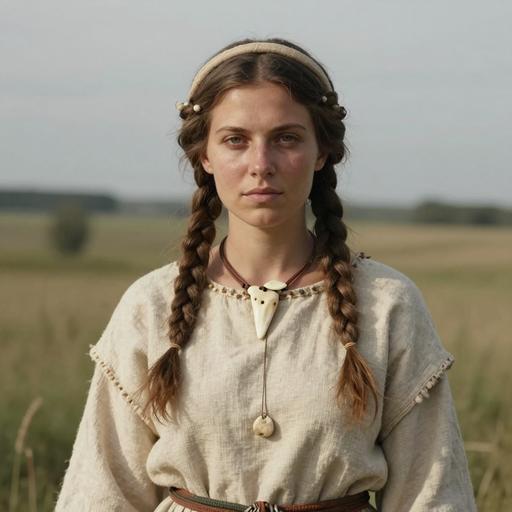
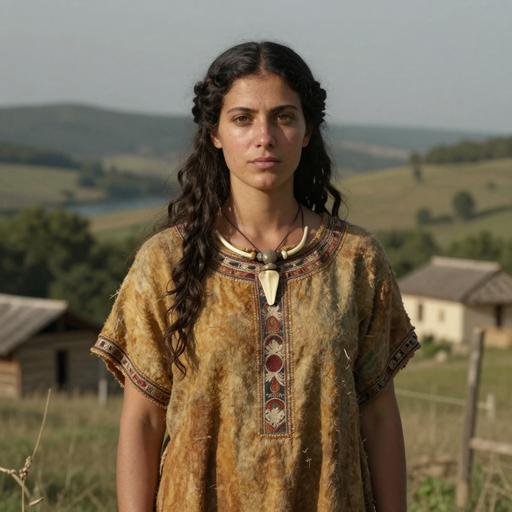
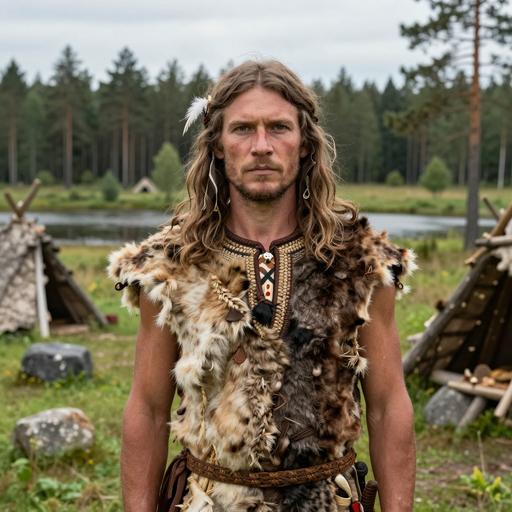
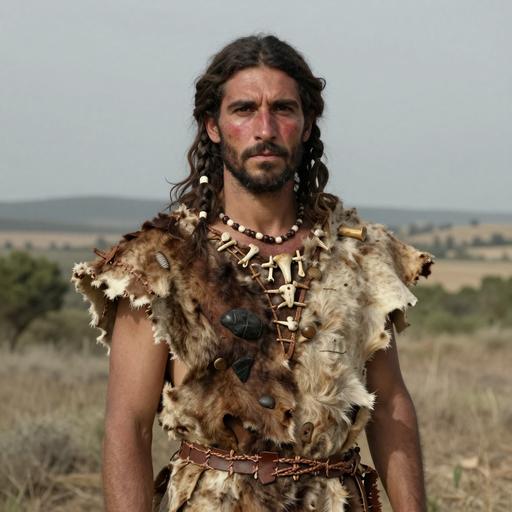
Portrait of ancient individual PCA0036 from Poland, dated 50 CE - 180 CE
PCA0036
Poland Wielbark Culture 50 CE - 180 CE Wielbark U5b1d1 Direct
Portrait of ancient individual PCA0060 from Poland, dated 50 CE - 180 CE
PCA0060
Poland Wielbark Culture 50 CE - 180 CE Wielbark U5b1d1 Direct
Portrait of ancient individual SGR002 from Italy, dated 751 BCE - 415 BCE
SGR002
Italy Iron Age San Giovanni, Italy 751 BCE - 415 BCE San Giovanni Culture U5b1d1 Direct
Portrait of ancient individual I13386 from Italy, dated 850 BCE - 550 BCE
I13386
Italy Iron Age Sicily 850 BCE - 550 BCE Sicilian Iron Age U5b1d1 Direct
Portrait of ancient individual I2434 from Poland, dated 3400 BCE - 2800 BCE
I2434
Poland Globular Amphora Culture, Poland 3400 BCE - 2800 BCE Globular Amphora U5b1d1 Direct
Portrait of ancient individual NER001 from Czech Republic, dated 4235 BCE - 3995 BCE
NER001
Czech Republic Neolithic Jordanow Culture, Bohemia, Czech Republic 4235 BCE - 3995 BCE Jordanow Culture U5b1d1 Direct
Portrait of ancient individual I10052 from Croatia, dated 4246 BCE - 4052 BCE
I10052
Croatia Chalcolithic Lasinja Culture, Croatia 4246 BCE - 4052 BCE Lasinja Culture U5b1d1 Direct
Portrait of ancient individual I3209 from Spain, dated 5978 BCE - 5773 BCE
I3209
Spain Hunter-Gatherer Spain 5978 BCE - 5773 BCE Mesolithic Iberian U5b1d1 Direct
Portrait of ancient individual Bockstein from Germany, dated 6450 BCE - 6060 BCE
Bockstein
Germany Bockstein Cave, Germany 6450 BCE - 6060 BCE Bockstein U5b1d1 Direct
Portrait of ancient individual Bockstein from Germany, dated 6450 BCE - 6060 BCE
Bockstein
Germany Late Mesolithic Central Europe 6450 BCE - 6060 BCE U5b1d1 Direct
Chapter VI

Carrier Distribution Map

Geographic distribution of 20 ancient DNA samples (direct and subclade carriers of U5B1D1)

Direct carrier Subclade carrier
Time Period Filter
All Time Periods
Showing all samples
Chapter VII

Temporal Distribution

Distribution of carriers across archaeological periods

Chapter VIII

Geographic Distribution

Distribution by country of origin (direct and subclade carriers shown by default)

Chapter IX

Country × Era Distribution

Cross-tabulation of carrier countries and archaeological periods (direct and subclade carriers shown by default)

Data

Data & Provenance

Source information and data quality

Last Updated 2026-02-16
Confidence Score 50/100
Coverage Low
Data Source

We use the latest phylotree for MTDNA haplogroup classification and data.