mtDNA · Maternal lineage

U6A1A1A

mtDNA Haplogroup U6A1A1A

A reference profile for one lineage branch. Shared haplogroups do not establish a family relationship or cultural identity.

Reference profile

Branch background

Historical context for mtDNA lineage branch U6A1A1A

Origins and Evolution

mtDNA haplogroup U6A1A1A is a terminal subclade nested within U6A1A1, itself part of the broader U6 lineage that characterizes much indigenous maternal diversity in the Maghreb. Based on its phylogenetic position one step downstream of U6A1A1 and coalescence patterns observed in related lineages, U6A1A1A most likely arose in the late Holocene in North Africa roughly ~2.5 kya (2500 years ago). This timing places its origin in the broad window of the Bronze-to-Iron Age transition and the centuries that followed, a period that saw increased coastal connectivity across the western Mediterranean.

Subclades

U6A1A1A is currently considered a relatively terminal/derived branch without widely documented further subclades in the published literature or in accessible public phylogenies; it behaves as a localized lineage that shows signs of founder effects in island and coastal populations. Where deeper sequencing has been applied, U6A1A1A typically appears as a well-defined haplotype cluster rather than a complex internal branching structure, consistent with a recent origin and demographic expansion from a small number of maternal founders.

Geographical Distribution

The strongest representation of U6A1A1A is in the westernmost portions of the Maghreb and in the Canary Islands (Guanche and their modern descendants), with secondary occurrences along southwestern Iberia and scattered low-frequency detections in parts of the wider western Mediterranean. Low-frequency instances reported from East Africa and the Near East likely reflect historical gene flow and long-distance maritime or trans-Saharan contacts rather than primary centers of origin. The pattern—concentration in the Maghreb and islands with sporadic coastal occurrences—fits a model of localized differentiation followed by limited maritime-mediated dispersal.

Historical and Cultural Significance

The distribution of U6A1A1A aligns with known historical processes in the western Mediterranean: indigenous North African population structure, Phoenician and later classical-period maritime networks, and the human settlement history of the Canary Islands prior to European contact. In particular, the high frequency and reduced diversity of this branch among ancient and modern Guanche samples indicate a strong founder effect during island colonization and subsequent demographic persistence. Along southwestern Iberia and nearby coastal regions, presence of U6A1A1A is consistent with gene flow across the Gibraltar corridor and with episodic movements associated with Bronze/Iron Age seafaring and later historical contacts.

Conclusion

U6A1A1A is best interpreted as a late-Holocene, North African-derived maternal lineage that exemplifies localized differentiation (notably in the Canaries) and limited coastal dispersal across the western Mediterranean. Its phylogenetic position and geographic pattern provide useful markers for studying North African maternal ancestry, island founder events, and maritime connections between the Maghreb and Iberia during the last few millennia.

Key Points

  • Origins and Evolution
  • Subclades
  • Geographical Distribution
  • Historical and Cultural Significance
  • Conclusion
Reference profile

Tree & Relationships

Phylogenetic context and subclades

Evolution Path

Follow the recorded parent branches toward U6A1A1A. Dates are estimates and can change as reference data is revised.

Steps Haplogroup Age Estimate Archaeology Era Time Passed Immediate Descendants Tested Modern Descendants Ancient Connections
1 U6A1A1A Current ~2,000 years ago Classical Antiquity 2,500 years 0 0 1
2 U6A1A1 ~3,000 years ago Iron Age 3,000 years 1 7 0
3 U6A1A ~4,000 years ago Bronze Age 3,500 years 1 7 2
4 U6A1 ~12,000 years ago Neolithic 12,000 years 2 18 0
5 U6A ~25,000 years ago Paleolithic 25,000 years 5 87 5
6 U6A'B'D - - - 2 127 0
7 U6 ~35,000 years ago Paleolithic 35,000 years 3 146 10
8 U ~46,000 years ago Paleolithic 46,000 years 5 5,557 110
9 R ~55,000 years ago Paleolithic 55,000 years 17 22,830 57
10 NA - - - 1 22,830 0
11 N ~60,000 years ago Paleolithic 60,000 years 16 26,150 13
12 L3 ~70,000 years ago Paleolithic 70,000 years 7 30,162 6
13 L3'4 - - - 2 30,212 0
14 L3'4'6 - - - 2 30,216 0
15 L2'3'4'6 - - - 2 31,333 0
16 L2'3'4'5'6'7 - - - 2 31,349 0
17 L1'2'3'4'5'6'7 - - - 2 31,852 0
18 L ~160,000 years ago Paleolithic 160,000 years 2 32,236 5

Subclades (0)

Terminal branch - no recorded subclades

Reference profile

Where in the World

Geographic distribution and modern presence

Recorded origin

North Africa (Maghreb)

Modern Distribution

The populations where mtDNA haplogroup U6A1A1A is found include:

  1. North African Berber populations (Morocco, Algeria, Tunisia)
  2. Indigenous Guanche of the Canary Islands (pre-Hispanic and modern islanders)
  3. Iberian Peninsula (southwestern Spain and Portugal)
  4. East African populations (Ethiopia, Somalia) at low frequencies
  5. Near Eastern populations at low frequencies
  6. Sporadic presence in southern France, Sicily and other western Mediterranean coastal populations
Historical context

A branch through time

Estimated formation in a broad historical timeline. Period markers provide context and do not imply a connection with particular cultures.

  1. ~10k years ago

    Neolithic Revolution

    Agriculture begins, settled communities form

  2. ~5k years ago

    Bronze Age

    Metalworking, writing, and early civilizations

  3. ~3k years ago

    Iron Age

    Iron tools, expanded trade networks

  4. ~2.5k years ago

    Classical Antiquity

    Greek and Roman civilizations flourish

  5. ~2.5k years ago

    Haplogroup U6A1A1A

    Estimated formation of this mtDNA branch; dates and locations are reference estimates.

    This branch
  6. Present

    Present Day

    Modern era

Reference profile

Archaeological context

Recorded archaeological associations for mtDNA branch U6A1A1A

Recorded associations

These labels describe archaeological contexts recorded for reference samples linked to U6A1A1A. An association does not establish that all carriers belonged to a culture or followed a particular migration route.

Iberomaurusian Kaf Taht el-Ghar Moroccan Early Neolithic Moroccan Transitional Peștera Muierii Segorbe Islamic Tunisia_N Viking
Culture assignments are based on archaeological context of ancient DNA samples and may represent regional associations during specific time periods.
Reference profile

Sample Catalog

1 direct carrier of haplogroup U6A1A1A

1 shown · 1 matching samples

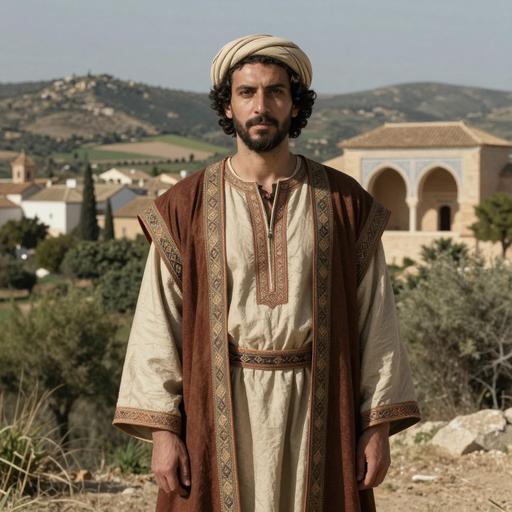
Portraits are AI-generated illustrations. Sample labels and accession IDs identify the reference records.

Portrait Sample Country Era Date Culture mtDNA Match
AI-generated illustrative portrait of Medieval Islamic individual, Valencia. Castelló. Segorbe Islamic Necropolis, Spain (1,000-1,300 CE)
Sample ID: MS060
Spain Medieval Islamic Segorbe, Spain 1000-1300 CE Segorbe Islamic U6a1a1a Direct
MATERNAL LINEAGE · ANCIENT DNA

Ancient lineage evidence map

Follow parent clades toward this branch and explore where ancient carriers were found.

Loading ancient observations…

Markers are archaeological find locations. A dashed connector is an uncertain, proposed geographic transition between consecutive branches supported by multiple dated observations; it is not an exact travel route, birthplace or proof of direct descent. Parent-clade samples may belong to other descendant branches. Gaps remain where evidence is insufficient. Sample dates differ from haplogroup formation dates.

Reference profile

Carrier Distribution Map

Geographic distribution of 1 ancient DNA sample (direct and subclade carriers of U6A1A1A)

Direct carrier
Time Period Filter
All Time Periods
Showing all samples
Reference profile

Temporal Distribution

Distribution of carriers across archaeological periods

Reference profile

Geographic Distribution

Counts by recorded sample country. These reflect the available reference selection, not population frequencies.

Reference profile

Country × Era Distribution

Compare recorded sample counts across countries and archaeological periods. Select a populated cell to inspect a sample.

Data

Data & Provenance

Source information and data quality

Last Updated 2026-02-16
Confidence Score 50/100
Coverage Low

Data Source

Classification, estimated dates and geographic context reflect the recorded reference data and may change as evidence is revised. Sample coverage is uneven; recorded locations and archaeological associations do not establish personal origin or cultural identity.

A haplogroup follows one maternal or paternal line. The branch prediction depends on which markers the DNA file contains. How our analysis works