mtDNA · Maternal lineage

U6A3

mtDNA Haplogroup U6A3

A reference profile for one lineage branch. Shared haplogroups do not establish a family relationship or cultural identity.

Reference profile

Branch background

Historical context for mtDNA lineage branch U6A3

Origins and Evolution

Haplogroup U6A3 is a downstream branch of the North African‑centered mtDNA clade U6. The broader U6 lineage is widely interpreted as a Pleistocene/early Holocene North African or Near Eastern maternal lineage that diversified in the Maghreb and surrounding regions. U6A3 itself appears to be a Holocene sublineage that diversified after the Last Glacial Maximum, likely during the early to mid‑Holocene (on the order of ~5–10 kya), reflecting local population expansion or structure within Northwest Africa.

Genetically, U6A3 sits within the U6A series of branches; its exact internal topology is still incompletely resolved in global mtDNA surveys because it is less frequent than some other U6 subclades and has been under‑sampled in many population studies. Where sequence data are available, U6A3 haplotypes cluster with other Maghrebian U6 lineages, supporting a regional origin and subsequent limited spread into adjacent Mediterranean areas.

Subclades

As an intermediate clade, U6A3 may contain finer sublineages (e.g., U6A3a, U6A3b reported in detailed phylogenies), but many of these subbranches remain poorly characterized in the literature. High‑resolution mitogenome sequencing and expanded sampling across North Africa and Iberia are required to resolve internal structure, date subclade coalescences precisely, and detect recent demographic events.

Geographical Distribution

The highest frequencies and diversity of U6 lineages, including U6A derivatives, are observed in the Maghreb (Morocco, Algeria, Tunisia). U6A3 is most plausibly centered in Northwest Africa with measurable, though lower, frequencies in the Western Mediterranean — notably the Iberian Peninsula — reflecting Holocene gene flow across the Gibraltar and western Mediterranean corridors. U6 lineages are also well documented among historical isolates such as the indigenous Canarian populations (Guanches) and appear at low frequencies in some southern European and Mediterranean populations due to prehistoric and historic contacts.

Historical and Cultural Significance

Because U6 as a whole is associated with ancient North African population structure, subclades such as U6A3 are informative for reconstructing maternal continuity and movement in the Maghreb through the Paleolithic into the Holocene. Possible archaeological correlates include ties to late Pleistocene and early Holocene North African industries and cultures (for example, the Iberomaurusian and later Capsian horizons) that reflect long‑term occupation and local demographic shifts. In later periods, U6 subclades were likely carried into Iberia and the Canary Islands via prehistoric trans‑Mediterranean contacts and historic movements (e.g., Phoenician, Roman, and medieval trans‑Saharan or Andalusi exchanges), making U6A3 useful for tracing both prehistoric continuity and historic gene flow.

Conclusion

U6A3 is a regionally informative maternal lineage within the U6 family, best understood as a Holocene Maghreb diversification with secondary presence in the western Mediterranean. Its relatively low frequency and incomplete sampling mean that further full mitogenome sequencing across Northwest Africa and neighboring regions is needed to refine age estimates, subclade structure, and precise migration episodes involving U6A3.

Key Points

  • Origins and Evolution
  • Subclades
  • Geographical Distribution
  • Historical and Cultural Significance
  • Conclusion
Reference profile

Tree & Relationships

Phylogenetic context and subclades

Evolution Path

Follow the recorded parent branches toward U6A3. Dates are estimates and can change as reference data is revised.

Steps Haplogroup Age Estimate Archaeology Era Time Passed Immediate Descendants Tested Modern Descendants Ancient Connections
1 U6A3 Current ~7,000 years ago Neolithic 7,000 years 1 31 0
2 U6AA - - - 2 31 0
3 U6A ~25,000 years ago Paleolithic 25,000 years 5 87 5
4 U6A'B'D - - - 2 127 0
5 U6 ~35,000 years ago Paleolithic 35,000 years 3 146 10
6 U ~46,000 years ago Paleolithic 46,000 years 5 5,557 110
7 R ~55,000 years ago Paleolithic 55,000 years 17 22,830 57
8 NA - - - 1 22,830 0
9 N ~60,000 years ago Paleolithic 60,000 years 16 26,150 13
10 L3 ~70,000 years ago Paleolithic 70,000 years 7 30,162 6
11 L3'4 - - - 2 30,212 0
12 L3'4'6 - - - 2 30,216 0
13 L2'3'4'6 - - - 2 31,333 0
14 L2'3'4'5'6'7 - - - 2 31,349 0
15 L1'2'3'4'5'6'7 - - - 2 31,852 0
16 L ~160,000 years ago Paleolithic 160,000 years 2 32,236 5

Siblings (1)

Other branches from the same parent haplogroup

Reference profile

Where in the World

Geographic distribution and modern presence

Recorded origin

Northwest Africa (Maghreb)

Modern Distribution

The populations where mtDNA haplogroup U6A3 is found include:

  1. Berber populations of Morocco
  2. Indigenous and rural populations of Algeria
  3. Tunisan coastal and inland groups
  4. Canary Islanders (descendants of Guanche maternal lineages)
  5. Western Iberian populations (Portugal and southwestern Spain)
  6. Low-frequency presence in broader Western Mediterranean populations
Historical context

A branch through time

Estimated formation in a broad historical timeline. Period markers provide context and do not imply a connection with particular cultures.

  1. ~10k years ago

    Neolithic Revolution

    Agriculture begins, settled communities form

  2. ~7k years ago

    Haplogroup U6A3

    Estimated formation of this mtDNA branch; dates and locations are reference estimates.

    This branch
  3. ~5k years ago

    Bronze Age

    Metalworking, writing, and early civilizations

  4. ~3k years ago

    Iron Age

    Iron tools, expanded trade networks

  5. ~2.5k years ago

    Classical Antiquity

    Greek and Roman civilizations flourish

  6. Present

    Present Day

    Modern era

Reference profile

Archaeological context

Recorded archaeological associations for mtDNA branch U6A3

Recorded associations

These labels describe archaeological contexts recorded for reference samples linked to U6A3. An association does not establish that all carriers belonged to a culture or followed a particular migration route.

1984 AL_ANDALUS Ifri n'Amr Kaf Taht el-Ghar Medieval Norse Moroccan Transitional Nazari Culture Peștera Muierii Tunisia_N Tunisia_Punic-oAfrica
Culture assignments are based on archaeological context of ancient DNA samples and may represent regional associations during specific time periods.
Reference profile

Sample Catalog

3 direct carriers and 3 subclade carriers of haplogroup U6A3

6 shown · 6 matching samples

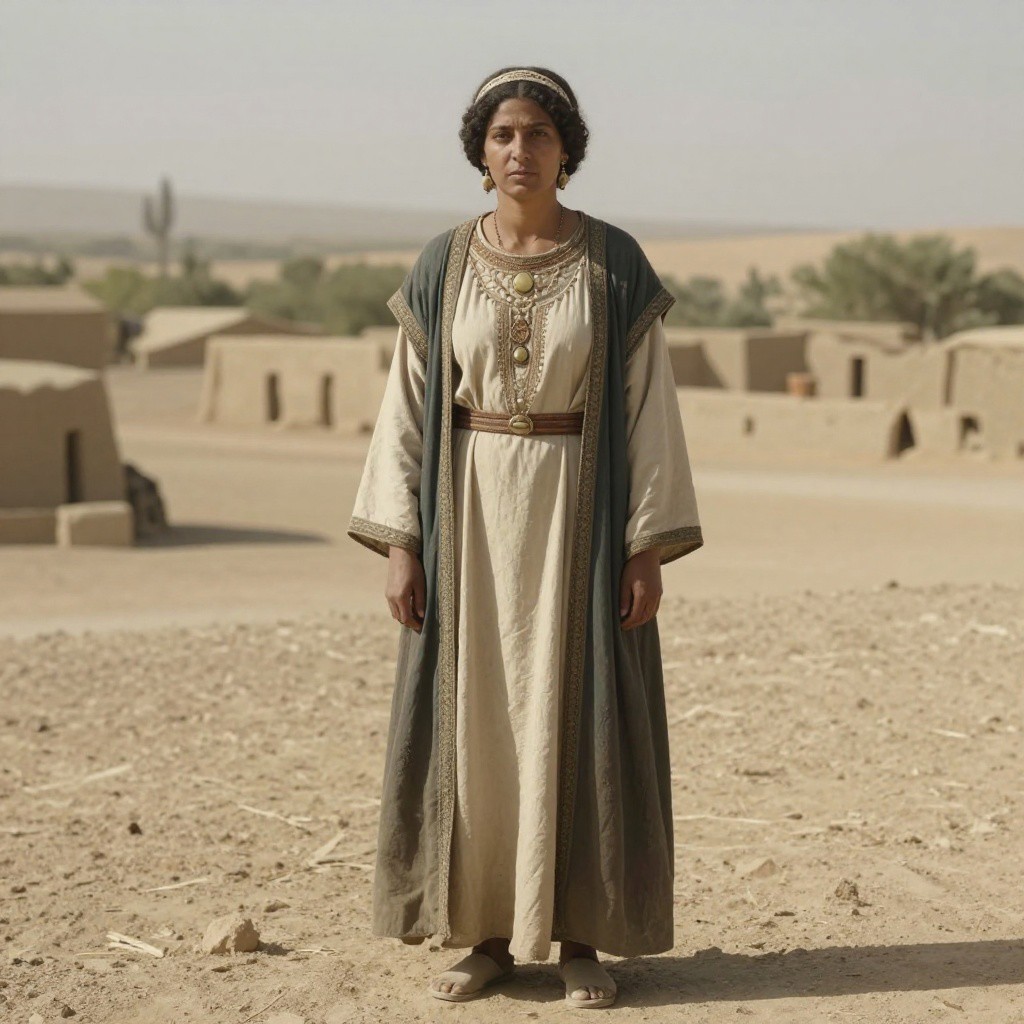
Portraits are AI-generated illustrations. Sample labels and accession IDs identify the reference records.

Portrait Sample Country Era Date Culture mtDNA Match
AI-generated illustrative portrait of Norse individual, Nor Mid. Trondheim, Norway (1,100-1,300 CE)
Sample ID: VK116
Norway Norway Medieval 1100 CE - 1300 CE Medieval Norse U6a3 Direct
AI-generated illustrative portrait of Nordic Ma individual, Nor Mid. Trondheim, Norway (1,100-1,300 CE)
Sample ID: VK116
Norway Medieval Nordic Region 1100 CE - 1300 CE 1984 U6a3 Direct
AI-generated illustrative portrait of N individual, Djebba (Béja, Djaba), Tunisia (6,228-6,076 BCE)
Sample ID: I20824
Tunisia Tunisia N 6228-6076 calBCE (7300±35 BP, PSUAMS-9393) Tunisia_N U6a3+185 Direct
AI-generated illustrative portrait of Punic-o Africa individual, Kerkouene (Nabeul, Dar Allosh, Ezzahra), Tunisia (723-404 BCE)
Sample ID: I24205
Tunisia Tunisia Punic oAfrica 723-404 calBCE (2415±20 BP, PSUAMS-11775) Tunisia_Punic-oAfrica U6a3e Subclade
AI-generated illustrative portrait of Islamic Civilization individual, Andalusia. Granada. Mondújar (Lecrín). Nécropolis de Torna Alta, Spain (1,500-1,600 CE)
Sample ID: I3809
Spain Spain NazariPeriod Muslim 1500 CE - 1600 CE Nazari Culture U6a3b Subclade
AI-generated illustrative portrait of Iberia Muslim individual, Andalusia. Granada. Mondújar (Lecrín). Nécropolis de Torna Alta, Spain (1,500-1,600 CE)
Sample ID: I3809
Spain Muslim Iberia 1500 CE - 1600 CE AL_ANDALUS U6a3b Subclade
MATERNAL LINEAGE · ANCIENT DNA

Ancient lineage evidence map

Follow parent clades toward this branch and explore where ancient carriers were found.

Loading ancient observations…

Markers are archaeological find locations. A dashed connector is an uncertain, proposed geographic transition between consecutive branches supported by multiple dated observations; it is not an exact travel route, birthplace or proof of direct descent. Parent-clade samples may belong to other descendant branches. Gaps remain where evidence is insufficient. Sample dates differ from haplogroup formation dates.

Reference profile

Carrier Distribution Map

Geographic distribution of 6 ancient DNA samples (direct and subclade carriers of U6A3)

Direct carrier Subclade carrier
Time Period Filter
All Time Periods
Showing all samples
Reference profile

Temporal Distribution

Distribution of carriers across archaeological periods

Reference profile

Geographic Distribution

Counts by recorded sample country. These reflect the available reference selection, not population frequencies.

Reference profile

Country × Era Distribution

Compare recorded sample counts across countries and archaeological periods. Select a populated cell to inspect a sample.

Data

Data & Provenance

Source information and data quality

Last Updated 2026-06-14
Confidence Score 50/100
Coverage Low

Data Source

Classification, estimated dates and geographic context reflect the recorded reference data and may change as evidence is revised. Sample coverage is uneven; recorded locations and archaeological associations do not establish personal origin or cultural identity.

A haplogroup follows one maternal or paternal line. The branch prediction depends on which markers the DNA file contains. How our analysis works