mtDNA · Maternal lineage

U6A7B

mtDNA Haplogroup U6A7B

A reference profile for one lineage branch. Shared haplogroups do not establish a family relationship or cultural identity.

Reference profile

Branch background

Historical context for mtDNA lineage branch U6A7B

Origins and Evolution

Haplogroup U6A7B is a downstream branch of U6A7, itself a Holocene diversification of the broader North African mtDNA clade U6. U6 has deep roots in North Africa dating to the Late Pleistocene, while U6A7 likely arose in the Maghreb during the mid-Holocene (~5.5 kya). U6A7B represents a later split within this regional radiation, and coalescent age estimates for this subclade are consistent with a Late Bronze Age to Iron Age origin (on the order of ~3–4 kya), reflecting continued local maternal diversification in the Maghreb after the establishment of U6A7.

Genetically, U6A7B carries the defining mutations that place it within the U6A7 branch and additional private mutations that distinguish it from sibling lineages. Its phylogenetic position implies a Maghrebi origin with limited downstream expansion compared with older U6 subclades.

Subclades (if applicable)

As a named subclade (U6A7B), this lineage may contain further rare private branches observed in high-resolution mtDNA datasets and full mitogenome sequencing. Published mtDNA surveys and ancient DNA reports indicate a small number of derived haplotypes attributable to U6A7B; continued mitogenome sequencing in North Africa and adjacent regions is required to resolve any finer substructure.

Geographical Distribution

U6A7B is concentrated in the western Mediterranean margin with a clear North African (Maghreb) focus. Modern and ancient DNA records show its highest frequencies in Berber-speaking and indigenous coastal populations of Morocco, Algeria, and Tunisia. Secondary low-frequency occurrences are documented in the Canary Islands among Guanche-descended lineages, and scattered occurrences appear in the southwestern Iberian Peninsula (southern Spain and Portugal). There are also sporadic low-frequency detections in parts of the Near East and in East Africa (e.g., Ethiopia, Somalia), consistent with historical maritime and trans-Saharan connections and the long-term mobility of maternal lineages in the Mediterranean and Saharan corridors.

The haplogroup has been observed in a small number (six) of ancient DNA samples in available databases, reinforcing its Holocene antiquity and association with regional archaeological contexts in the western Mediterranean and North Africa.

Historical and Cultural Significance

U6A7B is best interpreted as part of the maternal genetic substrate of Maghrebi populations, including groups historically labeled as Berber. Its presence in the Canary Islands links it to the pre-European Guanche population, reflecting prehistoric seafaring or coastal migrations from North Africa to the islands. Low-frequency Iberian occurrences likely reflect prehistoric and historic cross-Mediterranean gene flow (coastal migrations, trading networks, or later movements during antiquity and the medieval period). The lineage’s pattern — high local retention in the Maghreb with scattered peripheral occurrences — mirrors other maternal haplogroups that document local continuity combined with episodic outward dispersal.

Conclusion

U6A7B is a regionally restricted, Holocene-age mtDNA subclade that captures a component of Maghrebi maternal ancestry. Its phylogenetic placement as a sublineage of U6A7 and its distribution — concentrated in North Africa with secondary low-frequency presence in the Canary Islands, Iberia, the Near East, and East Africa — make it useful for studies of North African population history, local Neolithic–Bronze/Iron Age diversification, and the prehistoric peopling of adjacent Mediterranean islands and coasts. Further full mitogenome sampling across North Africa and archaeological sampling will refine its exact age, internal structure, and migratory episodes.

Key Points

  • Origins and Evolution
  • Subclades (if applicable)
  • Geographical Distribution
  • Historical and Cultural Significance
  • Conclusion
Reference profile

Tree & Relationships

Phylogenetic context and subclades

Evolution Path

Follow the recorded parent branches toward U6A7B. Dates are estimates and can change as reference data is revised.

Steps Haplogroup Age Estimate Archaeology Era Time Passed Immediate Descendants Tested Modern Descendants Ancient Connections
1 U6A7B Current ~4,000 years ago Bronze Age 3,500 years 0 0 4
2 U6A7 ~6,000 years ago Chalcolithic 5,500 years 4 33 0
3 U6A ~25,000 years ago Paleolithic 25,000 years 5 87 5
4 U6A'B'D - - - 2 127 0
5 U6 ~35,000 years ago Paleolithic 35,000 years 3 146 10
6 U ~46,000 years ago Paleolithic 46,000 years 5 5,557 110
7 R ~55,000 years ago Paleolithic 55,000 years 17 22,830 57
8 NA - - - 1 22,830 0
9 N ~60,000 years ago Paleolithic 60,000 years 16 26,150 13
10 L3 ~70,000 years ago Paleolithic 70,000 years 7 30,162 6
11 L3'4 - - - 2 30,212 0
12 L3'4'6 - - - 2 30,216 0
13 L2'3'4'6 - - - 2 31,333 0
14 L2'3'4'5'6'7 - - - 2 31,349 0
15 L1'2'3'4'5'6'7 - - - 2 31,852 0
16 L ~160,000 years ago Paleolithic 160,000 years 2 32,236 5

Subclades (0)

Terminal branch - no recorded subclades

Siblings (3)

Other branches from the same parent haplogroup

Reference profile

Where in the World

Geographic distribution and modern presence

Recorded origin

North Africa (Maghreb)

Modern Distribution

The populations where mtDNA haplogroup U6A7B is found include:

  1. North African Berber populations (Morocco, Algeria, Tunisia)
  2. Indigenous Guanche-descended groups in the Canary Islands
  3. Iberian Peninsula (southwest Spain and Portugal)
  4. East African populations (Ethiopia, Somalia) at low frequencies
  5. Near Eastern populations at low frequencies
  6. Sporadic presence in southern France, Sicily and other Mediterranean coastal populations
Historical context

A branch through time

Estimated formation in a broad historical timeline. Period markers provide context and do not imply a connection with particular cultures.

  1. ~10k years ago

    Neolithic Revolution

    Agriculture begins, settled communities form

  2. ~5k years ago

    Bronze Age

    Metalworking, writing, and early civilizations

  3. ~3.5k years ago

    Haplogroup U6A7B

    Estimated formation of this mtDNA branch; dates and locations are reference estimates.

    This branch
  4. ~3k years ago

    Iron Age

    Iron tools, expanded trade networks

  5. ~2.5k years ago

    Classical Antiquity

    Greek and Roman civilizations flourish

  6. Present

    Present Day

    Modern era

Reference profile

Archaeological context

Recorded archaeological associations for mtDNA branch U6A7B

Recorded associations

These labels describe archaeological contexts recorded for reference samples linked to U6A7B. An association does not establish that all carriers belonged to a culture or followed a particular migration route.

Iberomaurusian Ifri n'Amr Moroccan Transitional Peștera Muierii Roman Sardinian Tunisia_N
Culture assignments are based on archaeological context of ancient DNA samples and may represent regional associations during specific time periods.
Reference profile

Sample Catalog

4 direct carriers of haplogroup U6A7B

4 shown · 4 matching samples

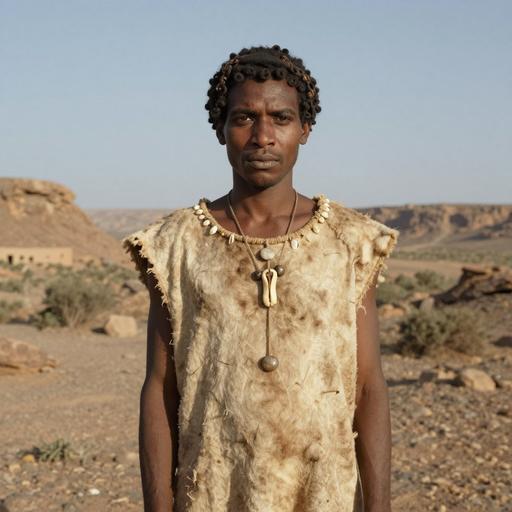
Portraits are AI-generated illustrations. Sample labels and accession IDs identify the reference records.

Portrait Sample Country Era Date Culture mtDNA Match
AI-generated illustrative portrait of Paleolithic individual, Taforalt, Morocco (13,137-12,252 BCE)
Sample ID: TAF010
Morocco Morocco Iberomaurusian 13137 BCE - 12252 BCE Iberomaurusian U6a7b Direct
AI-generated illustrative portrait of Iberomaurusian individual, Taforalt, Morocco (13,137-12,252 BCE)
Sample ID: TAF010
Morocco The Iberomaurusian Culture 13137 BCE - 12252 BCE Iberomaurusian U6a7b Direct
AI-generated illustrative portrait of Paleolithic individual, Taforalt, Morocco (13,200-11,900 BCE)
Sample ID: TAF013
Morocco Morocco Iberomaurusian 13200 BCE - 11900 BCE Iberomaurusian U6a7b Direct
AI-generated illustrative portrait of Iberomaurusian individual, Taforalt, Morocco (13,200-11,900 BCE)
Sample ID: TAF013
Morocco The Iberomaurusian Culture 13200 BCE - 11900 BCE Iberomaurusian U6a7b Direct
MATERNAL LINEAGE · ANCIENT DNA

Ancient lineage evidence map

Follow parent clades toward this branch and explore where ancient carriers were found.

Loading ancient observations…

Markers are archaeological find locations. A dashed connector is an uncertain, proposed geographic transition between consecutive branches supported by multiple dated observations; it is not an exact travel route, birthplace or proof of direct descent. Parent-clade samples may belong to other descendant branches. Gaps remain where evidence is insufficient. Sample dates differ from haplogroup formation dates.

Reference profile

Carrier Distribution Map

Geographic distribution of 4 ancient DNA samples (direct and subclade carriers of U6A7B)

Direct carrier
Time Period Filter
All Time Periods
Showing all samples
Reference profile

Temporal Distribution

Distribution of carriers across archaeological periods

Reference profile

Geographic Distribution

Counts by recorded sample country. These reflect the available reference selection, not population frequencies.

Reference profile

Country × Era Distribution

Compare recorded sample counts across countries and archaeological periods. Select a populated cell to inspect a sample.

Data

Data & Provenance

Source information and data quality

Last Updated 2026-02-16
Confidence Score 50/100
Coverage Low

Data Source

Classification, estimated dates and geographic context reflect the recorded reference data and may change as evidence is revised. Sample coverage is uneven; recorded locations and archaeological associations do not establish personal origin or cultural identity.

A haplogroup follows one maternal or paternal line. The branch prediction depends on which markers the DNA file contains. How our analysis works