mtDNA · Maternal lineage

W3A1A

mtDNA Haplogroup W3A1A

A reference profile for one lineage branch. Shared haplogroups do not establish a family relationship or cultural identity.

Reference profile

Branch background

Historical context for mtDNA lineage branch W3A1A

Origins and Evolution

W3A1A is a subclade of the broader W3A1 branch within haplogroup W3A, a West Eurasian maternal lineage that most likely arose in the Near East / South Asia during the early Holocene. While the parent clade (W3A1) is estimated at roughly ~8.5 kya, W3A1A represents a younger derivation that probably diversified later in the Holocene — plausibly during the mid- to late-Holocene (several thousand years after the initial W3A radiation). Its phylogenetic position as a derived subclade of W3A1 links it to the same broad demographic processes (Neolithic farmer dispersals and subsequent regional movements) but at a finer temporal and geographic scale.

The lineage tends to be low in frequency and patchily distributed, a pattern consistent with localized founder events, drift in small populations, and episodic long-distance gene flow. The occurrence of W3A1A in multiple regions indicates both ancient expansions out of a Near Eastern/South Asian homeland and later regional spread via trade, migration, and demographic processes of the Bronze Age and later periods.

Subclades (if applicable)

As a named subclade (W3A1A), its internal structure is currently limited by available sampling; published datasets and public mtDNA databases report only a small number of derived sequences attributed to W3A1A. Where denser sampling and full mitogenomes are available, one can expect further subdivision into geographically structured sub-branches reflecting local demographic histories. At present, W3A1 (the immediate parent) remains the principal reference node for comparative phylogeographic work.

Geographical Distribution

W3A1A is observed at low to moderate frequencies in a broad, discontinuous range across West Eurasia and South Asia. Its occurrences tend to concentrate in:

  • South Asia (India, Pakistan) — moderate representation in some regional and caste/tribal groups, consistent with deep Holocene presence and local founder effects.
  • Near East / West Asia (Iran, Anatolia) — observed sporadically, reflecting both Neolithic ancestry and subsequent mobility.
  • Caucasus and Central Asia — low-frequency but recurrent occurrences, consistent with genetic exchange across the mountain corridors.
  • Eastern and Northern Europe — occasional low-frequency occurrences, likely reflecting downstream dispersals from the Near East and secondary movements during the Neolithic and Bronze Age.

The haplogroup's patchy map reflects a mix of early Holocene dispersal from a Near Eastern/South Asian cradle and later, more restricted episodes of migration and drift. Ancient DNA hits (the lineage appears in a small number of archaeological samples) support its presence in prehistoric contexts, though it is not among the major maternal lineages driving continent-scale replacements.

Historical and Cultural Significance

Because W3A1A is relatively rare and geographically scattered, it is most useful for fine-scale phylogeographic and genealogical inference rather than for explaining broad demographic transitions on its own. Its distribution is coherent with known archaeological and genetic processes:

  • Neolithic farmer expansions from the Near East introduced a diversity of maternal lineages (including branches of W) into South Asia, the Caucasus and southeastern Europe; W3A1A plausibly represents one of these lineages or a later derivative.
  • Bronze Age mobility and steppe-related movements could have redistributed W3A1A at low frequency into Central and Eastern Europe and across Central Asia, producing the sparse occurrences seen today.
  • Local founder effects in South Asian and Caucasus populations can maintain W3A1A lineages over millennia even when overall frequencies remain low.

Because it coexists with other West Eurasian maternal lineages (e.g., H, U subclades, R0a) in many of the same populations, W3A1A contributes to the mosaic of maternal ancestries that characterize post-glacial and Neolithic Eurasia.

Conclusion

W3A1A is a derived, low-frequency mtDNA lineage nested within W3A1 that likely formed in or near the Near East / South Asia during the mid- to late-Holocene and subsequently dispersed in a patchy manner across South Asia, the Caucasus, Central Asia and parts of Europe. Its value to population genetics lies in refining regional maternal phylogeography and tracing localized founder events and migratory contacts across West Eurasia and South Asia. Continued targeted mitogenome sequencing and ancient DNA sampling will clarify its internal structure, age estimates, and routes of dispersal.

Key Points

  • Origins and Evolution
  • Subclades (if applicable)
  • Geographical Distribution
  • Historical and Cultural Significance
  • Conclusion
Reference profile

Tree & Relationships

Phylogenetic context and subclades

Evolution Path

Follow the recorded parent branches toward W3A1A. Dates are estimates and can change as reference data is revised.

Steps Haplogroup Age Estimate Archaeology Era Time Passed Immediate Descendants Tested Modern Descendants Ancient Connections
1 W3A1A Current ~4,000 years ago Bronze Age 4,000 years 3 45 4
2 W3A1 ~8,000 years ago Neolithic 8,500 years 2 129 0
3 W3A ~9,000 years ago Neolithic 9,000 years 1 139 32
4 W3 ~12,000 years ago Neolithic 12,000 years 2 162 4
5 WA ~12,000 years ago Neolithic 12,000 years 6 182 0
6 W ~20,000 years ago Mesolithic 20,000 years 4 570 114
7 N2 ~45,000 years ago Paleolithic 45,000 years 2 574 0
8 N ~60,000 years ago Paleolithic 60,000 years 16 26,150 13
9 L3 ~70,000 years ago Paleolithic 70,000 years 7 30,162 6
10 L3'4 - - - 2 30,212 0
11 L3'4'6 - - - 2 30,216 0
12 L2'3'4'6 - - - 2 31,333 0
13 L2'3'4'5'6'7 - - - 2 31,349 0
14 L1'2'3'4'5'6'7 - - - 2 31,852 0
15 L ~160,000 years ago Paleolithic 160,000 years 2 32,236 5

Siblings (1)

Other branches from the same parent haplogroup

Reference profile

Where in the World

Geographic distribution and modern presence

Recorded origin

Near East / South Asia

Modern Distribution

The populations where mtDNA haplogroup W3A1A is found include:

  1. Eastern European populations (e.g., Russians, Ukrainians, Poles)
  2. Northern European populations (e.g., Scandinavians)
  3. South Asian populations (e.g., India, Pakistan — diverse caste and tribal groups)
  4. Caucasus populations (e.g., Armenians, Georgians, Azeris)
  5. Central Asian populations (e.g., Kazakhs, Uzbeks, Tajiks)
  6. Middle Eastern populations (e.g., Iranians, Anatolian Turks)
  7. Western China and southern Siberian groups (low-frequency occurrences, e.g., Uyghurs, Altaians)
  8. Diaspora/admixed populations in Europe and the Near East (low frequency)
Historical context

A branch through time

Estimated formation in a broad historical timeline. Period markers provide context and do not imply a connection with particular cultures.

  1. ~10k years ago

    Neolithic Revolution

    Agriculture begins, settled communities form

  2. ~5k years ago

    Bronze Age

    Metalworking, writing, and early civilizations

  3. ~4k years ago

    Haplogroup W3A1A

    Estimated formation of this mtDNA branch; dates and locations are reference estimates.

    This branch
  4. ~3k years ago

    Iron Age

    Iron tools, expanded trade networks

  5. ~2.5k years ago

    Classical Antiquity

    Greek and Roman civilizations flourish

  6. Present

    Present Day

    Modern era

Reference profile

Archaeological context

Recorded archaeological associations for mtDNA branch W3A1A

Recorded associations

These labels describe archaeological contexts recorded for reference samples linked to W3A1A. An association does not establish that all carriers belonged to a culture or followed a particular migration route.

ANATOLIAN_BRONZE_AGE Bell Beaker Chemurcheck Culture Corded Ware Culture Early Bronze Anatolia Russia_Altai_Afanasievo Russia_Chelyabinsk_EBA_Yamnaya Russia_Eneolithic_EBA_Caucasus Russia_Rostov_EBA_Yamnaya Singen Culture Tepe Anau Ukraine_Odesa_EBA_Yamnaya Unetice Culture Yamnaya Culture
Culture assignments are based on archaeological context of ancient DNA samples and may represent regional associations during specific time periods.
Reference profile

Sample Catalog

3 direct carriers and 1 subclade carrier of haplogroup W3A1A

4 shown · 4 matching samples

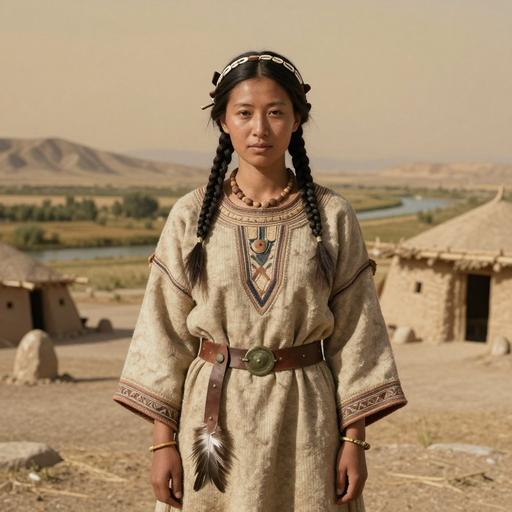
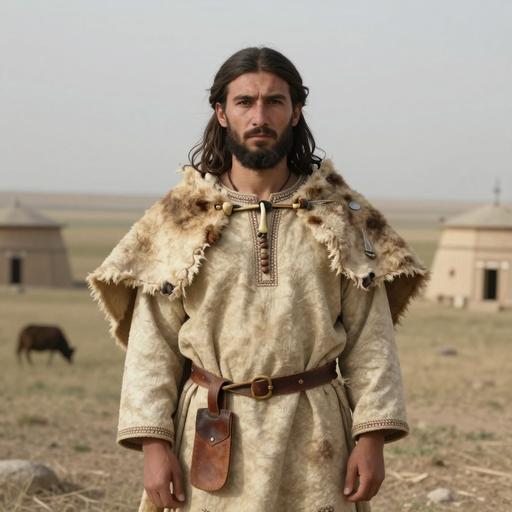
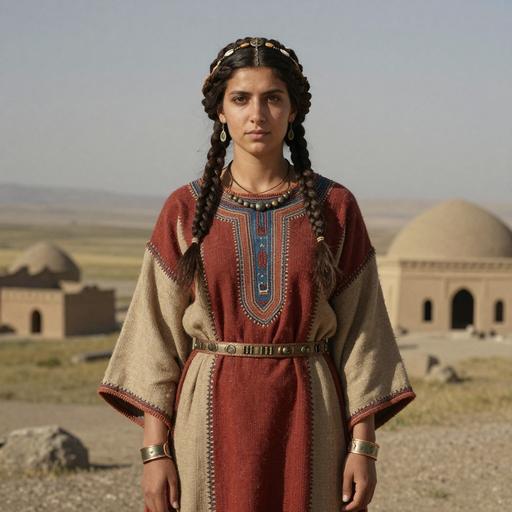
Portraits are AI-generated illustrations. Sample labels and accession IDs identify the reference records.

Portrait Sample Country Era Date Culture mtDNA Match
AI-generated illustrative portrait of Czechia EBA Unetice individual, Central Bohemia. Prague 5. Prague-Jinonice (Holmanʼs Garden Centre), Czech Republic (2,200-1,600 BCE)
Sample ID: I14186
Czech Republic Early Bronze Age Unetice Culture, Czech Republic 2200-1600 BCE Unetice Culture W3a1a Direct
AI-generated illustrative portrait of Xinjiang Chaganguole Chagangole BA Chemurcheck individual, Xinjiang. Aletai Region. Qinghe County. Chaganguole, China (2,571-2,347 BCE)
Sample ID: C2045
China The Bronze Age Chemurcheck culture 2571-2347 calBCE Chemurcheck Culture W3a1a Direct
AI-generated illustrative portrait of Samara EBA Yamnaya individual, Samara Oblast. Volga River Valley. Sok River. Lopatino II, Russia (3,331-2,930 BCE)
Sample ID: I0443
Russia Russia Samara EBA Yamnaya 3331-2930 calBCE (4440±30 BP, PSUAMS-11941) Yamnaya Culture W3a1a Direct
AI-generated illustrative portrait of Karashamb LBA EIA individual, Karashamb Cemetery, Armenia (1,400-900 BCE)
Sample ID: I19337
Armenia Late Bronze Age Armenia 1400-900 BCE Late Bronze Age Armenian W3a1a1 Subclade
MATERNAL LINEAGE · ANCIENT DNA

Ancient lineage evidence map

Follow parent clades toward this branch and explore where ancient carriers were found.

Loading ancient observations…

Markers are archaeological find locations. A dashed connector is an uncertain, proposed geographic transition between consecutive branches supported by multiple dated observations; it is not an exact travel route, birthplace or proof of direct descent. Parent-clade samples may belong to other descendant branches. Gaps remain where evidence is insufficient. Sample dates differ from haplogroup formation dates.

Reference profile

Carrier Distribution Map

Geographic distribution of 4 ancient DNA samples (direct and subclade carriers of W3A1A)

Direct carrier Subclade carrier
Time Period Filter
All Time Periods
Showing all samples
Reference profile

Temporal Distribution

Distribution of carriers across archaeological periods

Reference profile

Geographic Distribution

Counts by recorded sample country. These reflect the available reference selection, not population frequencies.

Reference profile

Country × Era Distribution

Compare recorded sample counts across countries and archaeological periods. Select a populated cell to inspect a sample.

Data

Data & Provenance

Source information and data quality

Last Updated 2026-02-16
Confidence Score 50/100
Coverage Low

Data Source

Classification, estimated dates and geographic context reflect the recorded reference data and may change as evidence is revised. Sample coverage is uneven; recorded locations and archaeological associations do not establish personal origin or cultural identity.

A haplogroup follows one maternal or paternal line. The branch prediction depends on which markers the DNA file contains. How our analysis works