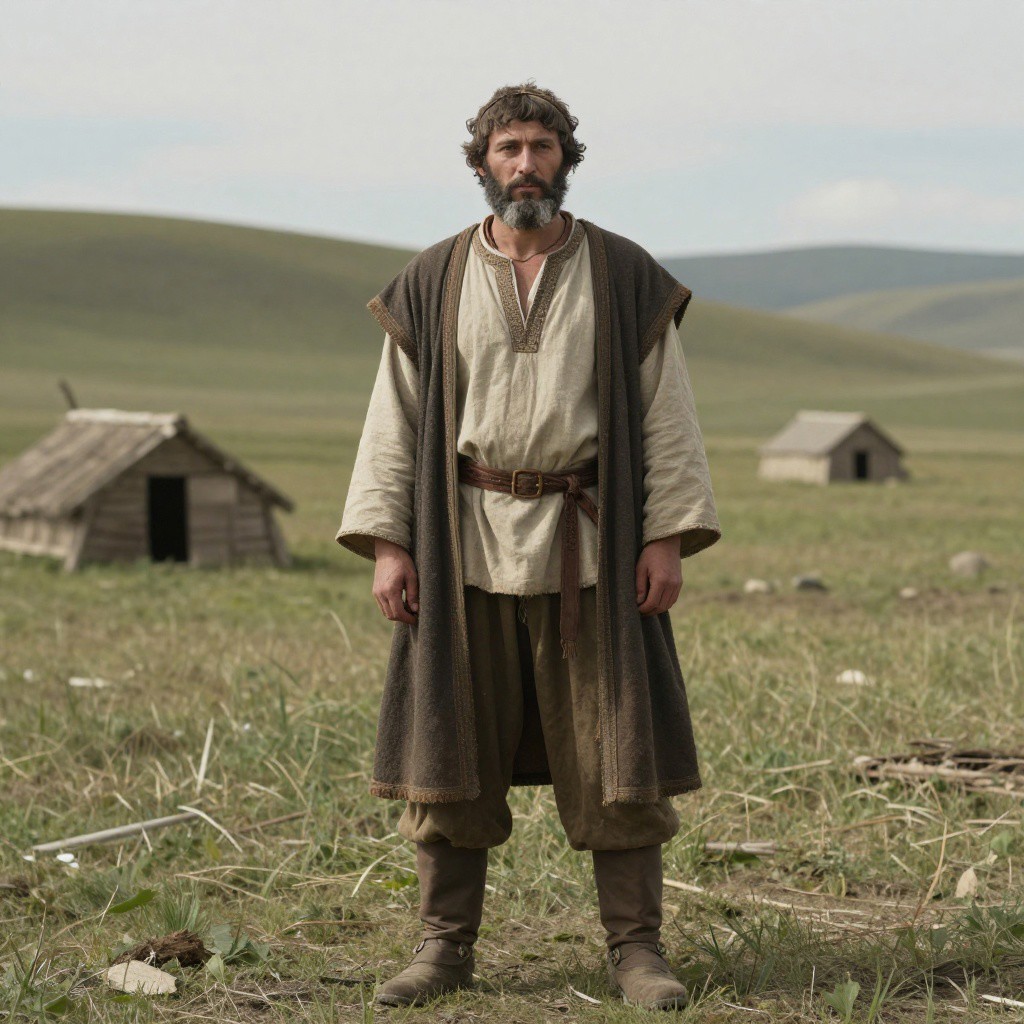
The Story
The journey of Y-DNA haplogroup N2
Origins and Evolution
Y-DNA haplogroup N2 is an intermediate subclade within haplogroup N, itself a major branch of the broader NO lineage. In phylogenetic terms, N2 belongs to the set of northern Eurasian paternal lineages that expanded after the deep diversification of haplogroup N in northern Asia. While the exact cradle of N2 is still best understood in broad regional terms, the most plausible origin is North Eurasia, likely within a zone spanning southern Siberia, the forest-steppe, or adjacent northern Eurasian regions where haplogroup N lineages were diversifying during the late Paleolithic or early Holocene.
Compared with the deeper parent clade N, haplogroup N2 is generally interpreted as a later offshoot that participated in the broader dispersals of northern Eurasian populations. Its age is substantially younger than haplogroup N as a whole, and its formation likely postdates the initial emergence of N by many tens of thousands of years. Because this is an intermediate clade, N2 is best understood as part of the branching history that ultimately produced lineages found in Uralic-speaking peoples, Siberian groups, and parts of northeastern Europe.
Subclades
The internal structure of N2 is important for interpreting population history, because different downstream branches can show very different geographic patterns. In general, N2 lineages are expected to fall into subclades that are geographically patterned across Siberia, the Ural region, and northern Europe. Some descendant branches may be associated with more localized expansions among forest-zone and taiga populations, while others may reflect founder effects in historically documented populations.
Because Y-chromosome nomenclature is periodically revised as new SNPs are discovered, the exact placement and naming of N2 sub-branches may vary across references. Nevertheless, the broader interpretation remains the same: N2 is a northern Eurasian paternal lineage with strong connections to population movements in the postglacial and early historic periods.
Geographical Distribution
Haplogroup N2 is found primarily across northern Eurasia, with the highest relevance in populations that have historically interacted with the forest belt of northern Europe and Siberia. It is most strongly associated with Uralic-speaking populations and with groups in Siberia and northeastern Europe, where paternal lineages from haplogroup N are frequent.
In Europe, N2 is most often discussed in relation to Finnish, Estonian, Sámi, and Baltic-Finnic populations, as well as other northeastern European groups. In Asia, it appears among Siberian and northern Asian populations, including communities with long histories of mobility, hunting, herding, and taiga adaptation. Lower-frequency occurrences in Central Asia and East Asia likely reflect deeper shared ancestry within the broader N macro-lineage and later regional movements.
Historical and Cultural Significance
Haplogroup N2 is significant because it contributes to the paternal genetic landscape of regions shaped by postglacial recolonization, forest-zone population structure, and the spread of Uralic languages. Although no single archaeological culture can be assigned exclusively to N2, haplogroup N lineages more broadly are often discussed in contexts involving the Late Neolithic, Bronze Age, and Iron Age expansions across northern Eurasia.
Its presence in Finnish, Sámi, and Siberian-associated populations makes N2 relevant to debates about the origins and spread of Uralic-speaking peoples. In ancient DNA research, haplogroup N and related downstream branches are often used to model the movement of paternal lineages across the northern Eurasian forest zone, including interactions between hunter-gatherer groups, early pastoralists, and later ethnolinguistic expansions.
Conclusion
Y-DNA haplogroup N2 is a northern Eurasian subclade of haplogroup N that reflects the deep population history of the forest belt stretching from Siberia to northeastern Europe. While not as broadly distributed as its parent clade, it remains an important marker for studying the paternal ancestry of Uralic, Siberian, and Baltic-Finnic populations, and for reconstructing the demographic processes that shaped northern Eurasia after the last Ice Age.
Key Points
- Origins and Evolution
- Subclades
- Geographical Distribution
- Historical and Cultural Significance
- Conclusion