Menu
Currency
Y-DNA Haplogroup • Paternal Lineage

O2A2B1A1

Y-DNA Haplogroup O2A2B1A1

~4,000 years ago
Southern China / mainland Southeast Asia
1 subclades
Scroll to explore
Chapter I

The Story

The journey of Y-DNA haplogroup O2A2B1A1

Origins and Evolution

Y-DNA haplogroup O2A2B1A1 is a downstream subclade of the East Asian paternal lineage O-M117, itself part of a broad phylogenetic network that diversified in eastern Eurasia during the Holocene. Based on the position of this branch within the tree, O2A2B1A1 likely arose after the major expansion of its parent lineage, probably in southern China or neighboring mainland Southeast Asia during the late Holocene.

As a relatively derived branch, O2A2B1A1 likely represents one of the many local lineages that emerged from population growth, internal differentiation, and regional dispersal among East and Southeast Asian groups. The deeper O-M117 clade is widely associated with demographic expansion in farming populations, so this subclade is best understood as part of that broader historical pattern rather than as an isolated ancient lineage.

Subclades

Because O2A2B1A1 is an intermediate downstream branch, it serves as a link between its parent lineage O2A2B1A and any more specific descendant branches, if present in the current phylogeny. Subclade structure within O-M117-related lineages often reflects fine-scale population history, including founder effects, clan expansions, and regional continuity.

In practical terms, O2A2B1A1 may be useful for distinguishing paternal lines within larger populations of southern East Asia, where multiple related O lineages can coexist at moderate to high frequency.

Geographical Distribution

This haplogroup is expected to occur primarily in southern China, mainland Southeast Asia, and neighboring East Asian populations that have experienced historical gene flow from these regions. Based on the distribution of its parent branch, it may also be present at lower frequencies in broader East Asian populations through later migrations and admixture.

Likely regions of occurrence include:

  • Southern Chinese populations, especially in areas with strong historical continuity in the south
  • Vietnamese and other mainland Southeast Asian groups
  • Tai-Kadai-speaking populations
  • Tibeto-Burman-speaking populations in southern or southwestern China and adjacent areas
  • Han Chinese populations, especially in southern provinces
  • Some Korean and Japanese lineages through long-distance regional diffusion at low frequencies
  • Austronesian-related populations in Taiwan and Island Southeast Asia, likely through secondary movement rather than deep local origin

Historical and Cultural Significance

Lineages within O-M117 are often discussed in relation to the spread of Neolithic and post-Neolithic agricultural societies in East Asia, especially where demographic growth created opportunities for lineage expansion. O2A2B1A1 likely reflects one of these local paternal branches that expanded within socially structured communities, potentially associated with clan formation, territorial expansion, and regional migration networks.

This haplogroup may also have relevance for understanding the complex population history of southern China and surrounding regions, where language families such as Sino-Tibetan, Tai-Kadai, and Austronesian intersect with long-term genetic continuity and repeated episodes of admixture. While no single culture can be assigned with certainty to O2A2B1A1 specifically, the lineage is most plausibly tied to late Neolithic to Bronze Age demographic processes in East and Southeast Asia.

Conclusion

O2A2B1A1 is a regional East Asian paternal subclade that likely developed from the broader O-M117 expansion in southern China or adjacent mainland Southeast Asia. Its value for genetic genealogy lies in its ability to resolve finer paternal relationships within populations shaped by Holocene farming expansions, linguistic dispersals, and historical mobility across East and Southeast Asia.

Key Points

  • Origins and Evolution
  • Subclades
  • Geographical Distribution
  • Historical and Cultural Significance
  • Conclusion
Chapter II

Tree & Relationships

Phylogenetic context and subclades

Evolution Path

This haplogroup's evolutionary journey from its earliest ancestor to the present.

Steps Haplogroup Age Estimate Archaeology Era Time Passed Immediate Descendants Tested Modern Descendants Ancient Connections
1 O2A2B1A1 Current ~4,000 years ago 🔶 Bronze Age 4,500 years 1 136 0
2 O2A2B1A ~6,000 years ago 🪨 Chalcolithic 6,000 years 2 192 1
3 O2A2B1 ~8,000 years ago 🌾 Neolithic 8,000 years 1 197 0
4 O2A2B ~10,000 years ago 🌾 Neolithic 10,000 years 2 293 0
5 O2A2 ~12,000 years ago 🌾 Neolithic 12,000 years 2 336 0
6 O2A ~20,000 years ago 🏹 Mesolithic 20,000 years 2 373 12
7 O2 ~35,000 years ago 🦴 Paleolithic 35,000 years 2 380 12
8 O ~45,000 years ago 🦴 Paleolithic 45,000 years 2 554 6
9 NO ~45,000 years ago 🦴 Paleolithic 45,000 years 4 770 12

Siblings (1)

Other branches from the same parent haplogroup

Chapter III

Where in the World

Geographic distribution and modern presence

Place of Origin

Southern China / mainland Southeast Asia

Modern Distribution

The populations where Y-DNA haplogroup O2A2B1A1 is found include:

  1. Han Chinese, especially in southern China
  2. Southern Chinese regional populations
  3. Vietnamese populations
  4. Tai-Kadai-speaking populations
  5. Tibeto-Burman-speaking populations
  6. Korean populations
  7. Japanese populations
  8. Austronesian-speaking populations in Taiwan and Island Southeast Asia

Regional Presence

Southeast Asia (Mainland) High
South Asia (Indian Subcontinent) Moderate
East Asia (Southern China) Moderate
Island Southeast Asia & Taiwan Low
East Asia High
Southeast Asia High
Central Asia Low
CHAPTER IV

When in Time

Your haplogroup in the context of human history

~10k years ago

Neolithic Revolution

Agriculture begins, settled communities form

~5k years ago

Bronze Age

Metalworking, writing, and early civilizations

~4k years ago

Haplogroup O2A2B1A1

Your Y-DNA haplogroup emerged in Southern China / mainland Southeast Asia

Southern China / mainland Southeast Asia
~3k years ago

Iron Age

Iron tools, expanded trade networks

~2k years ago

Classical Antiquity

Greek and Roman civilizations flourish

Present

Present Day

Modern era

Your Haplogroup
Historical Era
Chapter IV-B

Linked Cultures

Ancient cultures associated with Y-DNA haplogroup O2A2B1A1

Cultural Heritage

These ancient cultures have been linked to haplogroup O2A2B1A1 based on matching ancient DNA samples from archaeological excavations. The presence of this haplogroup in these cultures provides insights into the migrations and population movements of populations carrying this haplogroup.

Butaxiongqu Center West 5 Chinese Bronze-Iron Chokhopani Culture Dulan-Wayan Late Iron Age Culture Nudagang Culture Taiwanese Iron Upper Yellow River Culture Yellow River Culture
Culture assignments are based on archaeological context of ancient DNA samples and may represent regional associations during specific time periods.
Chapter V

Sample Catalog

1 direct carrier and 17 subclade carriers of haplogroup O2A2B1A1

18 / 18 samples
Portrait Sample Country Era Date Culture Y-DNA Match
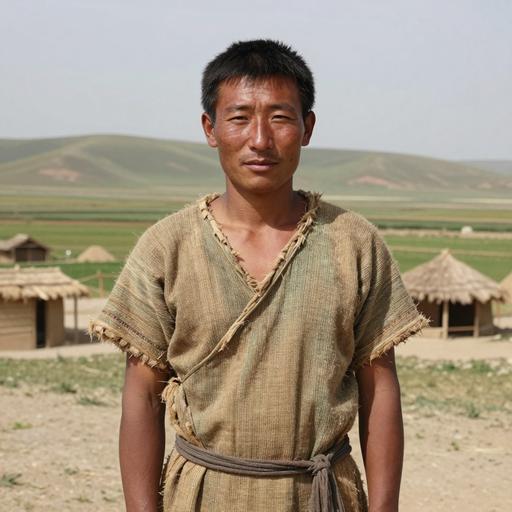
Portrait of ancient individual HJTM109 from China, dated 2111 BCE - 1882 BCE
HJTM109
China Late Neolithic Yellow River, China 2111 BCE - 1882 BCE Yellow River Culture O2a2b1a1 Direct
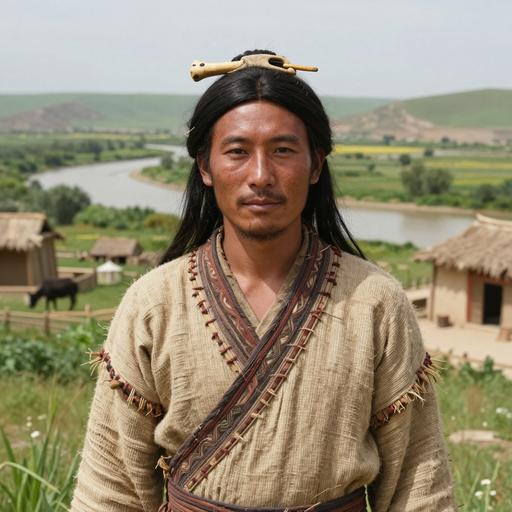
Portrait of ancient individual DCZ-M21II from China, dated 120 CE - 248 CE
DCZ-M21II
China Iron Age Upper Yellow River, China 120 CE - 248 CE Upper Yellow River Culture O2a2b1a1a1a2a Downstream
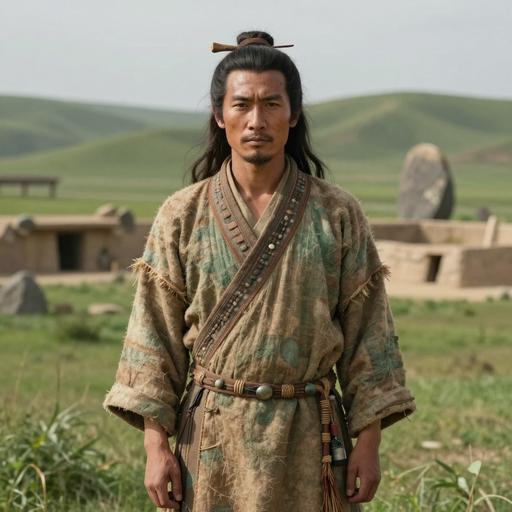
Portrait of ancient individual LGM41 from China, dated 250 BCE - 50 BCE
LGM41
China Late Bronze Age to Iron Age China 250 BCE - 50 BCE Chinese Bronze-Iron O2a2b1a1a Downstream
Portrait of ancient individual S10_S13 from Nepal, dated 350 CE - 1000 CE
S10_S13
Nepal Mustang Samdzong Middle Kingdoms 350 CE - 1000 CE Samdzong Culture O2a2b1a1a6 Downstream
Portrait of ancient individual S143_S173 from Nepal, dated 350 CE - 1000 CE
S143_S173
Nepal Mustang Samdzong Middle Kingdoms 350 CE - 1000 CE Samdzong Culture O2a2b1a1a6 Downstream
Portrait of ancient individual S153_S183 from Nepal, dated 350 CE - 1000 CE
S153_S183
Nepal Mustang Samdzong Middle Kingdoms 350 CE - 1000 CE Samdzong Culture O2a2b1a1a6 Downstream
Portrait of ancient individual KM4 from Nepal, dated 800 BCE - 1 BCE
KM4
Nepal Late Iron Age Nepal 800 BCE - 1 BCE Late Iron Age Culture O2a2b1a1a6 Downstream
Portrait of ancient individual KS20_KS25 from Nepal, dated 800 BCE - 1 BCE
KS20_KS25
Nepal Late Iron Age Nepal 800 BCE - 1 BCE Late Iron Age Culture O2a2b1a1a6 Downstream
Portrait of ancient individual KS8 from Nepal, dated 800 BCE - 1 BCE
KS8
Nepal Late Iron Age Nepal 800 BCE - 1 BCE Late Iron Age Culture O2a2b1a1a Downstream
Portrait of ancient individual KS9 from Nepal, dated 800 BCE - 1 BCE
KS9
Nepal Late Iron Age Nepal 800 BCE - 1 BCE Late Iron Age Culture O2a2b1a1a6 Downstream
Chapter VI

Carrier Distribution Map

Geographic distribution of 18 ancient DNA samples (direct and subclade carriers of O2A2B1A1)

Direct carrier Subclade carrier
Time Period Filter
All Time Periods
Showing all samples
Chapter VII

Temporal Distribution

Distribution of carriers across archaeological periods

Chapter VIII

Geographic Distribution

Distribution by country of origin (direct and subclade carriers shown by default)

Chapter IX

Country × Era Distribution

Cross-tabulation of carrier countries and archaeological periods (direct and subclade carriers shown by default)

Data

Data & Provenance

Source information and data quality

Last Updated 2026-06-17
Confidence Score 50/100
Coverage Low
Data Source

We use the latest phylotree for YDNA haplogroup classification and data.