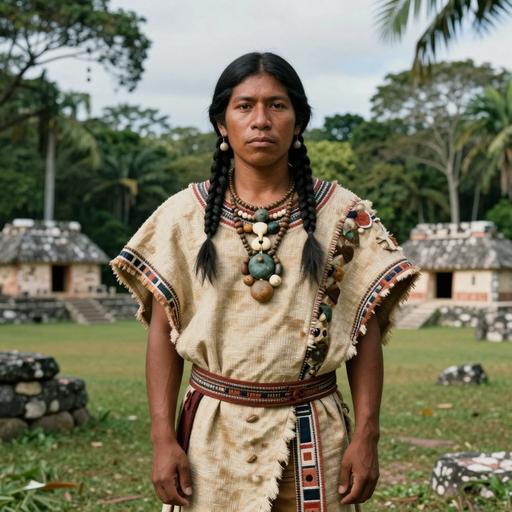
The Story
The journey of mtDNA haplogroup A2Q
Origins and Evolution
mtDNA haplogroup A2Q is a downstream lineage of haplogroup A2, one of the primary maternal founding lineages of the Indigenous peoples of the Americas. Haplogroup A2 diversified from East Asian/Northeast Asian haplogroup A during the Late Pleistocene, with the ancestral A2 likely arising in Beringia or nearby regions around ~15 kya. A2Q represents a later, regional diversification that most likely formed inside the Americas during the early to mid Holocene (roughly ~9 kya in our estimate), as populations spread and became regionally structured after initial colonization.
The phylogenetic position of A2Q as a subclade of A2 indicates it carries the hallmark control-region and coding-region mutations that define A2 plus additional derived variants that mark the Q branch. Because A2 lineages are deeply associated with the first American settlers, A2Q should be interpreted as part of the internal diversification of those founding maternal lineages rather than a signal of later trans-Pacific or trans-Atlantic input.
Subclades (if applicable)
A2Q is a specific terminal or near-terminal branch within the broader A2 tree. At present it appears to be a relatively terminal subclade with few well-characterized downstream branches in public phylogenies, reflecting its overall low frequency and limited sampling. As more complete mitogenomes are generated from under-sampled regions (especially northern South America and Central America), additional substructure within A2Q may be discovered and dated.
Geographical Distribution
Contemporary and ancient DNA evidence points to a localized distribution of A2Q, concentrated in northern and western parts of South America and the adjacent isthmian corridor into Central America. Reports and haplotype matches place A2Q at low to moderate frequencies among some Indigenous groups in the Isthmo-Colombian region and northern Amazonian/Andean foothill populations, with occasional occurrences in nearby Central American populations and in modern admixed communities where Indigenous maternal ancestry persists.
A2Q is not a major pan-American lineage in the way some other A2 subclades are; instead it illustrates regional continuity and post-glacial diversification of maternal lineages after the initial peopling. The appearance of A2Q in three ancient DNA samples (as noted) supports an Holocene presence in archaeological contexts and suggests it persisted locally through pre-ceramic and later periods in some areas.
Historical and Cultural Significance
While A2Q itself is not tied to any single large-scale archaeological culture across the Americas, its localized distribution makes it informative for studies of regional population history, maternal continuity, and microevolutionary processes. A2Q can help identify maternal ancestry continuity in northern South America and Isthmian zones across transitions such as forager-to-farmer shifts, coastal vs. inland demographic changes, and interactions between lowland and Andean communities.
Because the haplogroup is relatively rare, its presence in an individual or ancient skeleton often provides a high-resolution clue to local maternal origins and can assist in reconstructing migration routes and contact zones at sub-continental scales.
Conclusion
mtDNA A2Q is a regionally focused descendant of the primary American founding lineage A2 that likely arose within the Americas in the early to mid Holocene. Its limited frequency but clear phylogenetic identity make it a useful marker for tracing localized maternal lineages in northern South America and neighboring isthmian regions, and additional sampling and mitogenome sequencing are expected to refine its age, internal structure, and archaeological associations.
Key Points
- Origins and Evolution
- Subclades (if applicable)
- Geographical Distribution
- Historical and Cultural Significance
- Conclusion