Menu
mtDNA Haplogroup • Maternal Lineage

C4I

mtDNA Haplogroup C4I

~8,000 years ago
Northeast Asia / Siberia
0 subclades
3 ancient samples
Scroll to explore
Chapter I

The Story

The journey of mtDNA haplogroup C4I

Origins and Evolution

mtDNA haplogroup C4i sits within the broader C4 branch of haplogroup C, a lineage with deep roots in northern Asia that formed during the Late Pleistocene. As a downstream subclade of C4, C4i most likely formed after the main diversification of C4, during the Early to Middle Holocene, reflecting continued population structuring in high‑latitude Eurasia after the Last Glacial Maximum. The geographic and temporal placement of C4i is consistent with post‑glacial expansions and regional differentiation among small, often mobile hunter‑gatherer and mixed subsistence groups across Siberia, the Himalayan periphery and parts of Central Asia.

Subclades (if applicable)

C4i is one of several C4 sublineages (others include C4a, C4b, C4c, etc.). Where sampled, C4i appears to form localized branches rather than a widely distributed, deeply divergent clade; that pattern suggests a modest founder effect and subsequent regional persistence rather than a major continent‑wide expansion. Downstream diversification of C4 in general produced lineages that colonized Beringia and contributed to some Native American maternal lineages (notably C4c), but C4i itself is primarily recorded within Eurasia and only rarely (if at all) in direct American contexts in available datasets.

Geographical Distribution

C4i is concentrated in northern and central Eurasia. Modern and ancient DNA surveys find C4i at low to moderate frequencies across Siberian ethnic groups (for example, Turkic, Tungusic and some Paleo‑Siberian speaking populations), in parts of Central Asia (Kazakhs, Tuvans, Altaians), and in localized branches on the Tibetan Plateau and neighboring Himalayan foothills. It occurs at very low frequencies in some East Asian populations (occasionally in Han, Korean or Japanese samples) and appears sporadically in northern or eastern European contexts where historical admixture with Siberian groups has occurred. The lineage is represented in a small number of ancient samples (three in the referenced database), supporting continuity in some regions through the Holocene.

Historical and Cultural Significance

Because C4i is regionally concentrated rather than pan‑continental, its anthropological importance lies in tracing local maternal continuity and migration within northern Eurasia. It is informative for reconstructing post‑glacial recolonization of high latitudes, patterns of interaction between Siberian hunter‑gatherers and incoming pastoralist or agro‑pastoralist groups during the Bronze Age, and movements onto the Tibetan Plateau and adjacent highlands. In mixed‑ancestry populations (for example, some Central Asian and Siberian groups), C4i can indicate a maternal contribution from northern Asian foragers or early Holocene inhabitants prior to more recent cultural turnovers.

Conclusion

C4i is a localized, informative branch of the larger C4 phylogeny that highlights fine‑scale maternal structure in northern Eurasia during the Holocene. Its restricted distribution and modest diversity point to regional persistence and smaller founder events, making it a useful marker for studies of Siberian population history, highland colonization, and localized admixture events across northern and central Asia.

Key Points

  • Origins and Evolution
  • Subclades (if applicable)
  • Geographical Distribution
  • Historical and Cultural Significance
  • Conclusion
Chapter II

Tree & Relationships

Phylogenetic context and subclades

Evolution Path

This haplogroup's evolutionary journey from its earliest ancestor to the present.

Steps Haplogroup Age Estimate Archaeology Era Time Passed Immediate Descendants Tested Modern Descendants Ancient Connections
1 C4I Current ~8,000 years ago 🌾 Neolithic 8,000 years 0 0 3
2 C4 ~20,000 years ago 🏹 Mesolithic 20,000 years 7 34 48
3 C ~35,000 years ago 🦴 Paleolithic 35,000 years 5 617 75

Subclades (0)

Terminal branch - no known subclades

Siblings (6)

Other branches from the same parent haplogroup

Chapter III

Where in the World

Geographic distribution and modern presence

Place of Origin

Northeast Asia / Siberia

Modern Distribution

The populations where mtDNA haplogroup C4I is found include:

  1. Indigenous peoples of the Americas (certain Native American groups via downstream sublineages such as C4c)
  2. Siberian ethnic groups (e.g., Yakut, Evenk, Nenets, Chukchi)
  3. Mongolic and Tungusic-speaking populations (e.g., Mongolians, Buryats, Evens)
  4. East Asian populations (low frequencies in some Han, Koreans, Japanese)
  5. Central Asian populations (e.g., Kazakhs, Altaians, Tuvans)
  6. Highland and Himalayan groups (e.g., Tibetan populations showing localized C4 branches)
  7. Arctic and sub-Arctic peoples (e.g., certain Yupik/Inuit-associated lineages in Beringia-adjacent regions)
  8. Occasional occurrences in northern and eastern Europe in ancient or historically admixed contexts
CHAPTER IV

When in Time

Your haplogroup in the context of human history

~10k years ago

Neolithic Revolution

Agriculture begins, settled communities form

~8k years ago

Haplogroup C4I

Your mtDNA haplogroup emerged in Northeast Asia / Siberia

Northeast Asia / Siberia
~5k years ago

Bronze Age

Metalworking, writing, and early civilizations

~3k years ago

Iron Age

Iron tools, expanded trade networks

~2k years ago

Classical Antiquity

Greek and Roman civilizations flourish

Present

Present Day

Modern era

Your Haplogroup
Historical Era
Chapter IV-B

Linked Cultures

Ancient cultures associated with mtDNA haplogroup C4I

Cultural Heritage

These ancient cultures have been linked to haplogroup C4I based on matching ancient DNA samples from archaeological excavations. The presence of this haplogroup in these cultures provides insights into the migrations and population movements of populations carrying this haplogroup.

Early Buryat Kitoi Culture Lena River Culture Ob River Ob River Culture Shamanka Culture Siberian Paleolithic
Culture assignments are based on archaeological context of ancient DNA samples and may represent regional associations during specific time periods.
Chapter V

Sample Catalog

3 direct carriers of haplogroup C4I

3 / 3 samples
Portrait Sample Country Era Date Culture mtDNA Match
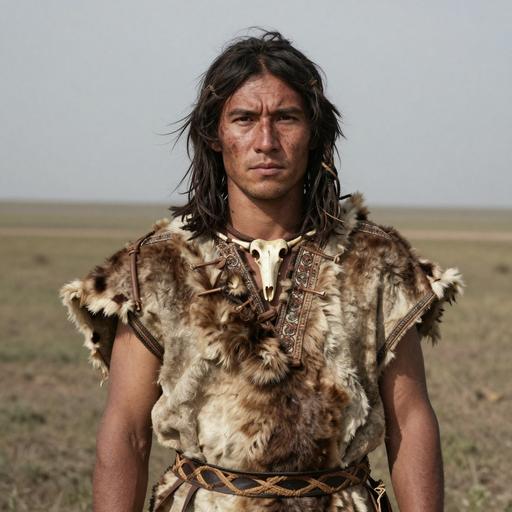
Portrait of ancient individual KPT002 from Russia, dated 2191 BCE - 1770 BCE
KPT002
Russia Early Bronze Age Lena River, Siberia, Russia 2191 BCE - 1770 BCE Lena River Culture C4i Direct
Portrait of ancient individual KPT002 from Russia, dated 2191 BCE - 1770 BCE
KPT002
Russia Early Bronze Age Cis-Baikal, Siberia 2191 BCE - 1770 BCE C4i Direct
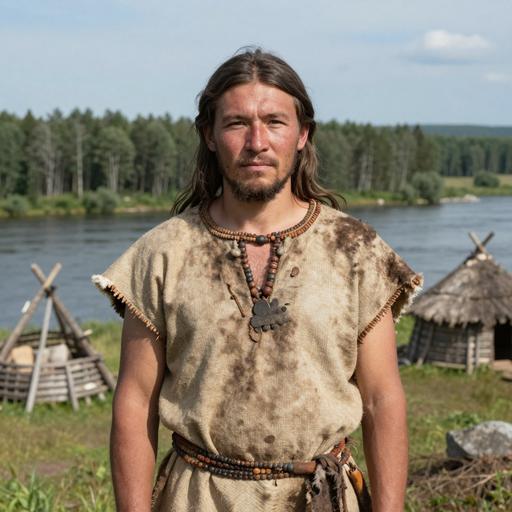
Portrait of ancient individual STB001 from Russia, dated 2854 BCE - 2576 BCE
STB001
Russia Early Bronze Age Lena River, Siberia, Russia 2854 BCE - 2576 BCE Lena River Culture C4i Direct
Chapter VI

Carrier Distribution Map

Geographic distribution of 3 ancient DNA samples (direct and subclade carriers of C4I)

Direct carrier
Time Period Filter
All Time Periods
Showing all samples
Chapter VII

Temporal Distribution

Distribution of carriers across archaeological periods

Chapter VIII

Geographic Distribution

Distribution by country of origin (direct and subclade carriers shown by default)

Chapter IX

Country × Era Distribution

Cross-tabulation of carrier countries and archaeological periods (direct and subclade carriers shown by default)

Data

Data & Provenance

Source information and data quality

Last Updated 2026-02-16
Confidence Score 50/100
Coverage Low
Data Source

We use the latest phylotree for MTDNA haplogroup classification and data.