Menu
mtDNA Haplogroup • Maternal Lineage

D4H3

mtDNA Haplogroup D4H3

~15,000 years ago
Northeast / East Asia (coastal regions)
1 subclades
Scroll to explore
Chapter I

The Story

The journey of mtDNA haplogroup D4H3

Origins and Evolution

Haplogroup D4H3 sits within the broader East Asian mtDNA haplogroup D4, a lineage that expanded across Siberia and East Asia after the Last Glacial Maximum. D4H3 likely differentiated from other D4 sublineages in the Late Pleistocene (around ~15 kya, with uncertainty due to limited sampling and molecular-clock calibration). Its geographic origin is most consistent with coastal or near-coastal Northeast/East Asia and adjacent Siberian regions, based on phylogeographic patterns of related D4 lineages and ancient DNA evidence.

The evolutionary significance of D4H3 is amplified by the presence of a derived branch, D4h3a, which has been recovered in early Holocene and later archaeological contexts in the Americas. That derived branch provides one of the mitochondrial lines of evidence supporting early coastal and/or rapid maritime-associated dispersals into the Americas, complementary to inland routes documented by other Native American maternal lineages.

Subclades (if applicable)

  • D4H3 (basal): The parent node from which the better-known American-associated lineage derives. Present at low frequency in modern Northeast Asian and Siberian samples and occasionally in coastal East Asia.
  • D4h3a: A derived and archaeologically important subclade observed in early Holocene and pre-Columbian individuals along the Pacific coast of the Americas and at low frequency in some modern Native American populations; this subclade accounts for the bulk of D4H3 signal in the Americas.

Other very small downstream branches have been reported in limited modern and ancient datasets; however, the low overall frequency of D4H3 means many substructure inferences remain provisional until larger sequencing surveys are available.

Geographical Distribution

Today and in ancient DNA studies, D4H3 and its derivatives are geographically patchy. Modern occurrences are most common in Northeast Asian and certain Siberian groups at low to moderate frequencies; the Americas show a geographically structured but generally low-frequency presence concentrated along Pacific coastal regions in both North and South America. Sporadic low-frequency occurrences have been reported in parts of East and Southeast Asia and, rarely, in Oceania, usually attributable to historical gene flow or limited sampling.

Ancient DNA has recovered D4h3a in early Holocene archaeological contexts in the Americas, as well as occasional early Holocene / Jomon-era contexts in coastal Japan and adjacent areas, consistent with an origin and early diversification in coastal Northeast Asia followed by maritime-associated spread.

Historical and Cultural Significance

D4H3 (particularly D4h3a) is frequently discussed in the context of the coastal migration hypothesis for the peopling of the Americas because its phylogeographic pattern is consistent with early movements along the Pacific shoreline. Its detection in early Holocene American samples provides direct genetic evidence for maternal lineages that reached the New World by or shortly after the terminal Pleistocene.

In East Asia, occasional detections in Jomon-period and other coastal archaeological samples suggest D4H3 was part of the genetic landscape of maritime and foraging groups in the northwestern Pacific. In modern populations the haplogroup is not a dominant lineage but contributes to the overall mitochondrial diversity that ties Siberian, Northeast Asian and some Native American maternal histories together.

Conclusion

mtDNA D4H3 is a low-frequency but evolutionarily informative subclade of D4 whose geographic pattern and ancient DNA occurrences make it particularly relevant to studies of Late Pleistocene and early Holocene coastal population dynamics in Northeast Asia and the initial peopling of the Americas. Its rarity and patchy distribution mean that careful sampling and full mitogenome sequencing are important for resolving its finer phylogeographic structure and timing.

Key Points

  • Origins and Evolution
  • Subclades (if applicable)
  • Geographical Distribution
  • Historical and Cultural Significance
  • Conclusion
Chapter II

Tree & Relationships

Phylogenetic context and subclades

Evolution Path

This haplogroup's evolutionary journey from its earliest ancestor to the present.

Steps Haplogroup Age Estimate Archaeology Era Time Passed Immediate Descendants Tested Modern Descendants Ancient Connections
1 D4H3 Current ~15,000 years ago 🏹 Mesolithic 15,000 years 1 15 0
2 D4H ~16,000 years ago 🏹 Mesolithic 16,000 years 3 19 4
3 D4 ~25,000 years ago 🦴 Paleolithic 25,000 years 12 276 19
4 D ~45,000 years ago 🦴 Paleolithic 45,000 years 7 398 137
5 M ~60,000 years ago 🦴 Paleolithic 60,000 years 11 1,200 41
6 L3 ~70,000 years ago 🦴 Paleolithic 70,000 years 11 17,621 6
7 L ~160,000 years ago 🦴 Paleolithic 160,000 years 7 18,987 5

Siblings (2)

Other branches from the same parent haplogroup

Chapter III

Where in the World

Geographic distribution and modern presence

Place of Origin

Northeast / East Asia (coastal regions)

Modern Distribution

The populations where MTDNA haplogroup D4H3 is found include:

  1. East Asian populations (Han Chinese, Japanese, Korean)
  2. Indigenous Siberian groups (Yakut, Evenk, Yukaghir, Nganasan, Chukchi, etc.)
  3. Indigenous peoples of the Americas, especially Pacific coastal groups (North and South America)
  4. Central Asian populations (low frequency in some Mongolic and Turkic groups)
  5. Southeast Asian coastal populations (sporadic, low frequency)
  6. Jomon-era and other early Holocene archaeological samples in Northeast Asia
  7. Low-frequency occurrences in parts of Oceania and regions affected by historic admixture
CHAPTER IV

When in Time

Your haplogroup in the context of human history

~20k years ago

Last Glacial Maximum

Peak of the last ice age, populations isolated

~15k years ago

Haplogroup D4H3

Your mtDNA haplogroup emerged in Northeast / East Asia (coastal regions)

Northeast / East Asia (coastal regions)
~10k years ago

Neolithic Revolution

Agriculture begins, settled communities form

~5k years ago

Bronze Age

Metalworking, writing, and early civilizations

~3k years ago

Iron Age

Iron tools, expanded trade networks

~2k years ago

Classical Antiquity

Greek and Roman civilizations flourish

Present

Present Day

Modern era

Your Haplogroup
Historical Era
Chapter IV-B

Linked Cultures

Ancient cultures associated with mtDNA haplogroup D4H3

Cultural Heritage

These ancient cultures have been linked to haplogroup D4H3 based on matching ancient DNA samples from archaeological excavations. The presence of this haplogroup in these cultures provides insights into the migrations and population movements of populations carrying this haplogroup.

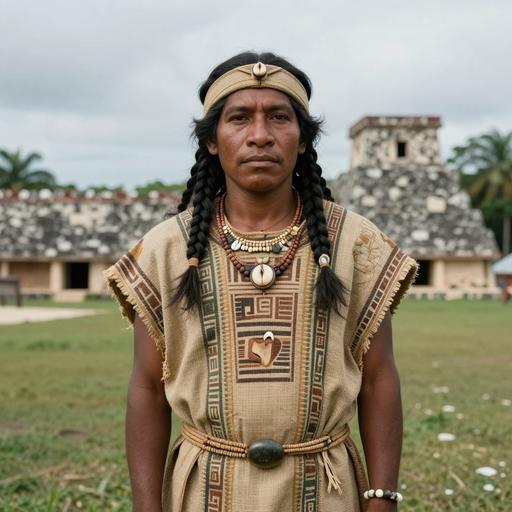
Ancient Beringian Anzick Archaic Belize Chinese Paleolithic Kaweskar Lapa do Santo Mayahak Cab Pek Culture Moraes Sumidouro
Culture assignments are based on archaeological context of ancient DNA samples and may represent regional associations during specific time periods.
Chapter V

Sample Catalog

2 direct carriers and 37 subclade carriers of haplogroup D4H3

39 / 39 samples
Portrait Sample Country Era Date Culture mtDNA Match
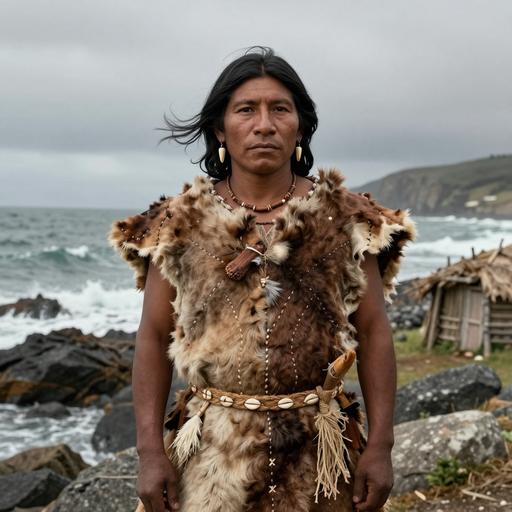
Portrait of ancient individual NE34 from China, dated 12896 BCE - 12285 BCE
NE34
China Late Paleolithic China 12896 BCE - 12285 BCE Chinese Paleolithic D4h3 Direct
Portrait of ancient individual NE34 from China, dated 12896 BCE - 12285 BCE
NE34
China Ancient Hunter-Gatherers of East Asia 12896 BCE - 12285 BCE D4h3 Direct
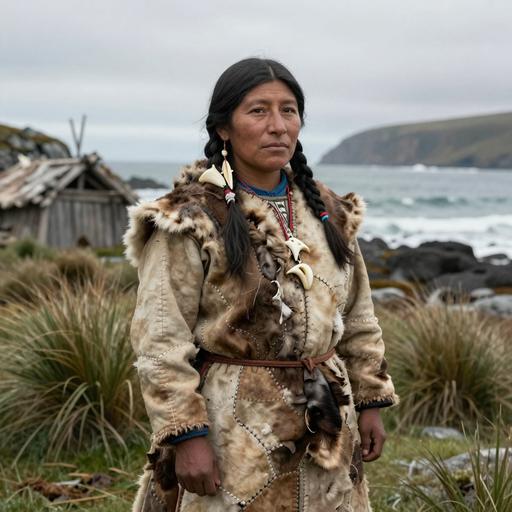
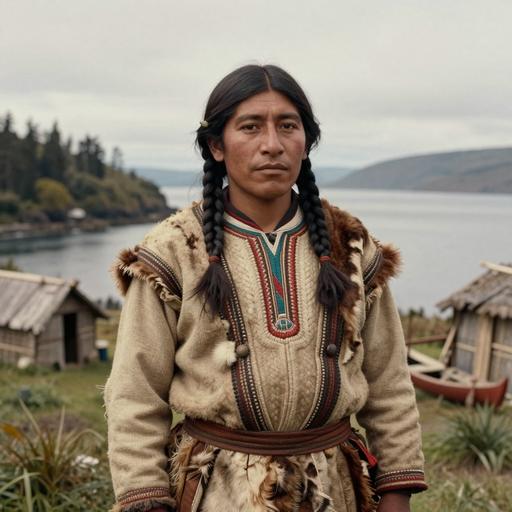
Portrait of ancient individual IPY08 from Chile, dated 600 CE - 1300 CE
IPY08
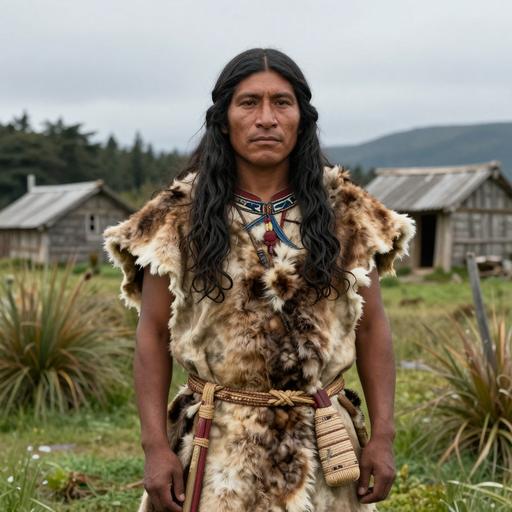
Chile Yamana Culture Beagle Channel, Chile 800 Years Ago 600 CE - 1300 CE Yamana Culture D4h3a5 Downstream
Portrait of ancient individual IPY08 from Chile, dated 600 CE - 1300 CE
IPY08
Chile Pre-Columbian South America 600 CE - 1300 CE D4h3a5 Downstream
Portrait of ancient individual I2263 from Peru, dated 710 CE - 1010 CE
I2263
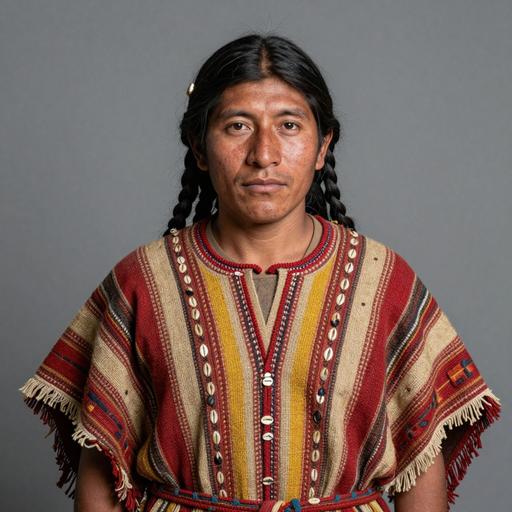
Peru Early Intermediate Period El Brujo, Peru 1,300 Years Ago 710 CE - 1010 CE El Brujo D4h3a Downstream
Portrait of ancient individual I11262 from USA, dated 896 CE - 1020 CE
I11262
USA Chumash 896 CE - 1020 CE Chumash D4h3a Downstream
Portrait of ancient individual I1754 from Chile, dated 1040 CE - 1210 CE
I1754
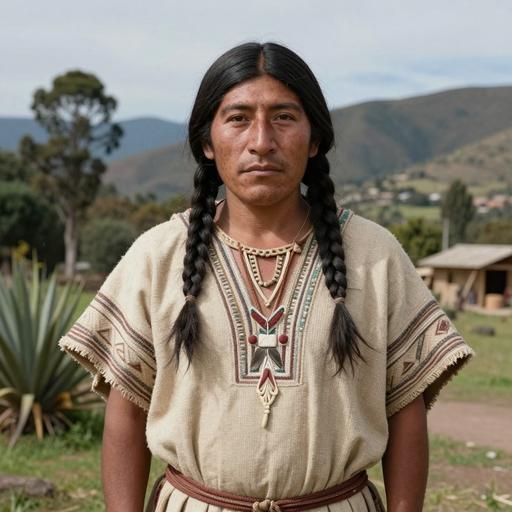
Chile Conchali, Chile 700 Years Ago 1040 CE - 1210 CE Conchali D4h3a1a2 Downstream
Portrait of ancient individual I12364 from Argentina, dated 1040 CE - 1280 CE
I12364
Argentina North Tierra del Fuego Selknam Culture 500 Years Ago 1040 CE - 1280 CE Selknam D4h3a Downstream
Portrait of ancient individual I23710 from Mexico, dated 1325 CE - 1425 CE
I23710
Mexico Trincheras Culture La Playa 600 Before Present 1325 CE - 1425 CE Trincheras D4h3a Downstream
Portrait of ancient individual AM74 from Chile, dated 1800 CE - 1900 CE
AM74
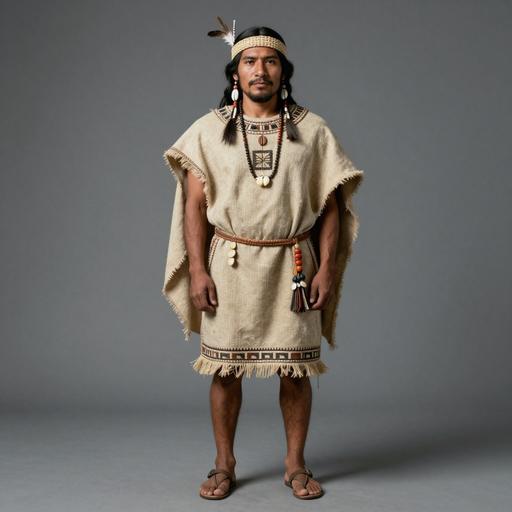
Chile Strait of Magellan Kaweskar Culture, Chile 100 Years Ago 1800 CE - 1900 CE Kaweskar D4h3a Downstream
Chapter VI

Carrier Distribution Map

Geographic distribution of 39 ancient DNA samples (direct and subclade carriers of D4H3)

Direct carrier Subclade carrier
Time Period Filter
All Time Periods
Showing all samples
Chapter VII

Temporal Distribution

Distribution of carriers across archaeological periods

Chapter VIII

Geographic Distribution

Distribution by country of origin (direct and subclade carriers shown by default)

Chapter IX

Country × Era Distribution

Cross-tabulation of carrier countries and archaeological periods (direct and subclade carriers shown by default)

Data

Data & Provenance

Source information and data quality

Last Updated 2026-02-16
Confidence Score 50/100
Coverage Low
Data Source

We use the latest phylotree for MTDNA haplogroup classification and data.