Menu
mtDNA Haplogroup • Maternal Lineage

D4O1

mtDNA Haplogroup D4O1

~9,000 years ago
Northeast Asia
0 subclades
Scroll to explore
Chapter I

The Story

The journey of mtDNA haplogroup D4O1

Origins and Evolution

mtDNA haplogroup D4O1 is a downstream subclade of the D4O branch of haplogroup D4, a well-established East Asian maternal lineage. Based on the phylogenetic position within D4O and the temporal estimate for its parent clade, D4O1 most plausibly originated in the early Holocene (roughly ~9 kya) as small coastal and riverine populations in Northeast Asia diversified after the Last Glacial Maximum. Its low modern frequency and the limited number of confirmed ancient occurrences suggest that D4O1 represents a case of local diversification followed by long-term low-level persistence and drift rather than a major demographic expansion.

Subclades

D4O1 is a defined sub-branch of D4O. At present, published and database records indicate few further nested subclades with substantial sample sizes; where deeper branching exists it is rare and sparsely sampled. The scarcity of sequences assigned to D4O1 in public datasets means that phylogenetic resolution is still improving — targeted mitogenome sequencing of additional modern and ancient specimens may reveal additional internal structure.

Geographical Distribution

D4O1 is geographically centered on Northeast Asia with sporadic, low-frequency occurrences in neighboring regions. Confirmed and likely occurrences are found among:

  • Han Chinese, Japanese, and Korean datasets (recorded at very low frequency in some surveys)
  • Indigenous Siberian groups (for example Yakut, Evenk and neighboring Tungusic-speaking populations)
  • Northeast Asian island and coastal groups with Jomon/Okhotsk-related ancestry (Ainu and related ancient samples)
  • Northeastern Mongolic-speaking communities at low frequency
  • Scattered, low-frequency reports among Turkic and other Central Asian groups

Ancient DNA hits (limited number of samples) place D4O1 within Holocene hunter-gatherer and coastal contexts in the Russian Far East and northern Japan, consistent with a long-standing but numerically small presence in these regions.

Historical and Cultural Significance

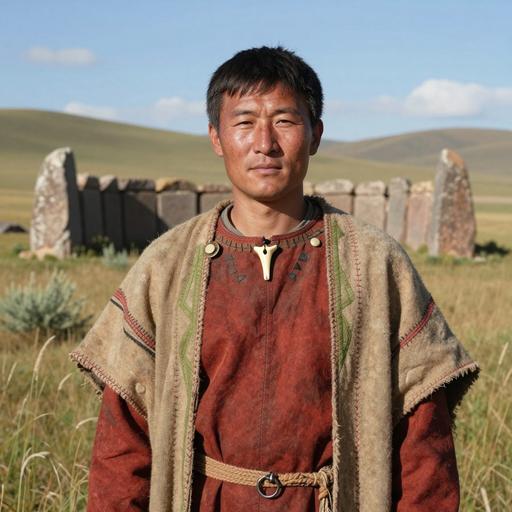
While D4O1 is not associated with major continent-wide demographic turnovers, its distribution links it to coastal and riverine hunting-foraging traditions of the Holocene in Northeast Asia. The haplogroup's presence in contexts related to Jomon and other prehistoric coastal assemblages implies continuity or episodic gene flow between local early-Holocene hunter-gatherers and later populations of the region. In Siberian and Tungusic-speaking groups, D4O1 appears as one of several low-frequency maternal lineages that together reflect complex regional population histories involving local survival, drift, and limited long-distance contacts.

Conclusion

D4O1 is a rare, regionally restricted mitochondrial lineage that exemplifies how the wide-ranging D4 haplogroup diversified into locally concentrated maternal clades after the Last Glacial Maximum. Its limited modern frequency and few ancient occurrences point to persistent but small population pockets in Northeast Asia and adjacent areas; improved sampling and full mitochondrial genomes from both modern and archaeological contexts will clarify its internal structure and deeper demographic history.

Key Points

  • Origins and Evolution
  • Subclades
  • Geographical Distribution
  • Historical and Cultural Significance
  • Conclusion
Chapter II

Tree & Relationships

Phylogenetic context and subclades

Evolution Path

This haplogroup's evolutionary journey from its earliest ancestor to the present.

Steps Haplogroup Age Estimate Archaeology Era Time Passed Immediate Descendants Tested Modern Descendants Ancient Connections
1 D4O1 Current ~9,000 years ago 🌾 Neolithic 9,000 years 0 1 0
2 D4O ~12,000 years ago 🌾 Neolithic 12,000 years 2 2 5
3 D4 ~25,000 years ago 🦴 Paleolithic 25,000 years 12 276 19
4 D ~45,000 years ago 🦴 Paleolithic 45,000 years 7 398 137
5 M ~60,000 years ago 🦴 Paleolithic 60,000 years 11 1,200 41
6 L3 ~70,000 years ago 🦴 Paleolithic 70,000 years 11 17,621 6
7 L ~160,000 years ago 🦴 Paleolithic 160,000 years 7 18,987 5

Subclades (0)

Terminal branch - no known subclades

Siblings (1)

Other branches from the same parent haplogroup

Chapter III

Where in the World

Geographic distribution and modern presence

Place of Origin

Northeast Asia

Modern Distribution

The populations where MTDNA haplogroup D4O1 is found include:

  1. Han Chinese, Japanese and Korean populations (low frequency in some datasets)
  2. Indigenous Siberian groups (e.g., Yakut, Evenk and neighboring Tungusic-speaking groups)
  3. Northeast Asian island and coastal groups with Jomon/Okhotsk-related ancestry (e.g., Ainu and related ancient samples)
  4. Mongolic-speaking populations in northeastern Mongolia (low frequency)
  5. Turkic and other Central Asian groups at sporadic, low frequencies
  6. Ancient Holocene hunter-gatherer contexts in the Russian Far East and northern Japan (limited ancient occurrences)
  7. Scattered, low-frequency reports in peripheral East Asian datasets and mixed populations
CHAPTER IV

When in Time

Your haplogroup in the context of human history

~10k years ago

Neolithic Revolution

Agriculture begins, settled communities form

~9k years ago

Haplogroup D4O1

Your mtDNA haplogroup emerged in Northeast Asia

Northeast Asia
~5k years ago

Bronze Age

Metalworking, writing, and early civilizations

~3k years ago

Iron Age

Iron tools, expanded trade networks

~2k years ago

Classical Antiquity

Greek and Roman civilizations flourish

Present

Present Day

Modern era

Your Haplogroup
Historical Era
Chapter IV-B

Linked Cultures

Ancient cultures associated with mtDNA haplogroup D4O1

Cultural Heritage

These ancient cultures have been linked to haplogroup D4O1 based on matching ancient DNA samples from archaeological excavations. The presence of this haplogroup in these cultures provides insights into the migrations and population movements of populations carrying this haplogroup.

Chinese Neolithic Devil's Cave Culture Early Avar Lokomotiv Culture Slab Grave Culture Sukhbaatar Culture
Culture assignments are based on archaeological context of ancient DNA samples and may represent regional associations during specific time periods.
Chapter V

Sample Catalog

3 direct carriers of haplogroup D4O1

3 / 3 samples
Portrait Sample Country Era Date Culture mtDNA Match
Portrait of ancient individual CSPF-114 from Hungary, dated 556 CE - 640 CE
CSPF-114
Hungary Early Avar Period Hungary 556 CE - 640 CE Early Avar D4o1 Direct
Portrait of ancient individual I6365 from Mongolia, dated 809 BCE - 779 BCE
I6365
Mongolia Early Iron Age Slab Grave Culture 1, Mongolia 809 BCE - 779 BCE Slab Grave Culture D4o1 Direct
Portrait of ancient individual SHG002 from Mongolia, dated 1000 CE - 1500 CE
SHG002
Mongolia Late Medieval Sukhbaatar, Mongolia 1000 CE - 1500 CE Sukhbaatar Culture D4o1 Direct
Chapter VI

Carrier Distribution Map

Geographic distribution of 3 ancient DNA samples (direct and subclade carriers of D4O1)

Direct carrier
Time Period Filter
All Time Periods
Showing all samples
Chapter VII

Temporal Distribution

Distribution of carriers across archaeological periods

Chapter VIII

Geographic Distribution

Distribution by country of origin (direct and subclade carriers shown by default)

Chapter IX

Country × Era Distribution

Cross-tabulation of carrier countries and archaeological periods (direct and subclade carriers shown by default)

Data

Data & Provenance

Source information and data quality

Last Updated 2026-02-16
Confidence Score 50/100
Coverage Low
Data Source

We use the latest phylotree for MTDNA haplogroup classification and data.