Menu
mtDNA Haplogroup • Maternal Lineage

F1A1

mtDNA Haplogroup F1A1

~9,000 years ago
East to Southeast Asia
1 subclades
Scroll to explore
Chapter I

The Story

The journey of mtDNA haplogroup F1A1

Origins and Evolution

mtDNA haplogroup F1A1 is a downstream branch of the broader F1A lineage, which itself derives from haplogroup F common across East and Southeast Asia. Based on the phylogenetic position of F1A1 beneath F1A and on coalescence estimates for comparable subclades, F1A1 most likely arose in the early Holocene (roughly around 9 kya), following the post-glacial demographic re-expansions that reshaped coastal and riverine populations in East and Southeast Asia. Its emergence fits a pattern in which an older, widely distributed maternal lineage (F1/F1A) diversified into regionally restricted subclades during the Holocene as human groups adopted more sedentary, food-producing lifeways and expanded along coastal routes.

Subclades (if applicable)

F1A1 itself is a defined sub-branch of F1A; depending on sampling depth and sequencing resolution, additional downstream branches or local variants of F1A1 have been reported in population surveys and high-resolution mitogenomes. These downstream variants commonly show geographic clustering (for example, variants more frequent in Taiwan/Philippines versus mainland Southeast Asia), which is typical for Holocene maternal lineages undergoing localized expansion and drift. Continued full mitogenome sequencing in under-sampled regions may recover further substructure inside F1A1.

Geographical Distribution

F1A1 is primarily centered on mainland and island Southeast Asia with appreciable representation in neighboring East Asian populations. High relative frequencies and diversity are observed in southern China, Taiwan indigenous groups, and parts of mainland Southeast Asia (Vietnam, Thailand, Laos). The haplogroup also occurs among Austronesian-speaking populations in the Philippines, Indonesia, and Malaysia, consistent with coastal and maritime dispersals. Lower but detectable frequencies have been reported in Japan (including Ryukyu/Okinawa), Korea, and in scattered inland or highland populations (e.g., Tibeto-Burman fringe groups). Near Oceania and some Micronesian communities show rare occurrences, reflecting Austronesian-era movements or later admixture.

Historical and Cultural Significance

F1A1's distribution and time depth tie it to several important demographic processes in the region. First, its origin in the early Holocene aligns with post-glacial coastal expansions and the spread of foraging-to-farming transitions in southern China and mainland Southeast Asia. Second, the presence of F1A1 in Taiwan and Island Southeast Asia is consistent with involvement in Austronesian-associated dispersals (late Neolithic to early Bronze Age in archaeological chronology), where maternal lineages from coastal southern China and Taiwan contributed to the genetic makeup of expanding maritime populations. The appearance of F1A1 in a small number of ancient DNA samples (two documented ancient occurrences in current databases) supports its archaeological relevance, though ancient representation remains limited and patchy.

Conclusion

F1A1 is a regionally informative maternal lineage for studies of Holocene population dynamics in East and Southeast Asia. Its pattern—originating after the main F1A split, showing regional substructure, and occurring across both mainland and island contexts—illustrates how maternal lineages tracked coastal, riverine, and maritime expansions associated with post-glacial and Neolithic demographic processes. As more full mitogenomes and ancient samples become available, the phylogeographic map of F1A1 should become clearer, refining its subclades and the timing/paths of associated human movements.

Key Points

  • Origins and Evolution
  • Subclades (if applicable)
  • Geographical Distribution
  • Historical and Cultural Significance
  • Conclusion
Chapter II

Tree & Relationships

Phylogenetic context and subclades

Evolution Path

This haplogroup's evolutionary journey from its earliest ancestor to the present.

Steps Haplogroup Age Estimate Archaeology Era Time Passed Immediate Descendants Tested Modern Descendants Ancient Connections
1 F1A1 Current ~9,000 years ago 🌾 Neolithic 9,000 years 1 44 0
2 F1A ~12,000 years ago 🌾 Neolithic 12,000 years 2 52 2
3 F1 ~25,000 years ago 🦴 Paleolithic 25,000 years 7 115 10
4 N ~60,000 years ago 🦴 Paleolithic 60,000 years 15 15,452 13
5 L3 ~70,000 years ago 🦴 Paleolithic 70,000 years 11 17,621 6
6 L ~160,000 years ago 🦴 Paleolithic 160,000 years 7 18,987 5

Siblings (1)

Other branches from the same parent haplogroup

Chapter III

Where in the World

Geographic distribution and modern presence

Place of Origin

East to Southeast Asia

Modern Distribution

The populations where mtDNA haplogroup F1A1 is found include:

  1. Han Chinese and other East Chinese populations
  2. Japanese (including some Ryukyu/Okinawan groups)
  3. Koreans
  4. Vietnamese and other mainland Southeast Asian groups (Thai, Lao)
  5. Filipinos and other Austronesian-speaking populations in Island Southeast Asia
  6. Indonesians and Malays
  7. Taiwanese Indigenous (Austronesian-speaking) groups
  8. Some Near Oceanian and Micronesian communities (low to moderate frequency)
  9. Tibeto-Burman and Himalayan fringe groups (low frequency)
  10. Scattered occurrences in Central Asian and South Asian groups (rare)
CHAPTER IV

When in Time

Your haplogroup in the context of human history

~10k years ago

Neolithic Revolution

Agriculture begins, settled communities form

~9k years ago

Haplogroup F1A1

Your mtDNA haplogroup emerged in East to Southeast Asia

East to Southeast Asia
~5k years ago

Bronze Age

Metalworking, writing, and early civilizations

~3k years ago

Iron Age

Iron tools, expanded trade networks

~2k years ago

Classical Antiquity

Greek and Roman civilizations flourish

Present

Present Day

Modern era

Your Haplogroup
Historical Era
Chapter IV-B

Linked Cultures

Ancient cultures associated with mtDNA haplogroup F1A1

Cultural Heritage

These ancient cultures have been linked to haplogroup F1A1 based on matching ancient DNA samples from archaeological excavations. The presence of this haplogroup in these cultures provides insights into the migrations and population movements of populations carrying this haplogroup.

Dong Son Laotian Bronze Age Late Medieval Mongolian Transitional Indonesian Upper Yellow River Culture Vietnamese Neolithic Yellow River Culture
Culture assignments are based on archaeological context of ancient DNA samples and may represent regional associations during specific time periods.
Chapter V

Sample Catalog

14 subclade carriers of haplogroup F1A1 (no exact F1A1 samples sequenced yet)

14 / 14 samples
Portrait Sample Country Era Date Culture mtDNA Match
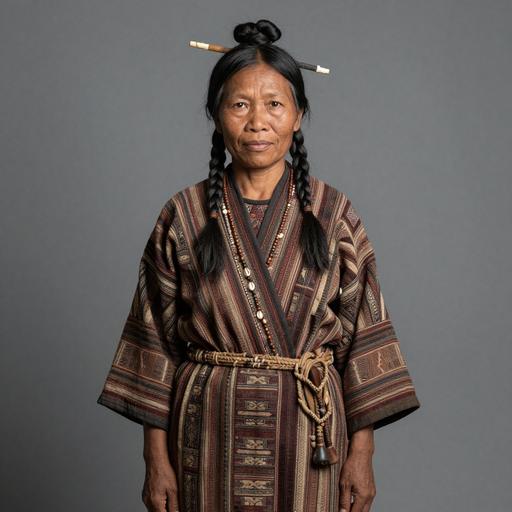
Portrait of ancient individual In661 from Indonesia, dated 30 CE - 209 CE
In661
Indonesia Late Neolithic to Iron Age Indonesia 30 CE - 209 CE Transitional Indonesian F1a1a Downstream
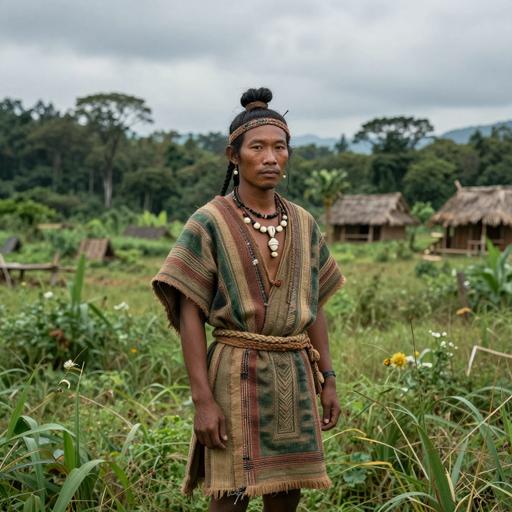
Portrait of ancient individual YPN002 from Thailand, dated 200 CE - 450 CE
YPN002
Thailand Yappa Nhae Log Coffin Culture Iron Age 200 CE - 450 CE Yappa Nhae F1a1a1 Downstream
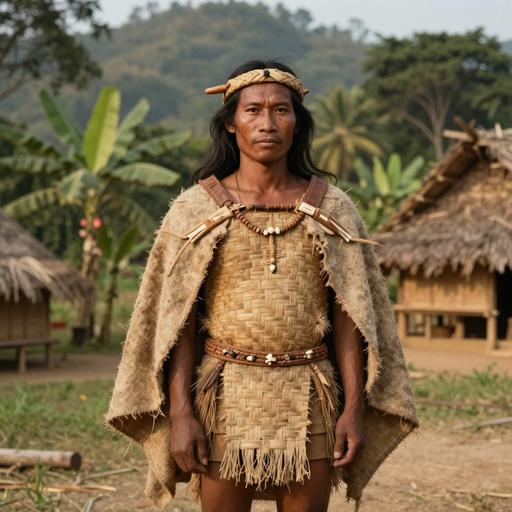
Portrait of ancient individual YPN010 from Thailand, dated 200 CE - 450 CE
YPN010
Thailand Yappa Nhae Log Coffin Culture Iron Age 200 CE - 450 CE Yappa Nhae F1a1a1 Downstream
Portrait of ancient individual YPN013 from Thailand, dated 200 CE - 450 CE
YPN013
Thailand Yappa Nhae Log Coffin Culture Iron Age 200 CE - 450 CE Yappa Nhae F1a1a1 Downstream
Portrait of ancient individual YPN022 from Thailand, dated 200 CE - 450 CE
YPN022
Thailand Yappa Nhae Log Coffin Culture Iron Age 200 CE - 450 CE Yappa Nhae F1a1a1 Downstream
Portrait of ancient individual YPN030 from Thailand, dated 200 CE - 450 CE
YPN030
Thailand Yappa Nhae Log Coffin Culture Iron Age 200 CE - 450 CE Yappa Nhae F1a1a1 Downstream
Portrait of ancient individual THL004 from Thailand, dated 252 CE - 406 CE
THL004
Thailand Tham Lod Log Coffin Culture Iron Age 252 CE - 406 CE Tham Lod F1a1a1 Downstream
Portrait of ancient individual Vt778 from Vietnam, dated 800 BCE - 551 BCE
Vt778
Vietnam Late Neolithic Vietnam 800 BCE - 551 BCE Vietnamese Neolithic F1a1a1 Downstream
Portrait of ancient individual Vt778 from Vietnam, dated 800 BCE - 551 BCE
Vt778
Vietnam Late Neolithic Vietnam 800 BCE - 551 BCE Vietnamese Neolithic F1a1a1 Downstream
Portrait of ancient individual La364 from Laos, dated 1125 BCE - 926 BCE
La364
Laos Late Neolithic to Bronze Age Laos 1125 BCE - 926 BCE Laotian Bronze Age F1a1a1 Downstream
Chapter VI

Carrier Distribution Map

Geographic distribution of 14 ancient DNA samples (direct and subclade carriers of F1A1)

Subclade carrier
Time Period Filter
All Time Periods
Showing all samples
Chapter VII

Temporal Distribution

Distribution of carriers across archaeological periods

Chapter VIII

Geographic Distribution

Distribution by country of origin (direct and subclade carriers shown by default)

Chapter IX

Country × Era Distribution

Cross-tabulation of carrier countries and archaeological periods (direct and subclade carriers shown by default)

Data

Data & Provenance

Source information and data quality

Last Updated 2026-02-16
Confidence Score 50/100
Coverage Low
Data Source

We use the latest phylotree for MTDNA haplogroup classification and data.