Menu
Currency
mtDNA Haplogroup • Maternal Lineage

G2A1D2

mtDNA Haplogroup G2A1D2

~5,000 years ago
Northeast Asia / Siberia
0 subclades
Scroll to explore
Chapter I

The Story

The journey of mtDNA haplogroup G2A1D2

Origins and Evolution

mtDNA haplogroup G2A1D2 falls within the broader mtDNA haplogroup G, a clade that is primarily associated with populations of Northeast Asia, Siberia and parts of Central Asia. As a downstream lineage of G2A1DA, G2A1D2 represents a relatively recent branching event within the G2A substructure. Age estimates for individual low-frequency subclades of G2 commonly fall in the mid to late Holocene when using standard mitochondrial molecular-clock calibrations; for G2A1D2 a conservative estimate places its origin in the last several thousand years (on the order of ~3–7 kya), though uncertainty is high because of sparse sampling and limited phylogenetic resolution for rare lineages.

The clade likely arose through mutation accumulation in a localized maternal population in Northeast Asia or southern Siberia; subsequent dispersal would have been driven by regional demographic processes such as Neolithic foraging-to-farming transitions, Bronze Age population movements across the steppe, and later historic interactions among Tungusic-, Mongolic-, and Turkic-speaking groups.

Subclades

G2A1D2 is itself a terminal or near-terminal subclade in current phylogenies (Phylotree and curated datasets). As an intermediate/derived clade under G2A1DA, it helps connect parent lineages to any further downstream variants that may be discovered in expanded sequencing surveys. At present, there are no well-characterized, widely-recognized daughter clades of G2A1D2 in the public phylogenies — this likely reflects limited sampling rather than a true absence of diversity.

Geographical Distribution

Observed and inferred occurrences of G2A1D2 concentrate in northern East Asian and Siberian contexts. Because G2 subclades are common among indigenous populations of the Amur River basin, southern Siberia and adjacent Mongolian regions, it is reasonable to infer G2A1D2 will appear most often in those populations or in groups that have historical connections to them. Low-frequency occurrences in Central Asian samples are plausible through historic east–west gene flow, while detection in western Eurasia or the Americas would be expected to be rare and typically associated with recent migration or limited founder events.

Historical and Cultural Significance

Because G2 lineages frequently appear in ancient and modern hunter-gatherer and early farmer contexts across Northeast Asia, G2A1D2 can be useful for reconstructing maternal line histories in that region. Potential archaeological associations include Neolithic Amur-region hunter-gatherers (whose genetic legacy persists in modern Northeast Asian populations) and later Bronze Age and Iron Age steppe interactions that redistributed maternal lineages across northern Asia. However, direct cultural attributions for G2A1D2 are tentative until ancient DNA or dense modern sampling links the clade to specific archaeological assemblages.

Conclusion

G2A1D2 is a narrowly-distributed, recently derived mitochondrial lineage within the G2A branch that highlights the fine-scale maternal structure of Northeast Asian and Siberian populations. Its rarity and current phylogenetic status underscore the need for broader high-resolution mtDNA sequencing across northern Asia and neighboring regions; increased sampling will refine age estimates, resolve substructure, and clarify archaeological associations. In the meantime, inferences should remain cautious and framed as provisional pending additional data.

Key Points

  • Origins and Evolution
  • Subclades
  • Geographical Distribution
  • Historical and Cultural Significance
  • Conclusion
Chapter II

Tree & Relationships

Phylogenetic context and subclades

Evolution Path

This haplogroup's evolutionary journey from its earliest ancestor to the present.

Steps Haplogroup Age Estimate Archaeology Era Time Passed Immediate Descendants Tested Modern Descendants Ancient Connections
1 G2A1D2 Current ~5,000 years ago 🔶 Bronze Age 5,000 years 0 1 0
2 G2A1DA — — — 1 1 0
3 G2A1D ~6,000 years ago 🪨 Chalcolithic 5,500 years 1 2 3
4 G2A1 ~12,000 years ago 🌾 Neolithic 12,000 years 3 9 0
5 G2A ~15,000 years ago 🏹 Mesolithic 15,000 years 3 34 48
6 G2A'C — — — 2 36 0
7 G2 ~20,000 years ago 🏹 Mesolithic 20,000 years 2 42 10
8 G ~35,000 years ago 🦴 Paleolithic 35,000 years 4 303 3
9 M12'G — — — 2 303 0
10 M ~60,000 years ago 🦴 Paleolithic 60,000 years 42 2,162 41
11 L3 ~70,000 years ago 🦴 Paleolithic 70,000 years 7 23,542 6
12 L3'4 — — — 2 23,581 0
13 L3'4'6 — — — 2 23,584 0
14 L2'3'4'6 — — — 2 24,475 0
15 L2'3'4'5'6'7 — — — 2 24,488 0
16 L1'2'3'4'5'6'7 — — — 2 24,903 0
17 L ~160,000 years ago 🦴 Paleolithic 160,000 years 2 25,205 5

Subclades (0)

Terminal branch - no known subclades

Chapter III

Where in the World

Geographic distribution and modern presence

Place of Origin

Northeast Asia / Siberia

Modern Distribution

The populations where mtDNA haplogroup G2A1D2 is found include:

  1. Indigenous Siberian groups (e.g., Yakut, Evenk) reported or expected in low numbers
  2. Northeastern Asian populations (Amur-region groups, some Mongolic-speaking communities)
  3. Buryat and other southern Siberian / Mongolian highland groups (sporadic detections or probable presence)
  4. Central Asian groups (low-frequency occurrences due to historic east–west contacts)
  5. Modern populations with recent Northeastern Asian ancestry (isolated reports possible)
CHAPTER IV

When in Time

Your haplogroup in the context of human history

~10k years ago

Neolithic Revolution

Agriculture begins, settled communities form

~5k years ago

Bronze Age

Metalworking, writing, and early civilizations

~5k years ago

Haplogroup G2A1D2

Your mtDNA haplogroup emerged in Northeast Asia / Siberia

Northeast Asia / Siberia
~3k years ago

Iron Age

Iron tools, expanded trade networks

~2k years ago

Classical Antiquity

Greek and Roman civilizations flourish

Present

Present Day

Modern era

Your Haplogroup
Historical Era
Chapter IV-B

Linked Cultures

Ancient cultures associated with mtDNA haplogroup G2A1D2

Cultural Heritage

These ancient cultures have been linked to haplogroup G2A1D2 based on matching ancient DNA samples from archaeological excavations. The presence of this haplogroup in these cultures provides insights into the migrations and population movements of populations carrying this haplogroup.

Argun River Culture Hunnic Period Korgantas Culture Lena River Culture Shamanka Culture Wuzhuangguoliang Culture Zongri Culture
Culture assignments are based on archaeological context of ancient DNA samples and may represent regional associations during specific time periods.
Chapter V

Sample Catalog

3 direct carriers of haplogroup G2A1D2

3 / 3 samples
Portrait Sample Country Era Date Culture mtDNA Match
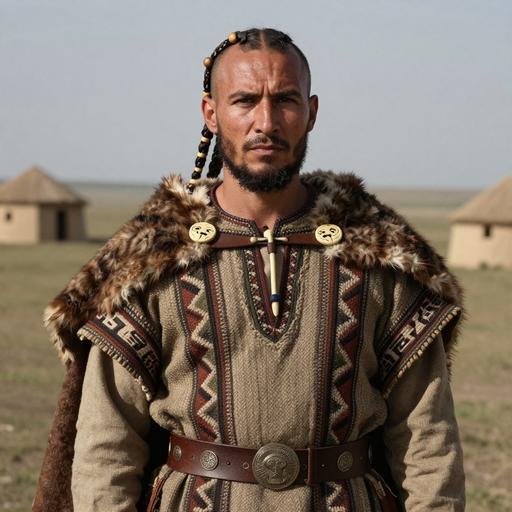
Portrait of ancient individual KBO001 from Kazakhstan, dated 403 BCE - 231 BCE
KBO001
Kazakhstan Iron Age Korgantas, Kazakhstan 403 BCE - 231 BCE Korgantas Culture G2a1d2 Direct
Portrait of ancient individual DA52 from Kyrgyzstan, dated 411 CE - 547 CE
DA52
Kyrgyzstan The Hun Period in Kyrgyzstan 411 CE - 547 CE Hunnic Period G2a1d2 Direct
Portrait of ancient individual DA52 from Kyrgyzstan, dated 411 CE - 547 CE
DA52
Kyrgyzstan The Huns 411 CE - 547 CE G2a1d2 Direct
Chapter VI

Carrier Distribution Map

Geographic distribution of 3 ancient DNA samples (direct and subclade carriers of G2A1D2)

Direct carrier
Time Period Filter
All Time Periods
Showing all samples
Chapter VII

Temporal Distribution

Distribution of carriers across archaeological periods

Chapter VIII

Geographic Distribution

Distribution by country of origin (direct and subclade carriers shown by default)

Chapter IX

Country × Era Distribution

Cross-tabulation of carrier countries and archaeological periods (direct and subclade carriers shown by default)

Data

Data & Provenance

Source information and data quality

Last Updated 2026-06-14
Confidence Score 50/100
Coverage Low
Data Source

We use the latest phylotree for MTDNA haplogroup classification and data.