mtDNA · Maternal lineage

HV17

mtDNA Haplogroup HV17

A reference profile for one lineage branch. Shared haplogroups do not establish a family relationship or cultural identity.

Reference profile

Branch background

Historical context for mtDNA lineage branch HV17

Origins and Evolution

mtDNA haplogroup HV17 is a subclade within the HV phylogeny, positioned under the parent clade HVB (which derives from the broader HV lineage that itself branches from R0/R). HV lineages are characteristic of West Eurasian maternal diversity and are thought to have deep roots in the Near East and adjacent regions following the Last Glacial Maximum. Based on the time depth of related HV subclades and the behavior of HV lineages in both modern and ancient samples, HV17 is plausibly a post‑glacial / early Neolithic clade, with an estimated origin on the order of approximately ~9 kya (thousands of years ago). This estimate is provisional and derived from the relative position of HV17 within HVB and observed coalescence times for comparable HV subclades.

Because HV17 is described as an intermediate node in the phylogenetic tree, it likely represents a lineage that helped connect earlier Near Eastern maternal diversity with later regional subclades that spread into Europe and the Mediterranean. However, the clade is currently under‑sampled in published datasets and may be split into further subclades once more whole mitogenomes are reported.

Subclades

At present, HV17 is best treated as an intermediate clade with limited resolved downstream diversity in public phylogenies. Where whole mitogenome sequencing has been performed on samples assigned to HV-derived lineages, researchers frequently find further internal structure (for example HV1, HV4, etc.), but HV17's internal branching pattern is not yet comprehensively characterized in the literature. Future sequencing and Phylotree updates are likely to define named subclades (e.g., HV17a/HV17b) and to refine its diagnostic mutations and time estimates.

Geographical Distribution

Modern distribution: Based on the geographic patterns of HV and HVB and the sparse reported occurrences consistent with an HV17 placement, this lineage is most plausibly found at low to moderate frequencies in the Near East, Anatolia, and the Caucasus, with occasional presence in the eastern Mediterranean and southern Europe. Where dense sampling exists (e.g., Armenian, Georgian, Turkish, and some Levantine datasets), HV clades in general are common and HV17-type mitogenomes may be detected at low frequencies.

Ancient DNA context: Broader HV lineages appear repeatedly in ancient Near Eastern and early European farmer contexts (Anatolian Neolithic and Early European Farmers). If HV17 is an early Neolithic Near Eastern lineage, it could appear in Neolithic Anatolian and early farmer-associated ancient samples; however, explicit HV17 assignments to published ancient mitogenomes remain limited and require confirmation.

Historical and Cultural Significance

Because HV lineages played a role in the maternal ancestry of populations that participated in the Neolithic expansion from Anatolia into Europe, HV17—if centered in Anatolia/Caucasus—could represent one of the maternal components carried by early farming communities into southeastern Europe and the Mediterranean. Its archaeological and cultural associations are therefore most plausibly with Anatolian Neolithic and other early farming complexes. Later, low‑frequency dispersals into Europe and the Mediterranean could reflect millennia of regional migrations, trade, and admixture (Bronze Age movements, historical population flows in the Near East and Mediterranean).

It is important to emphasize that HV17 itself is currently of limited visibility in published population surveys; therefore, its precise cultural affiliations and historical trajectories remain provisional until broader whole‑mitogenome sampling and ancient DNA matches are available.

Conclusion

mtDNA HV17 is a modestly aged, West Eurasian maternal lineage best placed as an intermediate subclade of HVB with an inferred origin in the Near East / Anatolia–Caucasus around the early Neolithic (roughly ~9 kya). It likely contributed to the maternal pool of early farming and regional populations, but is under‑sampled and understudied at present: targeted whole mitogenome sequencing and careful inclusion in ancient DNA analyses will be required to resolve its internal structure, precise age, and detailed geographic history.

Key Points

  • Origins and Evolution
  • Subclades
  • Geographical Distribution
  • Historical and Cultural Significance
  • Conclusion
Reference profile

Tree & Relationships

Phylogenetic context and subclades

Evolution Path

Follow the recorded parent branches toward HV17. Dates are estimates and can change as reference data is revised.

Steps Haplogroup Age Estimate Archaeology Era Time Passed Immediate Descendants Tested Modern Descendants Ancient Connections
1 HV17 Current ~9,000 years ago Neolithic 9,000 years 1 5 0
2 HVB - - - 10 137 0
3 HV ~30,000 years ago Paleolithic 30,000 years 14 11,092 228
4 R0 ~15,000 years ago Mesolithic 15,000 years 2 11,230 4
5 R ~55,000 years ago Paleolithic 55,000 years 17 22,830 57
6 NA - - - 1 22,830 0
7 N ~60,000 years ago Paleolithic 60,000 years 16 26,150 13
8 L3 ~70,000 years ago Paleolithic 70,000 years 7 30,162 6
9 L3'4 - - - 2 30,212 0
10 L3'4'6 - - - 2 30,216 0
11 L2'3'4'6 - - - 2 31,333 0
12 L2'3'4'5'6'7 - - - 2 31,349 0
13 L1'2'3'4'5'6'7 - - - 2 31,852 0
14 L ~160,000 years ago Paleolithic 160,000 years 2 32,236 5

Siblings (9)

Other branches from the same parent haplogroup

Reference profile

Where in the World

Geographic distribution and modern presence

Recorded origin

Near East / Anatolia–Caucasus

Modern Distribution

The populations where mtDNA haplogroup HV17 is found include:

  1. Armenians
  2. Georgians
  3. Anatolian Turks
  4. Iranians (northwestern/Transcaucasian border regions)
  5. Levantine populations (e.g., Lebanese)
  6. Greeks and other eastern Mediterranean groups
  7. Southern Italian and Sicilian populations
Historical context

A branch through time

Estimated formation in a broad historical timeline. Period markers provide context and do not imply a connection with particular cultures.

  1. ~10k years ago

    Neolithic Revolution

    Agriculture begins, settled communities form

  2. ~9k years ago

    Haplogroup HV17

    Estimated formation of this mtDNA branch; dates and locations are reference estimates.

    This branch
  3. ~5k years ago

    Bronze Age

    Metalworking, writing, and early civilizations

  4. ~3k years ago

    Iron Age

    Iron tools, expanded trade networks

  5. ~2.5k years ago

    Classical Antiquity

    Greek and Roman civilizations flourish

  6. Present

    Present Day

    Modern era

Reference profile

Archaeological context

Recorded archaeological associations for mtDNA branch HV17

Recorded associations

These labels describe archaeological contexts recorded for reference samples linked to HV17. An association does not establish that all carriers belonged to a culture or followed a particular migration route.

1984 Çamlıbel Tarlası Dziekanowice Culture Ganj Dareh Culture Iron Age Armenian Iron Gates Culture Katelai Culture Norse-Christian Pottery Neolithic PPNA Anatolia
Culture assignments are based on archaeological context of ancient DNA samples and may represent regional associations during specific time periods.
Reference profile

Sample Catalog

2 direct carriers and 2 subclade carriers of haplogroup HV17

4 shown · 4 matching samples

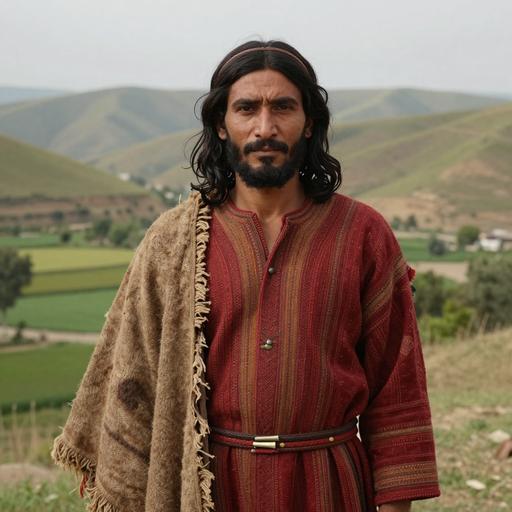
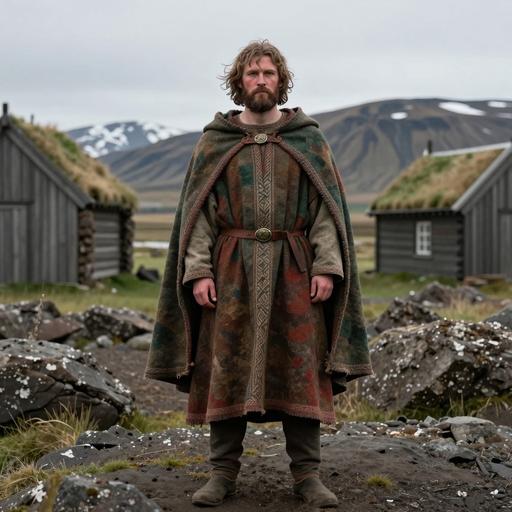
Portraits are AI-generated illustrations. Sample labels and accession IDs identify the reference records.

Portrait Sample Country Era Date Culture mtDNA Match
AI-generated illustrative portrait of IA individual, Swat Valley. Katelai, Pakistan (1,000-800 BCE)
Sample ID: I12471
Pakistan The Pakistan Katelai Iron Age Culture 1000-800 BCE Katelai Culture HV17 Direct
AI-generated illustrative portrait of IA individual, Dziekanowice-22 (Greater Poland Province, Gniezno, Łubowo), Poland (1,000-1,200 CE)
Sample ID: PCA0353
Poland Iron Age Dziekanowice Culture 1000-1200 CE Dziekanowice Culture HV17 Direct
AI-generated illustrative portrait of Norse individual, Fossvellir, Iceland (1,296-1,400 CE)
Sample ID: FOV-A1
Iceland Iceland Early Christian 1296 CE - 1400 CE Norse-Christian HV17a Subclade
AI-generated illustrative portrait of Nordic Ma individual, Fossvellir, Iceland (1,296-1,400 CE)
Sample ID: FOV-A1
Iceland Medieval Nordic Region 1296 CE - 1400 CE 1984 HV17a Subclade
MATERNAL LINEAGE · ANCIENT DNA

Ancient lineage evidence map

Follow parent clades toward this branch and explore where ancient carriers were found.

Loading ancient observations…

Markers are archaeological find locations. A dashed connector is an uncertain, proposed geographic transition between consecutive branches supported by multiple dated observations; it is not an exact travel route, birthplace or proof of direct descent. Parent-clade samples may belong to other descendant branches. Gaps remain where evidence is insufficient. Sample dates differ from haplogroup formation dates.

Reference profile

Carrier Distribution Map

Geographic distribution of 4 ancient DNA samples (direct and subclade carriers of HV17)

Direct carrier Subclade carrier
Time Period Filter
All Time Periods
Showing all samples
Reference profile

Temporal Distribution

Distribution of carriers across archaeological periods

Reference profile

Geographic Distribution

Counts by recorded sample country. These reflect the available reference selection, not population frequencies.

Reference profile

Country × Era Distribution

Compare recorded sample counts across countries and archaeological periods. Select a populated cell to inspect a sample.

Data

Data & Provenance

Source information and data quality

Last Updated 2026-06-14
Confidence Score 50/100
Coverage Low

Data Source

Classification, estimated dates and geographic context reflect the recorded reference data and may change as evidence is revised. Sample coverage is uneven; recorded locations and archaeological associations do not establish personal origin or cultural identity.

A haplogroup follows one maternal or paternal line. The branch prediction depends on which markers the DNA file contains. How our analysis works