A reference profile for one lineage branch. Shared haplogroups do not establish a family relationship or cultural identity.
Reference profile
Branch background
Historical context for mtDNA lineage branch HVB
mtDNA haplogroup HVB is a maternal lineage from the Phylotree reference tree. This record was auto-created to restore missing intermediate structure between existing clades. It is a subclade of HV.
Editorial status
This is a structural placeholder with low coverage. Enrich or reprocess for full narrative content.
Key Points
Editorial status
Reference profile
Tree & Relationships
Phylogenetic context and subclades
Evolution Path
Follow the recorded parent branches toward HVB. Dates are estimates and can change as reference data is revised.
The populations where mtDNA haplogroup HVB is found require further characterization through genetic studies.
Historical context
A branch through time
Estimated formation in a broad historical timeline. Period markers provide context and do not imply a connection with particular cultures.
A formation estimate is not recorded for this branch.
Reference profile
Archaeological context
Recorded archaeological associations for mtDNA branch HVB
Recorded associations
These labels describe archaeological contexts recorded for reference samples linked to HVB. An association does not establish that all carriers belonged to a culture or followed a particular migration route.
Ganj Dareh CultureHajji FiruzIron Gates CulturePottery NeolithicPPNA AnatoliaStarčevoStarčevo CultureSzatmár Group
Culture assignments are based on archaeological context of ancient DNA samples and may represent regional associations during specific time periods.
Reference profile
Sample Catalog
14 direct carriers and 3 subclade carriers of haplogroup HVB
10 shown · 17 matching samples
No samples match these filters. Try another label, location or period.
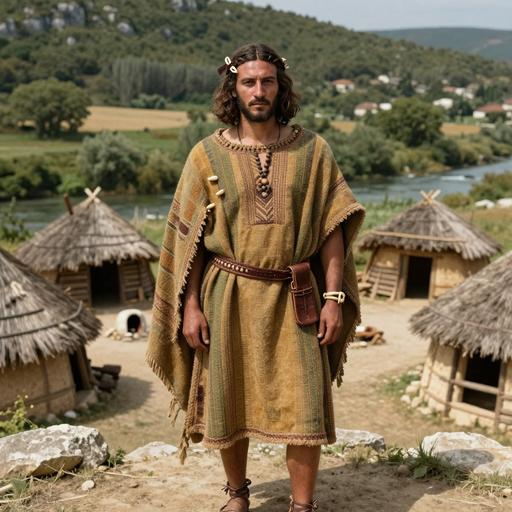
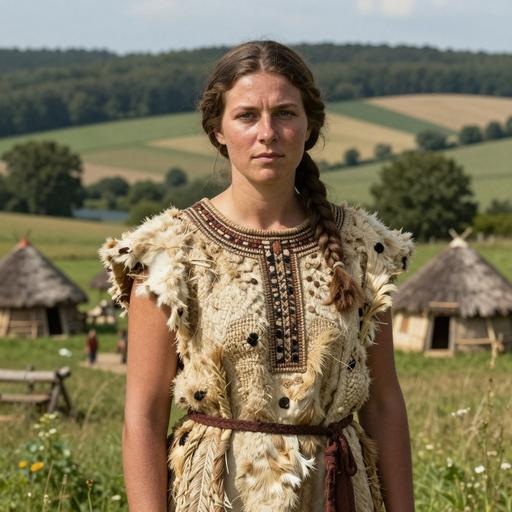
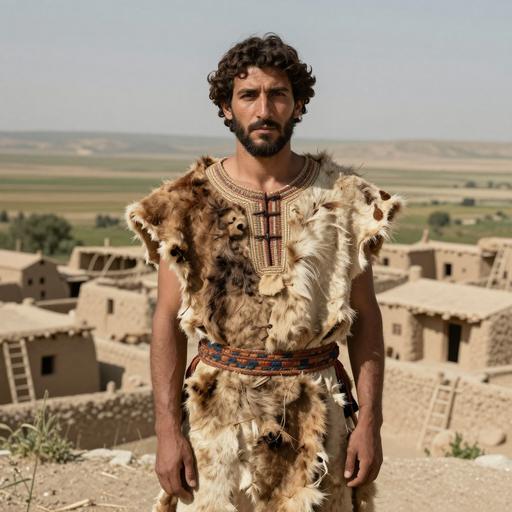
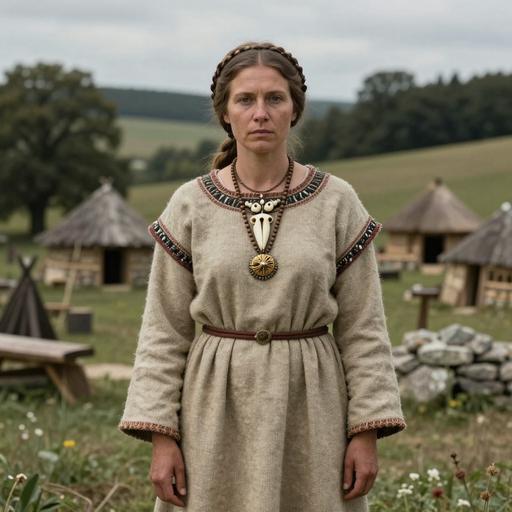
Portraits are AI-generated illustrations. Sample labels and accession IDs identify the reference records.
Portrait
Sample
Country
Era
Date
Culture
mtDNA
Match
Sample ID: R128
Italy
Imperial Rome
1-400 CE
Roman Empire
HV-b
Direct
Sample ID: I6551
Pakistan
Butkara: Iron Age Religious and Cultural Center in Swat Valley, Pakistan
200 BCE - 100 CE
Butkara Culture
HV-b
Direct
Sample ID: DA195
Hungary
Hungary IA Scythian
772 BCE - 423 BCE
Scythian Culture
HV-b
Direct
Sample ID: DA195
Hungary
The Scythian Culture
772 BCE - 423 BCE
HV-b
Direct
Sample ID: R973
Italy
Medieval to Early Modern Italy
1600 CE - 1700 CE
Medieval Italian
HV-b
Direct
Sample ID: I7412
Uzbekistan
Bronze Age Dzharkutan
1748-1624 calBCE (3405±20 BP, PSUAMS-3228)
Dzharkutan
HV-b
Direct
Sample ID: I4161
Uzbekistan
Bronze Age Dzharkutan
2100-1800 BCE
Dzharkutan
HV-b
Direct
Sample ID: I9129
Greece
Minoan Odigitria, Greece
2250-1650 BCE
Odigitria Culture
HV-b
Direct
Sample ID: I4134
Germany
The Bell Beaker Culture
2500 BCE - 2000 BCE
ANATOLIAN_BRONZE_AGE
HV-b
Direct
Sample ID: I4134
Germany
The Bell Beaker Culture
2500 BCE - 2000 BCE
ANATOLIAN_BRONZE_AGE
HV-b
Direct
Sample ID: I4134
Germany
Bell Beaker Culture, Germany
2800 BCE - 1800 BCE
Bell Beaker
HV-b
Direct
Sample ID: I10062
Croatia
Croatia C Lasinja
4300-3900 BCE
Lasinja Culture
HV-b
Direct
Sample ID: OBN008
France
France MN
4686-4499 calBCE (5743±30 BP, SUERC-52378)
Middle Neolithic French
HV-b
Direct
Sample ID: CCH294
Turkey
Neolithic Ceramic Turkey
7100 BCE - 6000 BCE
Pottery Neolithic
HV-b
Direct
Sample ID: VK34
Sweden
Sweden Viking
900 CE - 1200 CE
Viking
HV-b12
Subclade
Sample ID: VK34
Sweden
The Viking Age
900 CE - 1200 CE
HV-b12
Subclade
Sample ID: I7213
Czech Republic
Bell Beaker Culture, Czech Republic
2440-2201 calBCE (3835±20 BP, PSUAMS-4347)
Bell Beaker
HV-b17
Subclade
Sample ID: R128
Imperial Rome - Italy - Casale del dolce
Italy Imperial Rome 1-400 CE
HV-bDirect
Sample ID: I6551
Butkara: Iron Age Religious and Cultural Center in Swat Valley, Pakistan - Pakistan - Swat Valley. Butkara IV
Pakistan Butkara: Iron Age Religious and Cultural Center in Swat Valley, Pakistan 200 BCE - 100 CE
HV-bDirect
Sample ID: DA195
Iron Age Scythian Culture, Hungary - Hungary -
Hungary Hungary IA Scythian 772 BCE - 423 BCE
HV-bDirect
Sample ID: DA195
Hungary The Scythian Culture 772 BCE - 423 BCE
HV-bDirect
Sample ID: R973
Medieval to Early Modern Italy - Italy - Tivoli Palazzo Cianti
Italy Medieval to Early Modern Italy 1600 CE - 1700 CE
HV-bDirect
Sample ID: I7412
Bronze Age Dzharkutan - Uzbekistan - Dzharkutan
Uzbekistan Bronze Age Dzharkutan 1748-1624 calBCE (3405±20 BP, PSUAMS-3228)
HV-bDirect
Sample ID: I4161
Bronze Age Dzharkutan - Uzbekistan - Dzharkutan
Uzbekistan Bronze Age Dzharkutan 2100-1800 BCE
HV-bDirect
Sample ID: I9129
Minoan Odigitria, Greece - Greece - Crete. Heraklion. Moni Odigitria
Greece Minoan Odigitria, Greece 2250-1650 BCE
HV-bDirect
Sample ID: I4134
Germany The Bell Beaker Culture 2500 BCE - 2000 BCE
Follow parent clades toward this branch and explore where ancient carriers were found.
Loading ancient observations…
Reduced motion is enabled. Use the timeline or Show all to explore at your own pace.
Read observations as a table
Displayed ancient observations by branch, period and date midpoint
Branch
Period
Date range
Sample
Sample ID
Location
Haplogroup
Relationship
Markers are archaeological find locations. A dashed connector is an uncertain, proposed geographic transition between consecutive branches supported by multiple dated observations; it is not an exact travel route, birthplace or proof of direct descent. Parent-clade samples may belong to other descendant branches. Gaps remain where evidence is insufficient. Sample dates differ from haplogroup formation dates.
Grouping by historical period reflects when each ancient individual lived, combined across every branch on this lineage chain; it is not a migration sequence or a personal timeline between periods.
Reference profile
Carrier Distribution Map
Geographic distribution of 17 ancient DNA samples (direct and subclade carriers of HVB)
Direct carrier Subclade carrier
Time Period Filter
All Time Periods
Showing all samples
Reference profile
Temporal Distribution
Distribution of carriers across archaeological periods
Reference profile
Geographic Distribution
Counts by recorded sample country. These reflect the available reference selection, not population frequencies.
Reference profile
Country × Era Distribution
Compare recorded sample counts across countries and archaeological periods. Select a populated cell to inspect a sample.
Data
Data & Provenance
Source information and data quality
Last Updated2026-06-14
Confidence Score50/100
CoverageLow
Data Source
Classification, estimated dates and geographic context reflect the recorded reference data and may change as evidence is revised. Sample coverage is uneven; recorded locations and archaeological associations do not establish personal origin or cultural identity.
A haplogroup follows one maternal or paternal line. The branch prediction depends on which markers the DNA file contains.
How our analysis works