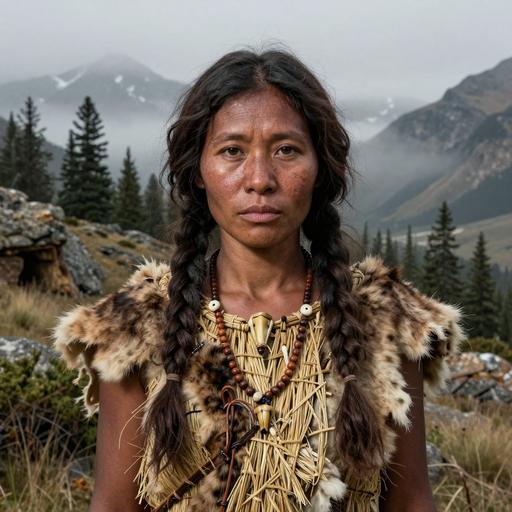
mtDNA · Maternal lineage

ND

mtDNA Haplogroup ND

A reference profile for one lineage branch. Shared haplogroups do not establish a family relationship or cultural identity.

Reference profile

Branch background

Historical context for mtDNA lineage branch ND

Origins and Evolution

mtDNA haplogroup ND represents a lineage derived from macro-haplogroup N and sits on the branch of the phylogeny that gives rise to haplogroup D and closely related lineages. Based on molecular-clock estimates for D and related N-derived clades, ND most likely diversified in northeast or East Asia during the Upper Paleolithic (roughly 40–50 kya), following the initial Out-of-Africa dispersal that produced macro-haplogroups M and N. The evolutionary history of ND reflects adaptation and demographic expansions in high-latitude Eurasia during the Late Pleistocene and the subsequent peopling of the Americas via Beringia in the terminal Pleistocene / early Holocene.

Subclades (if applicable)

The most biologically and archaeogenetically important descendant of the ND branch is haplogroup D, which contains multiple subclades (for example, D1, D2, D4 and D4h3a among others) that have distinctive geographic and temporal patterns. Many of these D subclades are highly diversified in East Asia and Siberia; several D lineages (notably D1 and D4h3a) are also key maternal lineages in Indigenous American populations. Where present, ND should be treated as the upstream node for these D subclades in phylogenetic reconstructions.

Geographical Distribution

Modern distributions of ND-derived lineages are concentrated in East Asia, Northeast Asia (Siberia/Tungusic/Mongolic areas), and among Indigenous peoples of the Americas. High frequencies are observed in some northern and eastern Asian populations and in many Native American groups, reflecting deep Pleistocene roots and later founder effects during the peopling of the Americas. ND-descended haplogroups are generally rare or absent in most of western Eurasia and Africa except where later migrations introduced eastern maternal lineages.

Historical and Cultural Significance

Lineages descending from ND played a central role in the Paleolithic settlement of northern Eurasia and the colonization of the Americas. Ancient DNA studies have recovered D-lineages in Pleistocene and early Holocene individuals from Siberia, East Asia, and pre-Clovis/early Holocene sites in the Americas (for example, D4h3a in early New World contexts). In East Asia, ND-derived lineages appear in prehistoric hunter-gatherer contexts such as Jomon-era Japan and in various Holocene Siberian groups, linking genetic evidence to archaeological patterns of mobility, coastal and inland foraging, and later regional continuity or replacement.

Conclusion

As an N-derived node associated with haplogroup D, ND is a key maternal lineage for reconstructing northern Eurasian population history and the ancestral maternal makeup of Native American peoples. Its time depth in the Upper Paleolithic and its geographic concentration in East/Northeast Asia make it informative for studies of Late Pleistocene migrations, high-latitude adaptations, and the demographic processes that carried people across Beringia into the Americas.

Key Points

  • Origins and Evolution
  • Subclades (if applicable)
  • Geographical Distribution
  • Historical and Cultural Significance
  • Conclusion
Reference profile

Tree & Relationships

Phylogenetic context and subclades

Evolution Path

Follow the recorded parent branches toward ND. Dates are estimates and can change as reference data is revised.

Steps Haplogroup Age Estimate Archaeology Era Time Passed Immediate Descendants Tested Modern Descendants Ancient Connections
1 ND Current ~45,000 years ago Paleolithic 45,000 years 1 0 12
2 N ~60,000 years ago Paleolithic 60,000 years 16 26,150 13
3 L3 ~70,000 years ago Paleolithic 70,000 years 7 30,162 6
4 L3'4 - - - 2 30,212 0
5 L3'4'6 - - - 2 30,216 0
6 L2'3'4'6 - - - 2 31,333 0
7 L2'3'4'5'6'7 - - - 2 31,349 0
8 L1'2'3'4'5'6'7 - - - 2 31,852 0
9 L ~160,000 years ago Paleolithic 160,000 years 2 32,236 5
Reference profile

Where in the World

Geographic distribution and modern presence

Recorded origin

East / Northeast Asia

Modern Distribution

The populations where mtDNA haplogroup ND haplogroup ND is found include:

  1. East Asian populations (Han Chinese, Japanese, Koreans)
  2. Northeast Asian and Siberian groups (Yakut, Evenks, Tungusic and Mongolic peoples)
  3. Indigenous peoples of the Americas (North, Central and South American Native groups carrying D subclades)
  4. Ainu and Jomon-descended populations of northern Japan
  5. Tibetan and Himalayan populations (low to moderate frequencies in some groups)
  6. Central Asian minorities (low to moderate frequencies reflecting east–west contact)
  7. Indigenous peoples of Arctic and subarctic regions (Inuit-related and other Arctic-adjacent groups, where D is present)
  8. Ancient Paleolithic and early Holocene remains from Siberia and northeastern Eurasia (archaeogenetic contexts)
  9. Coastal East Asian forager/seafaring groups (where specific D subclades are enriched)
  10. Small, localized occurrences in parts of Southeast Asia reflecting downstream dispersals or drift
Historical context

A branch through time

Estimated formation in a broad historical timeline. Period markers provide context and do not imply a connection with particular cultures.

  1. ~50k years ago

    Upper Paleolithic

    Advanced tool-making, art, and cultural explosion

  2. ~45k years ago

    Haplogroup ND

    Estimated formation of this mtDNA branch; dates and locations are reference estimates.

    This branch
  3. ~20k years ago

    Last Glacial Maximum

    Peak of the last ice age, populations isolated

  4. ~10k years ago

    Neolithic Revolution

    Agriculture begins, settled communities form

  5. ~5k years ago

    Bronze Age

    Metalworking, writing, and early civilizations

  6. ~3k years ago

    Iron Age

    Iron tools, expanded trade networks

  7. ~2.5k years ago

    Classical Antiquity

    Greek and Roman civilizations flourish

  8. Present

    Present Day

    Modern era

Reference profile

Archaeological context

Recorded archaeological associations for mtDNA branch ND

Recorded associations

These labels describe archaeological contexts recorded for reference samples linked to ND. An association does not establish that all carriers belonged to a culture or followed a particular migration route.

Altai Neanderthal Austria_Avar Bohemian Hunter-Gatherer Buran-Kaya Dzudzuana Early Avar Early Bronze Anatolia France_Megalithic_MN Funnel Beaker Culture Hetian Culture Iraqi PPN Peștera cu Oase
Culture assignments are based on archaeological context of ancient DNA samples and may represent regional associations during specific time periods.
Reference profile

Sample Catalog

12 subclade carriers of haplogroup ND (no direct carriers in the current reference selection)

10 shown · 12 matching samples

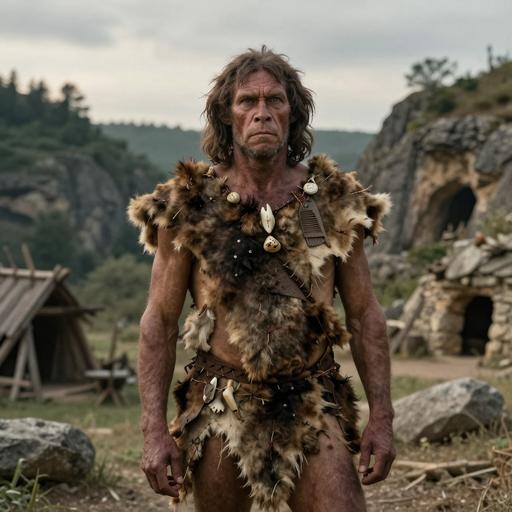
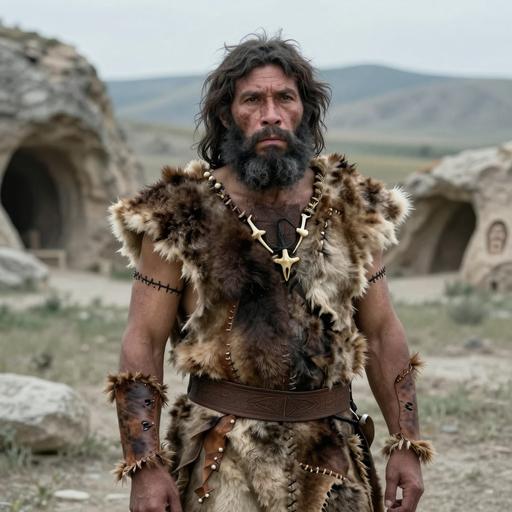
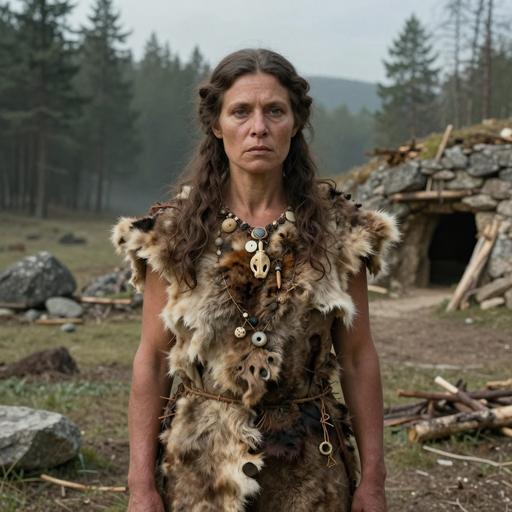
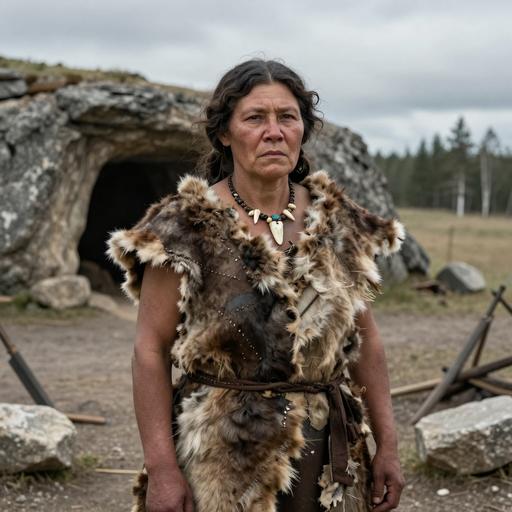
Portraits are AI-generated illustrations. Sample labels and accession IDs identify the reference records.

Portrait Sample Country Era Date Culture mtDNA Match
AI-generated illustrative portrait of Neanderthal individual, Spy Cave, Belgium (39,431-38,495 BCE)
Sample ID: Spy_final
Belgium Spy Neanderthal, Belgium 39431 BCE - 38495 BCE Spy Culture ND1b1a1b2* Subclade
AI-generated illustrative portrait of Neanderthal individual, Spy Cave, Belgium (39,431-38,495 BCE)
Sample ID: Spy_final
Belgium Neanderthals 39431 BCE - 38495 BCE ND1b1a1b2* Subclade
AI-generated illustrative portrait of Neanderthal individual, Les Cottes, France (41,201-40,596 BCE)
Sample ID: Les_Cottes_final
France Les Cottes Neanderthal 41201 BCE - 40596 BCE Les Cottes ND1b1* Subclade
AI-generated illustrative portrait of Neanderthal individual, Les Cottes, France (41,201-40,596 BCE)
Sample ID: Les_Cottes_final
France Neanderthals 41201 BCE - 40596 BCE ND1b1* Subclade
AI-generated illustrative portrait of Neanderthal individual, Mezmaiskaya, Russia (43,015-40,206 BCE)
Sample ID: Mezmaiskaya2_final
Russia Mezmaiskaya 2 Neanderthal 43015 BCE - 40206 BCE Mezmaiskaya ND1b1a* Subclade
AI-generated illustrative portrait of Neanderthal individual, Mezmaiskaya, Russia (43,015-40,206 BCE)
Sample ID: Mezmaiskaya2_final
Russia Neanderthals 43015 BCE - 40206 BCE ND1b1a* Subclade
AI-generated illustrative portrait of Neanderthal individual, North Caucasus. Republic of Adygea. Mezmaiskaya Cave, Russia (68,050-58,050 BCE)
Sample ID: Mezmaiskaya1
Russia Mezmaiskaya 1 Neanderthal 68050 BCE - 58050 BCE Mezmaiskaya ND1b2* Subclade
AI-generated illustrative portrait of Neanderthal individual, North Caucasus. Republic of Adygea. Mezmaiskaya Cave, Russia (68,050-58,050 BCE)
Sample ID: Mezmaiskaya1
Russia Neanderthals 68050 BCE - 58050 BCE ND1b2* Subclade
AI-generated illustrative portrait of Neanderthal individual, Chagyrskaya Cave, Russia (98,050-58,050 BCE)
Sample ID: Chagyrskaya
Russia Chagyrskaya Cave Neanderthal, Russia 98050 BCE - 58050 BCE Chagyrskaya ND1b1* Subclade
AI-generated illustrative portrait of Neanderthal individual, Chagyrskaya Cave, Russia (98,050-58,050 BCE)
Sample ID: Chagyrskaya
Russia Neanderthals 98050 BCE - 58050 BCE ND1b1* Subclade
MATERNAL LINEAGE · ANCIENT DNA

Ancient lineage evidence map

Follow parent clades toward this branch and explore where ancient carriers were found.

Loading ancient observations…

Markers are archaeological find locations. A dashed connector is an uncertain, proposed geographic transition between consecutive branches supported by multiple dated observations; it is not an exact travel route, birthplace or proof of direct descent. Parent-clade samples may belong to other descendant branches. Gaps remain where evidence is insufficient. Sample dates differ from haplogroup formation dates.

Reference profile

Carrier Distribution Map

Geographic distribution of 12 ancient DNA samples (direct and subclade carriers of ND)

Subclade carrier
Time Period Filter
All Time Periods
Showing all samples
Reference profile

Temporal Distribution

Distribution of carriers across archaeological periods

Reference profile

Geographic Distribution

Counts by recorded sample country. These reflect the available reference selection, not population frequencies.

Reference profile

Country × Era Distribution

Compare recorded sample counts across countries and archaeological periods. Select a populated cell to inspect a sample.

Data

Data & Provenance

Source information and data quality

Last Updated 2026-02-16
Confidence Score 50/100
Coverage Low

Data Source

Classification, estimated dates and geographic context reflect the recorded reference data and may change as evidence is revised. Sample coverage is uneven; recorded locations and archaeological associations do not establish personal origin or cultural identity.

A haplogroup follows one maternal or paternal line. The branch prediction depends on which markers the DNA file contains. How our analysis works