mtDNA · Maternal lineage

R1A1A

mtDNA Haplogroup R1A1A

A reference profile for one lineage branch. Shared haplogroups do not establish a family relationship or cultural identity.

Reference profile

Branch background

Historical context for mtDNA lineage branch R1A1A

Origins and Evolution

mtDNA haplogroup R1A1A is a downstream lineage of R1A1 and most likely split from its parent within the South Asian mitochondrial phylogeny during the Late Pleistocene to early Holocene (estimated here at approximately 14 kya, based on the parent clade age of ~18 kya and typical subclade branching patterns). Its emergence fits a pattern seen across many R-derived maternal lineages in South Asia: deep regional roots followed by localized diversification and later low-level dispersals into adjacent regions. The lineage's mutational motif and relative phylogenetic position indicate a South Asian origin with subsequent drift and regional structuring.

Subclades

As a subclade of R1A1, R1A1A may itself contain further downstream sublineages (e.g., hypothetical R1A1A1, R1A1A2) that show localized distributions; however, many of these lower-level branches are rare and unevenly sampled in modern and ancient datasets. Where observed, downstream subclades often show stronger geographic restriction (e.g., concentrated in particular language or ethnic groups within South Asia) reflecting founder effects, endogamy, or recent demographic events.

Geographical Distribution

The highest frequencies of R1A1A are expected in South Asia, particularly among populations of the Indian subcontinent, with lower but detectable frequencies in neighboring Central Asia and sporadic occurrences in Southeast and East Asia. Modern sampling and limited ancient DNA evidence suggest the lineage remained concentrated in South Asia for most of its history, with later small-scale dispersals associated with trade, migration, and historic diaspora movements.

Historical and Cultural Significance

While R1A1A predates most archaeologically defined South Asian cultures, its continued presence through the Holocene means it likely contributed maternally to populations involved in key cultural transitions, including the Mesolithic-to-Neolithic transition and later urban developments. The haplogroup is therefore relevant when reconstructing maternal ancestry in prehistoric and historic South Asia, but it is not diagnostic of a single archaeological culture. Limited ancient DNA hits (relative to more common mtDNA clades) mean associations to specific cultures remain provisional and should be treated cautiously.

Conclusion

In summary, R1A1A is a South Asian-rooted maternal lineage that exemplifies regional continuity of R-derived mtDNA in the subcontinent. It highlights patterns of local diversification following a Late Pleistocene origin and shows low-frequency dispersals into neighboring regions and modern diaspora populations. Improved modern sampling and additional ancient DNA recovery from South Asia will refine the internal structure and demographic history of this subclade.

Key Points

  • Origins and Evolution
  • Subclades
  • Geographical Distribution
  • Historical and Cultural Significance
  • Conclusion
Reference profile

Tree & Relationships

Phylogenetic context and subclades

Evolution Path

Follow the recorded parent branches toward R1A1A. Dates are estimates and can change as reference data is revised.

Steps Haplogroup Age Estimate Archaeology Era Time Passed Immediate Descendants Tested Modern Descendants Ancient Connections
1 R1A1A Current ~14,000 years ago Mesolithic 14,000 years 0 7 15
2 R1A1 ~18,000 years ago Mesolithic 18,000 years 1 9 0
3 R1A ~25,000 years ago Paleolithic 25,000 years 1 10 8
4 R1 ~40,000 years ago Paleolithic 40,000 years 2 12 8
5 R ~55,000 years ago Paleolithic 55,000 years 17 22,830 57
6 NA - - - 1 22,830 0
7 N ~60,000 years ago Paleolithic 60,000 years 16 26,150 13
8 L3 ~70,000 years ago Paleolithic 70,000 years 7 30,162 6
9 L3'4 - - - 2 30,212 0
10 L3'4'6 - - - 2 30,216 0
11 L2'3'4'6 - - - 2 31,333 0
12 L2'3'4'5'6'7 - - - 2 31,349 0
13 L1'2'3'4'5'6'7 - - - 2 31,852 0
14 L ~160,000 years ago Paleolithic 160,000 years 2 32,236 5

Subclades (0)

Terminal branch - no recorded subclades

Reference profile

Where in the World

Geographic distribution and modern presence

Recorded origin

South Asia

Modern Distribution

The populations where mtDNA haplogroup R1A1A is found include:

  1. South Asian populations (India, Pakistan, Sri Lanka)
  2. Central Asian populations (e.g., Tajik, Uzbek and neighboring groups)
  3. Southeast Asian populations (low frequency; e.g., mainland SE Asian groups)
  4. East Asian populations (sporadic, low frequency occurrences)
  5. Diaspora communities with South Asian ancestry (e.g., UK, North America, Gulf states)
Historical context

A branch through time

Estimated formation in a broad historical timeline. Period markers provide context and do not imply a connection with particular cultures.

  1. ~20k years ago

    Last Glacial Maximum

    Peak of the last ice age, populations isolated

  2. ~14k years ago

    Haplogroup R1A1A

    Estimated formation of this mtDNA branch; dates and locations are reference estimates.

    This branch
  3. ~10k years ago

    Neolithic Revolution

    Agriculture begins, settled communities form

  4. ~5k years ago

    Bronze Age

    Metalworking, writing, and early civilizations

  5. ~3k years ago

    Iron Age

    Iron tools, expanded trade networks

  6. ~2.5k years ago

    Classical Antiquity

    Greek and Roman civilizations flourish

  7. Present

    Present Day

    Modern era

Reference profile

Archaeological context

Recorded archaeological associations for mtDNA branch R1A1A

Recorded associations

These labels describe archaeological contexts recorded for reference samples linked to R1A1A. An association does not establish that all carriers belonged to a culture or followed a particular migration route.

ANATOLIAN_BRONZE_AGE Bell Beaker Corded Ware North Caucasus Culture Russia_Rostov_EBA_Don_Yamnaya Serbian Bronze Age Ukraine_Odesa_EBA_Catacomb_Yamnaya_possible Unetice Yamnaya Yamnaya Culture
Culture assignments are based on archaeological context of ancient DNA samples and may represent regional associations during specific time periods.
Reference profile

Sample Catalog

15 direct carriers of haplogroup R1A1A

10 shown · 15 matching samples

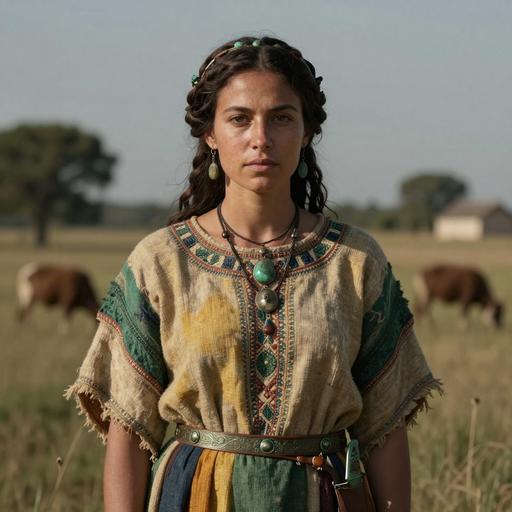
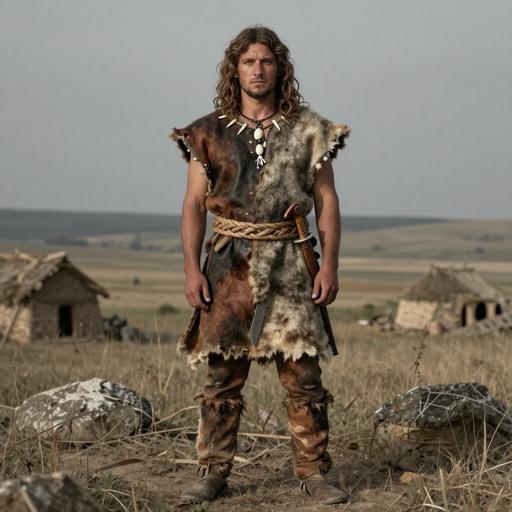
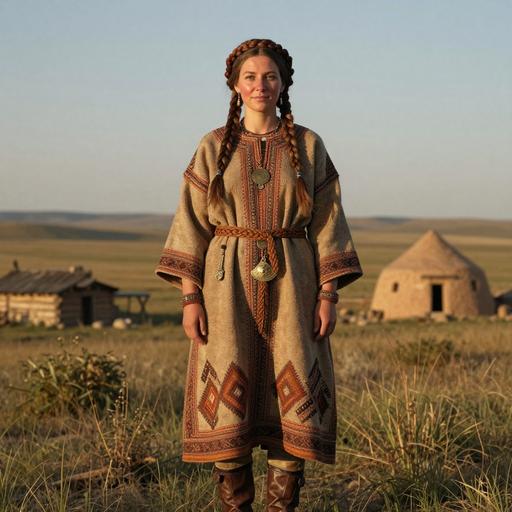
Portraits are AI-generated illustrations. Sample labels and accession IDs identify the reference records.

Portrait Sample Country Era Date Culture mtDNA Match
AI-generated illustrative portrait of Karnut EBA EIA individual, Karnut Archaeological Complex, Armenia (931-816 BCE)
Sample ID: I16707
Armenia Iron Age Armenia 931-816 calBCE (2740±25 BP, PSUAMS-7829) Iron Age Armenian R1a1a Direct
AI-generated illustrative portrait of Norse individual, Nor Mid. Trondheim, Norway (1,100-1,300 CE)
Sample ID: VK114
Norway Norway Medieval 1100 CE - 1300 CE Medieval Norse R1a1a Direct
AI-generated illustrative portrait of Nordic Ma individual, Nor Mid. Trondheim, Norway (1,100-1,300 CE)
Sample ID: VK114
Norway Medieval Nordic Region 1100 CE - 1300 CE 1984 R1a1a Direct
AI-generated illustrative portrait of Karashamb LBA EIA individual, Karashamb Cemetery, Armenia (1,250-1,100 BCE)
Sample ID: I19342
Armenia Late Bronze Age Armenia 1400-900 BCE Late Bronze Age Armenian R1a1a Direct
AI-generated illustrative portrait of BA Protohistoric Bell Beaker individual, Morbihan. Quiberon. Beg-er-Vil, France (1,881-1,691 BCE)
Sample ID: I16791
France France BA 1881-1691 calBCE (3460±25 BP, PSUAMS-9422) French Bronze Age R1a1a Direct
AI-generated illustrative portrait of BA Protohistoric Bell Beaker individual, Morbihan. Quiberon. Beg-er-Vil, France (1,950-1,650 BCE)
Sample ID: I16792
France France BA Protohistoric 1950-1650 BCE French Bronze Age R1a1a Direct
AI-generated illustrative portrait of Haunstetten Unterer Talweg5862 EBA individual, Haunstetten - Unterer Talweg 58-62, Germany (2,008-1,775 BCE)
Sample ID: UNTA58_153
Germany Early Bronze Age Lech Valley, Germany 2008-1775 calBCE (3553±24 BP, MAMS-18943) Lech Valley Bronze Age R1a1a Direct
AI-generated illustrative portrait of BA-o individual, Ostojicevo, Serbia (2,131-1,942 BCE)
Sample ID: I16813
Serbia Bronze Age Serbia 2131-1942 calBCE (3645±20 BP, PSUAMS-7893) Serbian Bronze Age R1a1a Direct
AI-generated illustrative portrait of Leubingen1 EBA Unetice individual, Leubingen-1 (Thüringen, Kyffhäuserkreis), Germany (2,196-2,031 BCE)
Sample ID: LEU036
Germany Early Bronze Age Unetice Culture, Germany 2196-2031 calBCE (3709±21 BP, MAMS-43530) Unetice R1a1a Direct
AI-generated illustrative portrait of Czechia BA Bell Beaker individual, Brandýsek, Czech Republic (2,500-2,000 BCE)
Sample ID: I7250
Czech Republic Bell Beaker Culture, Czech Republic 2500-2000 BCE Bell Beaker R1a1a Direct
MATERNAL LINEAGE · ANCIENT DNA

Ancient lineage evidence map

Follow parent clades toward this branch and explore where ancient carriers were found.

Loading ancient observations…

Markers are archaeological find locations. A dashed connector is an uncertain, proposed geographic transition between consecutive branches supported by multiple dated observations; it is not an exact travel route, birthplace or proof of direct descent. Parent-clade samples may belong to other descendant branches. Gaps remain where evidence is insufficient. Sample dates differ from haplogroup formation dates.

Reference profile

Carrier Distribution Map

Geographic distribution of 15 ancient DNA samples (direct and subclade carriers of R1A1A)

Direct carrier
Time Period Filter
All Time Periods
Showing all samples
Reference profile

Temporal Distribution

Distribution of carriers across archaeological periods

Reference profile

Geographic Distribution

Counts by recorded sample country. These reflect the available reference selection, not population frequencies.

Reference profile

Country × Era Distribution

Compare recorded sample counts across countries and archaeological periods. Select a populated cell to inspect a sample.

Data

Data & Provenance

Source information and data quality

Last Updated 2026-02-16
Confidence Score 50/100
Coverage Low

Data Source

Classification, estimated dates and geographic context reflect the recorded reference data and may change as evidence is revised. Sample coverage is uneven; recorded locations and archaeological associations do not establish personal origin or cultural identity.