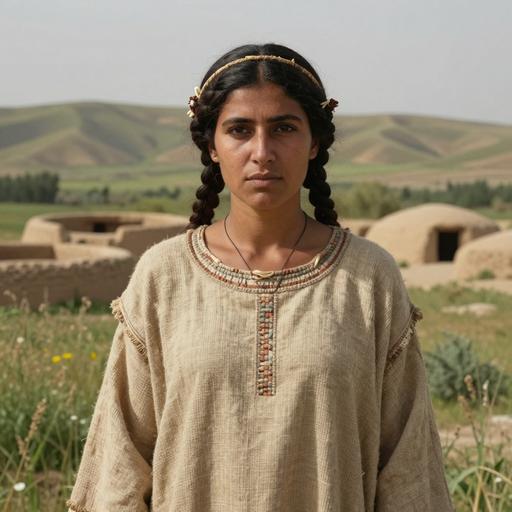
The Story
The journey of mtDNA haplogroup R2
Origins and Evolution
mtDNA haplogroup R2 is a descendant branch of macro-haplogroup R and sits alongside other major lineages that radiated out of Eurasia during the Upper Paleolithic. Coalescence time estimates for R2 vary between studies, but most molecular-clock analyses place its origin in the late Upper Paleolithic, roughly ~25–40 kya (here given as ~32 kya), consistent with deep regional diversification in South Asia after initial expansion of R-bearing lineages.
R2's phylogenetic position (as a branch distinct from the JT clade under the broader R node) marks it as an early regional founder lineage. Its presence in modern populations and in ancient DNA samples (where available) indicates long-term continuity in the Indian subcontinent with later dispersals into neighboring regions.
Subclades
R2 has multiple downstream lineages; the best-characterized is R2a, which is the most frequent and geographically widespread subclade in South Asia. Other, rarer sublineages of R2 have been reported from Iran, the Caucasus, Central Asia and isolated pockets within South Asia. Differences in subclade ages and geographic patterns suggest a scenario of early regional diversification followed by local expansions and limited long-range dispersals.
Geographical Distribution
The highest concentrations of R2 are observed in South Asia (including populations in India, Pakistan and Sri Lanka), with measurable frequencies extending into the Near East (Iran), parts of the Caucasus and Central Asia. Occasional low-frequency occurrences are reported in diaspora communities and in regions connected by historic trade and migration routes. The pattern—high local frequency with scattered presence in adjacent regions—supports an origin in or near South Asia with subsequent episodic outward movement.
Historical and Cultural Significance
Because R2 likely predates the Neolithic in South Asia, it is often interpreted as part of the genetic substrate associated with Late Pleistocene and early Holocene inhabitants of the subcontinent. Over millennia R2-lineages would have been carried by hunter-gatherer and early farming communities alike, contributing maternally to archaeological cultures in the region. In later periods (Neolithic, Chalcolithic and Bronze Age) R2 coexisted with incoming lineages tied to farming and later movements, showing continuity rather than replacement in many local maternal gene pools.
Specific archaeological cultures cannot be unambiguously assigned to R2 without ancient DNA confirmation, but the haplogroup's distribution is consistent with continuity from Pre-Neolithic/Upper Paleolithic groups through sites such as Mehrgarh and into Bronze Age South Asian contexts, including regions influenced by the Indus Valley (Harappan) civilization.
Conclusion
mtDNA haplogroup R2 is an informative maternal lineage for reconstructing the deep population history of South Asia and its contacts with neighboring regions. It reflects an early branching of R within or near the subcontinent, a pattern of local diversification (notably R2a), and subsequent lower-frequency dispersals into the Near East and Central Asia. Continued sampling and ancient DNA from South Asia and adjacent areas will refine subclade ages and clarify specific archaeological associations.
Key Points
- Origins and Evolution
- Subclades
- Geographical Distribution
- Historical and Cultural Significance
- Conclusion