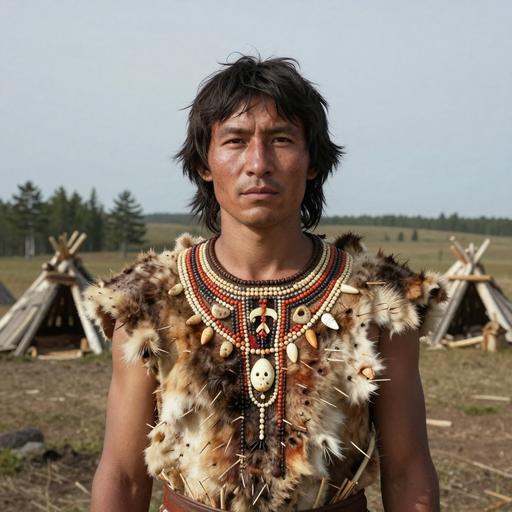
The Story
The journey of mtDNA haplogroup U8C
Origins and Evolution
Haplogroup U8C is a low-frequency branch of the broader mtDNA macro-haplogroup U8 (which itself sits within haplogroup U). U8 branches split early within the West Eurasian maternal radiation; U8C is generally interpreted as a later, regionally restricted offshoot that likely formed during the Late Upper Paleolithic or the Last Glacial Maximum (LGM) to early post-glacial interval. Its time depth is modest compared with the oldest U lineages, consistent with a local diversification event within populations that persisted in refugia or small, structured hunter-gatherer groups.
Genetically, U8C retains diagnostic mutations that place it inside the U8 topology but outside the more widespread U8-derived clades (for example the lineage that gives rise to haplogroup K). Because U8 lineages have been repeatedly documented in ancient European and Near Eastern samples, the existence of U8C fits the pattern of Paleolithic and Mesolithic maternal diversity in West Eurasia.
Subclades (if applicable)
At present, U8C is treated as a relatively shallow and rare branch; publicly available phylogenies and population surveys show few deeply branching named subclades under U8C. This reflects both its low modern frequency and limited representation in ancient DNA datasets. Additional whole-mitogenome sampling, especially from undersampled regions and archaeological contexts, may reveal further internal structure or nominate named subclades in the future.
Geographical Distribution
U8C is found at low frequencies in modern populations across parts of Southern and Western Europe and into adjacent Near Eastern and Caucasus regions. The distribution pattern is patchy, consistent with survival in local refugia and subsequent drift and local founder effects. Ancient DNA studies of Upper Paleolithic and Mesolithic European remains have documented various U8-lineages; while U8C itself appears infrequently in published ancient datasets, its inferred origin and presence are consistent with a West Eurasian Paleolithic/Mesolithic signature.
Because U8C is rare in large modern surveys, its detection is often limited to targeted mitogenome sequencing or deep regional studies (for example, focused work in the Iberian Peninsula, Italy, the Balkans, and the Caucasus). The patchiness and low frequency also mean that estimates of its precise range and frequency are subject to change with additional sampling.
Historical and Cultural Significance
- Paleolithic/Mesolithic association: The phylogenetic placement and time depth suggest U8C was present among hunter-gatherer groups in Europe during the Late Upper Paleolithic and/or Mesolithic. It likely contributed to the maternal pool of early post-glacial populations that recolonized parts of Europe after the LGM.
- Interaction with Neolithic farmers: With the spread of Neolithic farming from the Near East into Europe, many local hunter-gatherer mtDNA lineages—including rare U branches—were diluted by incoming lineages. However, U8C's continued presence at low frequency in some modern populations indicates survival through the Neolithic and later demographic transitions, likely via population continuity in pockets or assimilation into farming communities.
- Archaeogenetic utility: Because U8C is rare and regionally restricted, when it is found in ancient remains it can provide useful information about local continuity, refugial populations, and minor maternal lineages that did not expand broadly with major culture complexes.
Conclusion
mtDNA haplogroup U8C represents a minor, regionally focused branch of the U8 maternal radiation in West Eurasia. It most likely arose in the Late Pleistocene or early Holocene and is associated with hunter-gatherer substrate populations in Europe and neighboring regions. Its rarity in modern samples and limited presence in ancient datasets make it a candidate for targeted mitogenome studies; increased sampling and ancient DNA recovery will refine its phylogeny, geographic limits, and archaeological associations.
Key Points
- Origins and Evolution
- Subclades (if applicable)
- Geographical Distribution
- Historical and Cultural Significance
- Conclusion